Our Short List of 3
All 3 Picks at a Glance
| Product | Specs | Action |
|---|---|---|
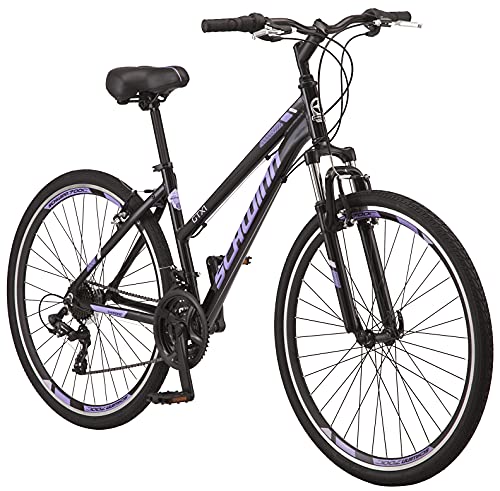 Schwinn GTX — the comfort hybrid most people actually need | Check price on Amazon | |
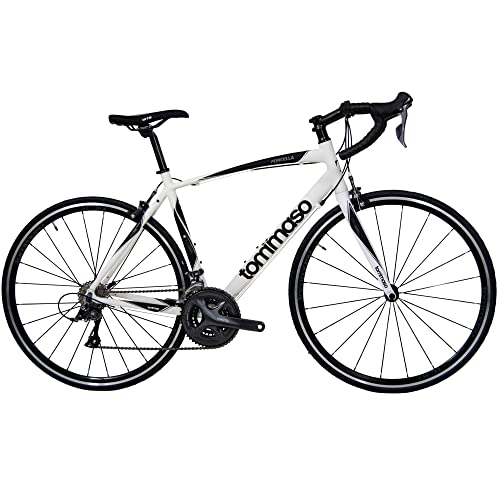 Tommaso Forcella — endurance road value with a carbon fork | Check price on Amazon | |
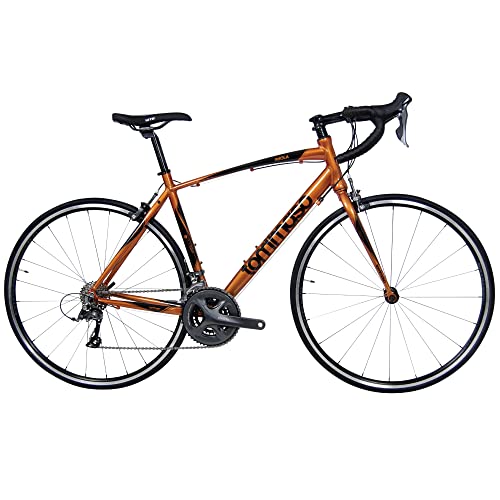 Tommaso Imola — the lightweight Claris build | Check price on Amazon |
Key takeaways
- A bike under the one-thousand mark should still shift cleanly and fit properly. Three picks compared: a comfort hybrid and two Tommaso road builds checked.
A budget ceiling of one thousand is the most contested ground in cycling. It is high enough that brands have to compete on real components rather than decoration, and low enough that every one of them cuts a corner somewhere. The skill in shopping this segment is knowing which corners matter for the riding you actually do, and which ones you will never notice. This guide compares three bikes that sit at or under that ceiling and take three different approaches: a comfort hybrid built for relaxed miles, an endurance road bike with a carbon fork, and a lightweight aluminium road bike built around a current Shimano Claris groupset.
One disclosure before the picks, and one caution. The caution: prices in this segment move, sizes sell through, and listings change. Treat the segment descriptions here as the shape of the market rather than a promise about any single listing on any single day, and confirm the current build and your size on the product page before you order.
Disclosure: As an Amazon Associate, this site may earn from qualifying purchases made through links in this article, at no additional cost to you.
How the segment actually divides
Bikes under the four-figure ceiling fall into three rough families. Comfort hybrids pair an upright riding position with wider tyres and simple, durable parts; they suit commuting, rail trails and fitness riding on mixed surfaces. Endurance road bikes add drop bars, a lighter frame and a geometry that stays comfortable over longer distances; they suit riders who want to cover ground efficiently on pavement. Gravel-leaning road bikes split the difference with clearance for wider tyres and gearing that handles loose surfaces and steeper climbs.
What separates a good buy from a regrettable one in this segment is rarely the frame material. It is the contact points and the drivetrain generation. A current-generation Shimano Claris or Tourney groupset shifts noticeably better than an older no-name setup, a carbon fork takes real sting out of rough pavement, and a saddle that fits you is worth more than a small weight saving you will never feel. The three picks below were chosen because each one gets those fundamentals right for its intended rider.
The picks
Schwinn GTX — the comfort hybrid most people actually need
The Schwinn GTX (ASIN B08239VFK6) is the pick for riders whose honest answer to “where will you ride?” is “a bit of everything.” The aluminium frame carries a suspension fork that softens broken pavement and packed gravel, the 700c wheels roll efficiently on the road, and the 21-speed drivetrain covers the range from flat bike paths to the kind of hill that makes you glad for a low gear. The riding position is upright enough for visibility in traffic and relaxed enough for riders returning to cycling after years away.
The GTX’s compromises are the honest ones for its class. The suspension fork adds weight and absorbs a little pedalling energy on smooth roads, and the component spec prioritises durability over lightness. Neither matters much for its job. What matters is that the bike is comfortable in the first ten minutes and still comfortable in the second hour, and that its parts are standard sizes any shop can service. If your riding is commuting, errands and weekend paths rather than timed road miles, this is the sensible end of the segment to spend on.
Tommaso Forcella — endurance road value with a carbon fork
The Tommaso Forcella (ASIN B0F4NTMP45) is the pick for riders who know they want drop bars and longer road rides. Its aluminium frame is paired with a carbon fork, a combination that used to be rare at this ceiling: the fork trims weight at the front end and, more importantly, filters the high-frequency buzz that makes hands and shoulders ache on coarse chip-seal roads. The Shimano Claris R2000 drivetrain in a 3×8 arrangement gives a wide, closely spaced set of gears, and the endurance geometry keeps the bars at a height that does not demand a racer’s flexibility.
Two honest notes on this pick. First, the Claris triple crankset gives range and small steps between gears at the cost of slightly more front shifting to manage; riders who prefer simplicity may find a compact double more intuitive, but the triple’s low gear is genuinely useful on steep ramps. Second, Tommaso sells several generations of its models, so confirm on the live listing that the build shown is the current Claris R2000 version described here, in your frame size, before ordering.
Tommaso Imola — the lightweight Claris build
The Tommaso Imola (ASIN B0F4NRG9TJ) takes a slightly different route to the same ceiling: a lightweight aluminium frame with a carbon fork and a Shimano Claris 24-speed drivetrain, tuned as an all-round road bike for fitness riding, club runs and first events. Compared with the Forcella, the Imola’s presentation leans a touch more toward the traditional road-bike brief — responsive handling, a cleaner silhouette, and gearing arranged for steady road speeds rather than maximum range.
Because Tommaso has sold the Imola name across several build generations, the same caution applies with extra weight: older listings for this model carried different components, and at least one older variant shows as unavailable. The pick here is the current Claris build. Read the live listing’s component list carefully, match it against the description above, and choose the frame size from Tommaso’s own sizing guidance rather than from your height alone.
Which one fits your riding?
If most of your miles are commuting, paths and relaxed weekend rides, the GTX is the right tool and leaves budget headroom for the lock, lights and helmet you will also need. If you want to build distance on pavement and care about ride quality over hours, the Forcella’s carbon fork and endurance fit earn their place. If you want the lightest, most traditionally road-shaped package of the three and are happy to verify the build generation carefully, the Imola is the pick.
Whichever you choose, three checks protect you in this segment. First, sizing: a bike that is one size wrong is a bad buy at any price, so measure your inseam and use the maker’s chart. Second, assembly: bikes in this segment ship partly assembled, and a professional tune after the first few rides settles cables and bedding-in brakes — budget the time if not the money. Third, the listing itself: confirm the drivetrain generation, the fork material and your size on the live page, because in this segment the model name stays the same while the build quietly changes.
Gearing and brakes, in plain terms
Two specifications confuse more buyers in this segment than everything else combined. The first is gear count. A 21-speed hybrid and a 24-speed road bike are not separated by quality; they are separated by purpose. The hybrid’s range is wider at the low end, which is what you want when a loaded commute meets a hill. The road bikes’ gears are spaced for maintaining rhythm at speed. Count matters less than suitability: match the range to your terrain, and prefer a current-generation named groupset — Claris or Tourney — over a higher gear count from an unnamed drivetrain, because shift quality and parts availability follow the name, not the number.
The second is brake type. Rim brakes on the road models here are light, simple and entirely adequate in dry conditions, with longer stopping distances in the wet as their known trade-off. The hybrid’s brakes prioritise easy adjustment and all-weather consistency for stop-start riding. Neither system is a defect at this ceiling; both are proven. What deserves scrutiny is not the brake category but the setup: brakes that are properly bedded in and adjusted during the first shop check stop the way the maker intended, and brakes assembled carelessly do not, whatever the spec sheet says.
What this ceiling does not buy — and why that is fine
Being clear about the limits of the segment saves disappointment later. At this level you will not find hydraulic disc brakes on road models, electronic shifting, or carbon frames from established brands, and you should be suspicious of any listing that claims all three at once. What you get instead is mature, well-understood technology: rim brakes or mechanical discs that any shop can adjust, cable shifting that a home mechanic can maintain with basic tools, and aluminium frames whose ride quality has improved steadily for a decade.
Weight is the other honest limit. Bikes at this ceiling typically weigh noticeably more than machines at twice the budget, and the difference shows most on climbs and when carrying the bike up stairs. For flat-to-rolling terrain and rides under a few hours, it is a smaller factor than fit and gearing. If your daily routine involves a third-floor walk-up, though, weigh that reality before choosing the heaviest option here.
Finally, expect to replace touchpoints over time. Stock saddles, grips and pedals are built to a price across the whole segment, and upgrading the one that bothers you is normal ownership, not a sign you bought the wrong bike. The frame, fork and drivetrain are the purchase; the rest is tuning.
A short pre-purchase checklist
Before ordering any bike in this segment, run through five checks. One: measure your inseam in riding shoes and match it to the maker’s size chart, not a generic height table. Two: read the live listing’s full component list and confirm the drivetrain generation matches the description in this guide — model names persist across build changes. Three: confirm the fork material; at this ceiling a carbon fork is a genuine ride-quality advantage worth verifying rather than assuming. Four: check what assembly is required on arrival and whether the maker supplies the tools and instructions, or plan for a shop setup. Five: look at the returns window for the listing, because a bike is one of the few purchases where a size exchange is a realistic possibility even after careful measuring.
None of these checks takes long, and together they remove most of the risk that makes people wary of buying a bike online. The segment rewards buyers who verify rather than assume.
Bottom line
The four-figure ceiling buys a genuinely good bike in 2026, as long as you spend it on the fundamentals: a current drivetrain, a frame that fits, and contact points you can live with. The Schwinn GTX covers the comfort and commuting brief, the Tommaso Forcella covers endurance road riding with a carbon fork, and the Tommaso Imola covers the lighter traditional road brief — each verified as a current Amazon US listing, and each worth a final size and build check on its product page before you commit.