Our Short List of 3

- CCA: 1,150
- Group size: 31
- Type: AGM, thin-plate pure lead
- Capacity: 103 Ah (20-hour rate)
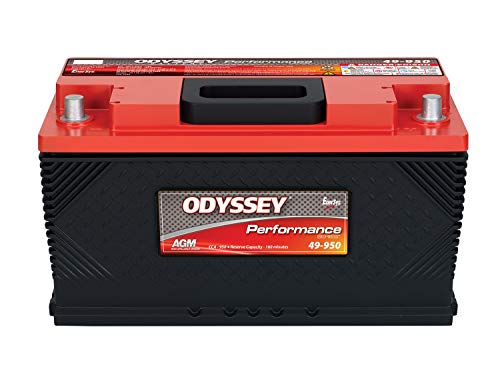
- CCA: 950
- Group size: 49 (H8)
- Type: AGM
- Reserve capacity: about 160 minutes

- CCA: 800
- Group size: 34/78
- Type: AGM, SpiralCell
- Capacity: 50 Ah; reserve capacity: 100 minutes
All 3 Picks at a Glance
| Product | Specs | Action |
|---|---|---|
| 1. Odyssey ODX-AGM31 Extreme Series — the CCA ceiling |
| Check price on Amazon |
| 2. Odyssey 49-950 Performance Series — big CCA for European cars |
| Check price on Amazon |
| 3. OPTIMA RedTop 34/78 — 800 CCA with dual terminals |
| Check price on Amazon |
Key takeaways
- Looking for the best CCA battery? Compare high cold cranking amp starting batteries by CCA rating, group size, reserve capacity and terminal type to find the right fit for cold-weather starts.
As an Amazon Associate we earn from qualifying purchases.
Affiliate Disclosure: This article contains affiliate links. If you buy through a link on this page, we may earn a commission at no extra cost to you. Product specifications are taken from the manufacturers and product listings, and availability should be confirmed on the product page before ordering.
Few sounds are as discouraging as a starter motor groaning slowly on a freezing morning. When temperatures drop, engine oil thickens, chemical reactions inside a battery slow down, and the starter has to work harder at exactly the moment the battery can deliver less. That is why cold cranking amps, usually shortened to CCA, is the single most important number on a starting battery for anyone who lives where winters bite. This guide explains what the CCA rating actually measures, how much of it your vehicle really needs, and which high-CCA starting batteries stand out for drivers who refuse to gamble on a cold start.
Every battery below is a 12-volt automotive starting battery, and every one was chosen because its published CCA rating sits well above the minimum most vehicles require. Just as important, the picks span several different BCI group sizes, because a battery with a huge CCA figure is useless if it does not physically fit your tray, clear your hold-down, or match your terminal layout. We deliberately focused on less common group sizes here — 31, 34/78 and 49 — rather than the most generic fitments, so check your owner’s manual or the label on your current battery before you order anything.
What CCA actually means
Cold cranking amps is a standardized rating defined by the Battery Council International. It measures the number of amps a fully charged 12-volt battery can deliver for 30 seconds at 0 degrees Fahrenheit while keeping its voltage at or above 7.2 volts. In plain terms, it is a worst-case test: a freezing battery, a heavy load, and a hard floor under the voltage so the test cannot be gamed by a battery that collapses after two seconds.
Two related numbers often appear next to CCA and are worth separating. Cranking amps, or CA, is measured at 32 degrees Fahrenheit instead of 0, so CA figures always look bigger for the same battery. Marine cranking amps, MCA, uses the same warmer test temperature. When you compare batteries, compare CCA against CCA only. A battery advertised mainly on a big CA or MCA number may be far less impressive in genuinely cold weather than a rival with a higher honest CCA rating.
Reserve capacity, listed in minutes, is a different measurement again. It describes how long a battery can run essential loads at a moderate draw before its voltage falls too low. Reserve capacity matters for accessories, lights left on, and vehicles that sit between trips, but it does not start your engine. For a CCA-focused purchase, treat reserve capacity as a useful tiebreaker, not the headline.
How much CCA do you actually need?
Start with the vehicle manufacturer’s specification. Your manual or the original battery label lists a minimum CCA, and your replacement should meet or exceed it. A long-standing rule of thumb is roughly one CCA per cubic inch of engine displacement for gasoline engines, which is why small four-cylinder cars often specify modest ratings while big V8 trucks and diesels call for far more. Diesel engines need substantially more cranking power because of their high compression ratios, and many diesel trucks use two batteries wired in parallel for exactly that reason.
Going above the specified CCA is generally safe and often smart. A higher-CCA battery in the same group size does not force extra current into the starter; the starter draws what it needs, and the battery simply sags less while delivering it. The practical benefits are stronger cranks as the battery ages, more margin on the coldest mornings, and headroom for short-trip driving that never fully recharges the battery. The trade-offs are weight and the fact that the highest-CCA designs are usually premium AGM batteries rather than basic flooded ones.
What you should not do is chase CCA by changing group size casually. Group size controls the case dimensions, terminal position and polarity orientation. A battery that is a quarter inch too tall can short against a hood or bracket, and reversed terminals can stretch cables or, worse, invite a polarity mistake. Match the group first, then maximize CCA inside it.
Why AGM dominates the high-CCA end
Most of the strongest starting batteries today use absorbed glass mat construction, where the electrolyte is held in fiberglass separators rather than sloshing freely. AGM designs have lower internal resistance than comparable flooded batteries, and low internal resistance is precisely what lets a battery dump a large current into a starter without its voltage collapsing. Thin-plate pure lead designs push this further: thinner plates mean more plates in the same case, more surface area, and higher cranking output.
AGM batteries are also sealed and maintenance-free, tolerate vibration better than flooded designs, and can be mounted in more positions. Their weaknesses are sensitivity to overcharging from an old or mismatched charging system and a higher upfront cost than basic flooded batteries. If your vehicle has a smart charging system that expects an AGM battery, stay with AGM; if it originally came with a flooded battery, an AGM upgrade usually works well but the charging voltage should be within the battery maker’s stated range.
Our top high-CCA picks
1. Odyssey ODX-AGM31 Extreme Series — the CCA ceiling
- CCA: 1,150
- Group size: 31
- Type: AGM, thin-plate pure lead
- Capacity: 103 Ah (20-hour rate)
If the brief is simply the most cold cranking power in a single 12-volt battery, the Odyssey ODX-AGM31 sits at the top of this list with a published rating of 1,150 CCA. It is a Group 31 battery, the large format common in commercial trucks, heavy pickups, and equipment, and its thin-plate pure lead AGM construction is built for both starting and deep-cycle punishment. Odyssey publishes a pulse hot cranking figure of 2,150 amps for the first few seconds, a 20-hour capacity of 103 amp-hours, and a reserve capacity of around 205 to 220 minutes depending on the test sheet, which is enormous for a battery that also cranks this hard.
The case measures about 13 inches long, 6.8 inches wide and 9.5 inches tall including terminals, and it weighs roughly 78 pounds, so this is a two-hand lift and a deliberate purchase, not a casual swap. This version uses 3/8-inch threaded stud terminals rather than SAE posts, which suits commercial and dual-purpose installations; a sibling version exists with SAE automotive posts, so confirm which terminal style your cables need before ordering. For a diesel truck, a work vehicle that cannot afford a no-start, or any Group 31 application in a genuinely cold climate, this is the benchmark.
2. Odyssey 49-950 Performance Series — big CCA for European cars
- CCA: 950
- Group size: 49 (H8)
- Type: AGM
- Reserve capacity: about 160 minutes
Many larger European sedans and SUVs take a Group 49, also called H8, battery, and that long case leaves room for serious cranking power. The Odyssey 49-950 Performance Series is rated at 950 CCA, with a reserve capacity of about 160 minutes and a capacity in the region of 94 amp-hours, putting it well ahead of the typical original-equipment rating for the cars it fits. Like the Extreme model above it uses absorbed glass mat construction with pure lead plates, so it pairs the high cranking figure with strong cycling ability for vehicles loaded with electronics that draw power at rest.
Group 49 batteries are long — roughly 13.9 inches — so measure the tray and check the hold-down style, and note that many European cars require the replacement battery to be registered with the vehicle’s computer so the charging system treats it correctly. That registration step applies to any brand of replacement in those cars, not just this one. If your car takes an H8 battery and cold starts have become hesitant, 950 CCA is a substantial step up in margin.
3. OPTIMA RedTop 34/78 — 800 CCA with dual terminals
- CCA: 800
- Group size: 34/78
- Type: AGM, SpiralCell
- Capacity: 50 Ah; reserve capacity: 100 minutes
The OPTIMA RedTop line is built purely for starting, and the 34/78 version delivers 800 CCA with a useful trick: it carries both top SAE posts and GM-style side terminals on the same case. That dual-terminal layout lets one battery serve vehicles designed for Group 34 and vehicles designed for Group 78, which makes it a flexible pick for mixed fleets and for older GM vehicles whose side-terminal cables are still in good shape. OPTIMA’s SpiralCell design winds the lead plates into cylindrical cells, and the maker rates the battery at 50 amp-hours with 100 minutes of reserve capacity.
At about 38.8 pounds it is noticeably lighter than most batteries with similar cranking output, and the sealed AGM case can be mounted in more positions than a flooded battery. The RedTop is a starting battery, not a deep-cycle battery, so it is the wrong choice for winches, big audio systems or camping loads that drain the battery deeply and repeatedly — OPTIMA’s own range has a different line for that. For pure starting duty in cars, trucks and SUVs that take a 34 or 78 battery, 800 CCA is a strong, proven figure.
4. OPTIMA YellowTop D34/78 — starting power plus deep-cycle tolerance
The YellowTop D34/78 shares the dual-terminal 34/78 case with the RedTop above but trades a little peak cranking for a lot more endurance. It is rated at 750 CCA, 55 amp-hours and 120 minutes of reserve capacity, and it is designed as a dual-purpose battery that can both start an engine and survive repeated deeper discharges. That makes it the sensible pick in this group-size family for vehicles with winches, auxiliary lighting, inverters, snow plows or serious audio systems — the loads that quietly ruin a starting-only battery.
You give up 50 CCA against the RedTop, which in practice matters far less than the YellowTop’s ability to recover from being run down by accessories. It weighs about 43.5 pounds. If your truck is a stock daily driver, the RedTop is the sharper tool; if it earns its keep with electrical accessories, the YellowTop’s dual-purpose design is worth more than the small CCA difference.
- CCA: 750
- Group size: 34/78
- Type: AGM, SpiralCell, dual purpose
- Capacity: 55 Ah; reserve capacity: 120 minutes
Side-by-side comparison
| Battery | CCA | Group | Capacity | Reserve | Best for |
|---|---|---|---|---|---|
| Odyssey ODX-AGM31 Extreme | 1,150 | 31 | 103 Ah | ~205–220 min | Diesel and commercial Group 31 applications |
| Odyssey 49-950 Performance | 950 | 49 (H8) | ~94 Ah | ~160 min | European sedans and SUVs |
| OPTIMA RedTop 34/78 | 800 | 34/78 | 50 Ah | 100 min | Pure starting, dual-terminal fitments |
| OPTIMA YellowTop D34/78 | 750 | 34/78 | 55 Ah | 120 min | Starting plus winches and accessories |
Before you buy: a five-minute checklist
First, read the group size and the minimum CCA off your current battery or manual, and write both down. Second, check terminal orientation: the positive post position is part of the fitment, and a battery with reversed terminals may not connect safely with your cable lengths. Third, measure the tray if you are tempted by a larger group, and confirm the hold-down can secure the new case — a high-CCA battery that moves around will fail early from vibration. Fourth, look at the age and health of your charging system; even the best battery cannot compensate for an alternator that undercharges, and chronic undercharging is the most common reason premium batteries die young. Fifth, if your vehicle has a battery management system, plan for the registration or reset procedure after the swap.
Also be honest about why the old battery struggled. If it only failed on the coldest mornings after years of service, a higher-CCA replacement is a direct fix. If it goes flat after a weekend parked, you may have a parasitic draw, and a bigger battery will only delay the same problem while masking the fault. A simple overnight voltage check or a draw test will tell you which problem you actually have.
Caring for a high-CCA battery
Cold weather does not kill batteries so much as it reveals weak ones, and most of that weakness is built up in summer heat and short-trip driving. Keep the state of charge up: vehicles used for short journeys benefit from an occasional longer drive or a quality AGM-compatible maintainer during long parked spells. Keep terminals clean and tight, because a corroded connection adds resistance exactly where you can least afford it during a high-current crank. Finally, when a battery does need testing, ask for a test that reflects its CCA rating rather than a quick voltage glance — a battery can show a healthy resting voltage and still collapse under a proper cranking load.
The bottom line
The best CCA battery is the one with the highest honest CCA rating inside the group size your vehicle was built for. For Group 31 applications, the Odyssey ODX-AGM31’s 1,150 CCA is in a class of its own. European cars on Group 49 get a major upgrade from the Odyssey 49-950 at 950 CCA. And for the huge number of vehicles on Group 34 or 78, the choice is between the RedTop’s 800 CCA starting focus and the YellowTop’s 750 CCA plus deep-cycle tolerance. Match the group, meet or beat the factory CCA, and cold mornings stop being a lottery.