Key takeaways
- Compare five fluoride water filters — two RO systems, two pitchers and a gravity add-on — by certification, filter life, capacity and install type.
Fluoride is added to many municipal water supplies, and some households simply prefer drinking water with less of it. The catch is that the standard activated carbon filter inside a typical pitcher is not built for that job. Fluoride is a dissolved ion, so reducing it takes specialty media or a membrane, and only some products publish data that names fluoride.
This guide compares five products that do publish fluoride-reduction specifications: two reverse osmosis systems, two pitchers that use specialty media, and a set of add-on elements for gravity systems. Every entry sticks to published specifications, certification listings and maker-stated filter life, so you can match a product to your plumbing and budget tier.
As an Amazon Associate, we earn from qualifying purchases.
Quick answer
If fluoride reduction is your goal, reverse osmosis is the most consistently certified route: the iSpring RCC7AK-UV carries whole-system NSF/ANSI 58 certification, and the Frizzlife PD600-TAM3 does the same job without a tank. For no-install options, the Clearly Filtered pitcher and ZeroWater 10-Cup use specialty media, while Berkey PF-2 elements add fluoride adsorption to gravity systems.
iSpring RCC7AK-UV 7-Stage Reverse Osmosis System

The RCC7AK-UV is a premium-tier, tank-based under-sink system built around a 75 gallon-per-day reverse osmosis membrane. Its strongest credential is certification scope: iSpring states the whole system, not just individual components, is tested and certified by NSF International against NSF/ANSI 58, and the listing names fluoride among the contaminants covered by that NSF testing, alongside lead, asbestos, cadmium, copper and TDS.
Seven stages do the work. Sediment, granular carbon and carbon block pre-filters protect the membrane, a post carbon filter polishes the water, an alkaline remineralization stage adds minerals back, and an 11-watt UV lamp provides a final stage that switches on only when water flows, thanks to a built-in flow sensor. A 3.2-gallon tank keeps filtered water on tap. Trade-offs are cabinet space and a drain connection, and homes with very low pressure may need the maker’s booster-pump variant.
Specs
- Type: Under-sink reverse osmosis system with storage tank
- Stages: 7, including alkaline remineralization and UV
- Rated output: 75 gallons per day
- Tank capacity: 3.2 gallons
- Certification: NSF/ANSI 58, certified by NSF International for the whole system
- UV stage: 11 W lamp with automatic flow sensor
- Dimensions: 15 x 8 x 18 inches
- Item weight: 20 pounds
- Feed water: municipal or well water, 40 to 100 degrees F
Frizzlife PD600-TAM3 Tankless Reverse Osmosis System
The PD600-TAM3 takes the opposite approach to the iSpring: a premium-tier tankless under-sink system, so no storage tank takes up cabinet space and water is filtered on demand. Frizzlife rates it at 600 gallons per day and publishes a 2:1 pure-to-drain ratio, leaner than many tank systems. A built-in TDS display tracks filter life.
Its final TAM3 cartridge is a three-in-one alkaline remineralization filter, designed to add minerals back after the membrane stage. The maker lists the system against NSF/ANSI 42, 53, 58 and 372 standards. One honest distinction: shoppers who want a certifier’s listing that names fluoride for the exact model should weigh the iSpring’s whole-system certification, while the Frizzlife leans on its RO membrane, the component that handles dissolved ions such as fluoride.
Specs
- Type: Tankless under-sink reverse osmosis system
- Rated output: 600 gallons per day
- Pure-to-drain ratio: 2:1 (maker specification)
- Final stage: TAM3 alkaline remineralization filter
- Display: Built-in TDS reading and filter life monitoring
- Standards listed by maker: NSF/ANSI 42, 53, 58 and 372
- Storage tank: None, filters on demand
- Filter changes: Twist-in composite cartridges
Clearly Filtered No.1 Filtered Water Pitcher (P-V3)
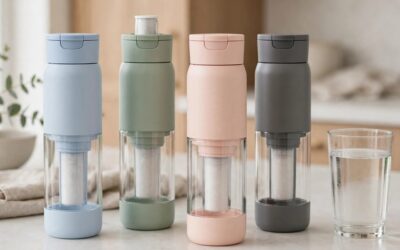
For a no-install option, the Clearly Filtered pitcher is the mid-range pick built around hard-to-catch contaminants. It uses the maker’s Affinity Filtration Technology: Clearly Filtered says the filter targets more than 365 contaminants, with fluoride, lead, PFAS, arsenic and microplastics among those named. The pitcher holds 10 cups, with an 80-ounce filtered reservoir, and each filter is rated for 100 gallons, roughly four months of typical use.
The certification picture deserves a careful read. The pitcher carries NSF/ANSI 42 and 372 certification, covering chlorine taste and odor and lead-free materials. Its fluoride results come from independent laboratory testing published by the maker, rather than from a certification listing that names fluoride. That does not make the data worthless, but it is a different level of evidence. The body is BPA and BPS free Tritan, with no plumbing or power required.
Specs
- Type: Pitcher, no installation required
- Capacity: 10 cups, 80-ounce filtered reservoir
- Filter life: 100 gallons per filter (maker rating)
- Technology: Affinity Filtration Technology
- Maker-published targets: 365-plus contaminants, including fluoride, lead, PFAS and arsenic
- Certification: NSF/ANSI 42 and 372; fluoride results from independent lab testing published by the maker
- Material: BPA and BPS free Tritan
- Model: P-V3
ZeroWater 10-Cup Ready-Pour Pitcher (ZP-010)
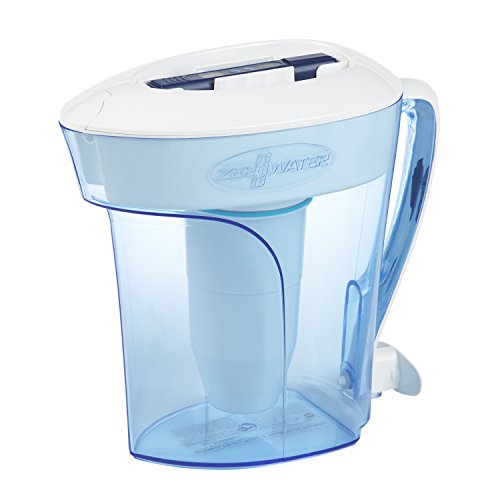
The ZeroWater pitcher is the budget-tier route, and it approaches fluoride from a different direction: instead of targeting fluoride alone, its five-stage ion exchange filter is designed to remove nearly all dissolved solids, and the maker’s published performance data lists fluoride among the contaminants it reduces. Because the filter strips dissolved solids so aggressively, ZeroWater includes a TDS meter in the box so you can see when the filter is spent.
The listing states IAPMO certification to reduce lead, chromium and PFOA/PFOS, and the Ready-Pour design uses a sealed lid so you can pour while water is still filtering. The honest trade-off is filter life: a cartridge’s lifespan depends heavily on the dissolved solids in your tap water, and the maker advises replacing it when the meter reads 006. High-TDS households will go through filters faster, which can erase the upfront savings.
Specs
- Type: Pitcher, no installation required
- Capacity: 10 cups
- Filtration: 5-stage ion exchange with activated carbon
- Included accessory: TDS meter for checking dissolved solids
- Certification on listing: IAPMO certified to reduce lead, chromium and PFOA/PFOS
- Maker-published data: Fluoride listed among contaminants reduced by the 5-stage filter
- Filter change cue: Replace when the TDS meter reads 006 (maker guidance)
- Dimensions: 11.63 x 5.93 x 11 inches
- Model: ZP-010
Berkey PF-2 Fluoride and Arsenic Reduction Elements (Set of 2)
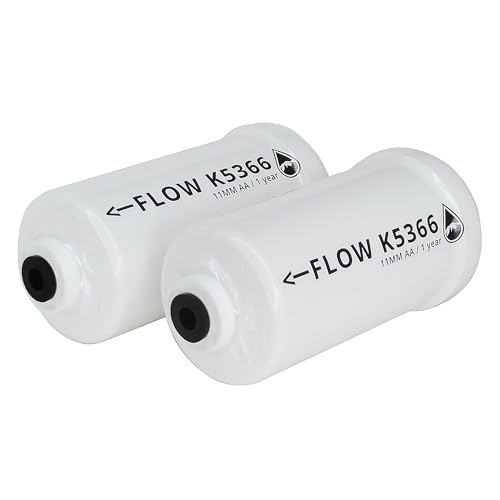
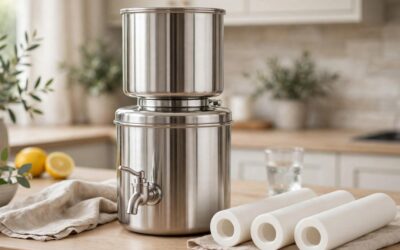
The PF-2 set is the add-on option, made for people who already own, or plan to buy, a Berkey gravity system. These elements are not a filter on their own: each one screws onto the bottom of a Black Berkey purification element and sits in the lower chamber, where water passes through after the main elements. The media is activated alumina, and Berkey states the elements adsorb fluoride, arsenic V and pre-oxidized arsenic III, plus other residual heavy metal ions.
Berkey recommends replacing a set after 1,000 gallons of use, a long service interval compared with pitcher cartridges. The set fits the Travel, Big, Royal, Imperial, Crown, Go and Berkey Light systems, and also works with the Phoenix Gravity New Millennium Edition elements. Note the compatibility limit: PF-2 elements pair with Black Berkey elements, while ceramic-filter systems need the maker’s PF-4 elements instead. No plumbing or power is involved, but the elements only make sense within that ecosystem.
Specs
- Type: Add-on reduction elements for gravity systems, set of 2
- Media: Activated alumina
- Maker-stated targets: Fluoride, arsenic V and pre-oxidized arsenic III, other residual heavy metal ions
- Service life: Replace after 1,000 gallons per set (maker recommendation)
- Compatibility: Black Berkey elements and Phoenix Gravity New Millennium Edition elements
- Fits: Berkey Travel, Big, Royal, Imperial, Crown, Go and Berkey Light systems
- Requirement: Must be used with Black Berkey elements; not a standalone filter
- Model: PF-2
How to choose
Start with the paperwork. Fluoride is an optional claim under NSF/ANSI 58, so a reverse osmosis system can be certified for TDS reduction only and still carry a certification logo. Before buying, check the certifier’s listing for the exact model and confirm fluoride appears by name, or look for independent lab results for that product. Brand-level claims are not enough.
Next, pick a format that fits your home. Under-sink systems deliver the strongest documented fluoride reduction, but they need cabinet space, a drain connection and, for tankless or UV models, a power outlet. Pitchers need nothing but fridge space, at the cost of smaller capacity and shorter filter life. Gravity add-ons like the PF-2 only work with a compatible Berkey system.
Finally, think about running costs and water chemistry. Compare rated filter life in gallons, not months. Heavy sediment or iron may call for pre-filtration to protect an RO membrane, and high-TDS water will exhaust ion exchange pitcher filters quickly. If mineral taste matters, look for a remineralization stage, since membranes and ion exchange strip minerals along with fluoride.
Who should skip
Skip this whole category if your water is not fluoridated in the first place, which is common for private wells; a standard filter matched to your actual water report is a better buy. Skip it, too, if you prefer your water exactly as supplied: reducing fluoride is a preference, not a requirement for a normally maintained municipal supply.
Renters who cannot modify plumbing should skip the under-sink systems and stick with the pitchers. Anyone expecting a basic carbon pitcher to reduce fluoride should check the claim first, because standard carbon cartridges are not rated for it. And if you will not keep up with filter changes, skip the specialty media entirely, since every published figure assumes elements replaced on schedule.
FAQ
Do standard pitcher filters remove fluoride?
Standard activated carbon pitchers are not rated for fluoride reduction. Reducing fluoride takes a membrane, as in reverse osmosis, or specialty media such as activated alumina or ion exchange resin. If a pitcher’s contaminant list does not name fluoride, assume it is not designed to reduce it.
How can I verify a fluoride claim before buying?
Look up the exact model in the certifier’s directory, such as NSF, IAPMO or WQA, and check whether fluoride is among the listed reduction claims. Under NSF/ANSI 58 it is an optional claim, so one model from a brand may list it while a sibling does not. Maker-published lab reports are the next best evidence.
Does reverse osmosis remove minerals as well?
Yes. An RO membrane rejects a broad range of dissolved solids, including the minerals that give water much of its taste. That is why two systems here include alkaline remineralization stages designed to add minerals back. Whether that matters is a taste preference.
How often do fluoride filters need to be replaced?
It varies by design. The Berkey PF-2 set is rated for 1,000 gallons, the Clearly Filtered cartridge for 100 gallons, and ZeroWater cartridges last until the included meter reads 006. RO systems split the schedule: pre-filters on a shorter cycle and membranes on a multi-year cycle, per each maker’s guide.
Final verdict
For the strongest documented fluoride reduction, choose a reverse osmosis system whose certification listing names fluoride; the iSpring RCC7AK-UV is the clearest example here. The Frizzlife PD600-TAM3 suits kitchens that cannot spare room for a tank. Among pitchers, the Clearly Filtered offers the broadest maker-published contaminant list, while the ZeroWater ZP-010 is the budget pick for households happy to monitor a TDS meter. Berkey owners should not overlook the PF-2 set and its 1,000-gallon service life. Match the format to your plumbing first; the paperwork settles the rest.