Key takeaways
- Compare chlorine water filters for taste and odor, from Brita and PUR pitchers to Aquasana, APEC and iSpring systems, with certifications and filter life.
If your tap water smells like a swimming pool, chlorine is the usual reason. Most city supplies are disinfected with chlorine, and the fastest way to improve taste and odor at home is a carbon-based filter matched to how you actually drink water: a fridge pitcher, a dedicated under-sink tap, or a whole-house system that treats every faucet.
This guide compares five chlorine-led options across those formats: Brita and PUR pitchers, plumbed-in Aquasana and APEC systems, and an iSpring whole-house unit. Every pick below leads with chlorine reduction in its listing, and every certification claim is stated exactly as the maker or listing publishes it.
As an Amazon Associate, we earn from qualifying purchases.
Quick answer
For most households, the Brita Large 10-Cup Elite pitcher is the simplest chlorine fix: its Elite cartridge is certified to reduce chlorine taste and odor and lasts about six months. Renters who want filtered water on tap should look at the Aquasana Claryum 2-Stage, while the iSpring WGB21B-PB treats chlorine at every tap in the house.
Brita Large 10-Cup Elite Water Filter Pitcher
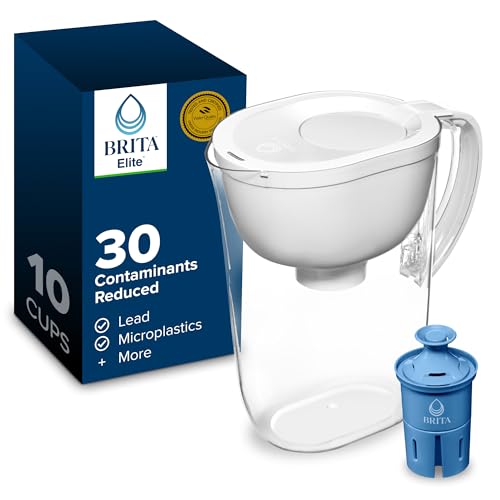
The Brita Elite pitcher is the default starting point for chlorine complaints because the cartridge does the work slowly and thoroughly. Water passes through the Elite filter’s activated carbon as the pitcher sits in the fridge, and the listing states the filter is certified to reduce chlorine (taste and odor). Brita also lists the Elite as reducing ninety-nine percent of lead, plus cadmium, mercury, benzene and asbestos, under its WQA certifications.
The practical advantage is filter life. One Elite cartridge is rated for 120 gallons, roughly six months for a typical household, so chlorine control does not turn into a monthly chore. The 10-cup body fits most fridge doors, the lid is designed for easy filling, and an electronic indicator tracks when the cartridge is due. Because nothing is plumbed in, it suits renters and anyone who wants a low-commitment first step.
Specs
- Format: Countertop and fridge pitcher, 10-cup capacity
- Filter: Brita Elite (OB06) activated carbon cartridge, included
- Filter life: 120 gallons, about 6 months per maker
- Certifications: WQA certified to NSF/ANSI standards; listing states certification for chlorine (taste and odor) reduction
- Model: Everyday Elite, OB46/OB06
- Extras: BPA-free body, electronic filter-change indicator, easy-fill lid
- Tier: Budget
PUR Plus 11-Cup Water Pitcher

PUR’s Plus pitcher is the other big-name pitcher built around chlorine. Its listing states the genuine PUR filter is NSF certified to reduce chlorine, mercury and microplastics, and WQA certified to reduce lead, so the chlorine claim carries the same kind of third-party backing as the Brita. The 2-in-1 filtration pairs activated carbon with ion exchange, and the pitcher itself adds a filter-change light and a LockFit cap that stays shut when you pour.
The trade-off is cartridge life. A PUR filter is rated for 40 gallons, about two months, which is a third of the Brita Elite’s span. In exchange, the 11-cup capacity is slightly larger and the pitcher parts are listed as dishwasher safe, which makes the more frequent cartridge swaps less of a nuisance. Choose the PUR if you prefer its certification mix and do not mind a faster replacement rhythm.
Specs
- Format: Fridge pitcher, 11-cup capacity
- Filter: Genuine PUR Plus lead-reducing cartridge, included
- Filter life: 40 gallons, about 2 months per maker
- Certifications: NSF certified to reduce chlorine, mercury and microplastics; WQA certified to reduce lead, as listed
- Model: PPT111M (Sage finish)
- Extras: LockFit cap, filter-change light, dishwasher-safe pitcher parts
- Tier: Budget
Aquasana Claryum 2-Stage Under Sink Water Filter (AQ-5200)

The Aquasana Claryum 2-Stage is the pick for people who want chlorine handled at a dedicated tap rather than a pitcher. It mounts under the sink, feeds its own all-metal faucet, and uses Aquasana’s Claryum selective filtration, combining activated carbon, catalytic carbon and ion exchange while leaving naturally occurring minerals in the water, per the maker. WQA’s listing for the AQ-5200 covers NSF/ANSI 42, 53 and 401, and the Standard 42 listing names both chlorine and chloramine, which matters in cities that disinfect with chloramine instead of free chlorine.
Aquasana rates the system for 500 gallons or up to six months per cartridge set, at a rated flow of half a gallon per minute, and publishes chlorine and chloramine reduction figures for the Claryum 2-Stage on its own product page. The chrome-faucet version listed here is model AQ-5200.56; other faucet finishes are sold under separate listings. The dedicated faucet needs a spare hole in the sink deck or countertop, so it fits owners more than renters.
Specs
- Format: Under-sink system with dedicated chrome faucet
- Stages: 2-stage Claryum filtration (activated and catalytic carbon with ion exchange, per maker)
- Capacity: 500 gallons or up to 6 months per cartridge set, per maker
- Flow rate: 0.5 gallons per minute, per WQA listing
- Certifications: WQA certified to NSF/ANSI 42, 53 and 401; Standard 42 listing covers chlorine and chloramine
- Replacement set: AQ-5200R (AQ-C2-R)
- Model: AQ-5200.56
- Tier: Premium
APEC WFS-1000 3-Stage Under-Sink Water Filter System

APEC’s WFS-1000 takes the older, serviceable approach: three standard-size stages in a row under the sink. The first stage is a polypropylene sediment cartridge, and the second and third stages are extruded carbon blocks that APEC rates for removing chlorine, tastes, odors and volatile organic compounds. Because the working stages are carbon block rather than a membrane, water flows at normal tap pressure with no storage tank and no drain line.
The cartridge set is the long-life option in this roundup. APEC positions the WFS-1000 as a super-capacity system and rates its filters for over a year of typical use, and the standard 10-inch cartridge format means replacements are a commodity item rather than a proprietary part. It ships with a lead-free faucet, per the maker. Pick it if you want an installed chlorine filter you can mostly forget about between annual cartridge changes.
Specs
- Format: Under-sink system with dedicated lead-free faucet, per maker
- Stages: 3 stages: polypropylene sediment, then two extruded carbon block stages
- Target contaminants: Chlorine, taste, odor and VOCs, per maker
- Filter life: Over 12 months per cartridge set, per maker
- Cartridges: Standard 10-inch format
- Model: WFS-1000
- Tier: Mid-range
iSpring WGB21B-PB 2-Stage Whole House Water Filter
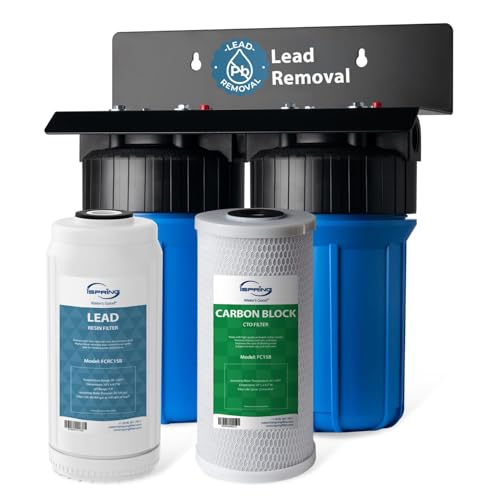
Every option above treats water at one tap. The iSpring WGB21B-PB instead installs at the point of entry, so showers, bathroom taps and the kitchen all draw water that has passed its carbon stage. This PB configuration pairs a 10-inch by 4.5-inch carbon block cartridge (FC15B) with a lead-reducing cartridge (FCRC15B), and iSpring positions the carbon block for chlorine, taste and odor reduction throughout the home. Ports are 1-inch inlet and outlet, sized for a main line.
Whole-house filtration answers a different complaint than a pitcher: chlorine smell in the shower, water that tastes off at every tap, and sediment reaching appliances. It does not soften water and it is not a drinking-water polisher on its own, so many owners pair it with a pitcher or under-sink unit at the kitchen tap. Installation means cutting into the main line, which usually calls for a plumber.
Specs
- Format: Whole-house point-of-entry system
- Stages: 2 stages, 10-inch by 4.5-inch cartridges
- Cartridges: FC15B carbon block and FCRC15B lead-reducing cartridge
- Ports: 1-inch inlet and outlet
- Target: Chlorine, taste and odor at every tap, per maker
- Model: WGB21B-PB
- Tier: Premium
How to choose
Start with format, because it decides both effort and coverage. A pitcher is the cheapest way to fix drinking-water taste and needs no installation, but it only treats what you pour into it. An under-sink system with a dedicated faucet gives you filtered water on demand for drinking and cooking. A whole-house unit treats every tap, including showers, but costs the most to install and does not replace a point-of-use filter for everything.
Next, read the certification, not the headline. NSF/ANSI Standard 42 is the standard that covers chlorine taste and odor, so look for a WQA, NSF or IAPMO certification against Standard 42 when chlorine is your main complaint. Standard 53 covers health-related contaminants such as lead, and Standard 401 covers emerging compounds. A long contaminant list without a certification behind it is marketing, not evidence.
Then check whether your city uses chlorine or chloramine. Many utilities have switched to chloramine, and standard activated carbon is slower against it. If your water report lists chloramine, favor a system whose certification or maker data names chloramine explicitly, such as the Aquasana above, or a catalytic carbon stage.
Finally, do the filter-life math. Cartridge spans in this guide range from 40 gallons on the PUR to 500 gallons on the Aquasana and over a year on the APEC set. A cheaper unit with short-lived cartridges can cost more over two years than a pricier system with long-life filters, so compare the replacement rhythm, not just the box.
Who should skip
Skip these filters if chlorine taste is not actually your problem. They will not fix metallic-tasting well water with iron or sulfur, which needs dedicated iron treatment, and they do not soften hard water. If your target is fluoride, dissolved solids or a low TDS reading, carbon filtration is the wrong tool and a reverse osmosis system is the relevant category. Renters who cannot modify plumbing should also skip installed systems; a pitcher gets the same chlorine benefit at the tap you drink from. None of the products here is a water purifier, and none should be relied on for microbiologically unsafe water.
FAQ
Which certification should I look for on a chlorine filter?
Look for certification to NSF/ANSI Standard 42, which is the standard covering chlorine taste and odor reduction. Listings certified by WQA, NSF or IAPMO against Standard 42 have had that specific claim verified, unlike unqualified claims of chlorine removal.
Does a chlorine filter also remove chloramine?
Not always. Standard activated carbon reduces free chlorine readily but works much more slowly on chloramine. If your utility uses chloramine, choose a filter whose certification or published data names chloramine, or one with a catalytic carbon stage, such as the Aquasana Claryum 2-Stage.
How often do chlorine filter cartridges need replacing?
It depends on the format. In this guide, the PUR pitcher cartridge is rated for 40 gallons, the Brita Elite for 120 gallons, the Aquasana set for 500 gallons, and the APEC cartridge set for over a year. Past its rating, a carbon cartridge gradually stops reducing chlorine, so taste is usually the first sign a change is overdue.
Will a carbon filter lower my water’s TDS?
No. Activated carbon works on chlorine, taste, odor and certain chemicals, but it leaves dissolved minerals in the water, so a TDS meter reading stays about the same. Reducing TDS is a job for reverse osmosis or distillation, not carbon filtration.
Final verdict
For chlorine, the right format matters more than the brand. The Brita Elite pitcher is the best first step for most people: certified chlorine reduction, a six-month cartridge and zero installation. The PUR Plus is a fair alternative if you prefer its certification mix and larger capacity. For filtered water on tap, the Aquasana Claryum 2-Stage is the strongest chlorine-and-chloramine pick, the APEC WFS-1000 wins on cartridge life, and the iSpring WGB21B-PB is the choice when the whole house, not just the kitchen, needs relief from chlorine taste and smell.