Key takeaways
- Compare the best pop-up sprinkler heads for coverage, with rotor radius in feet, pop-up height, arc range and spacing advice for even watering.
Coverage is the spec that decides whether a pop-up sprinkler system works. A head can be beautifully built and still leave a dry crescent at the edge of its throw, a brown ring midway out, or a soaked patch at its base while the far corner of the zone goes thirsty. When shoppers say they want the best coverage, they usually mean three things at once: a long enough radius to reach the far side of the lawn, a pattern that stays even from the head to the edge of that radius, and an arc that can be shaped so the water lands on grass rather than on the path, the fence or the driveway.

This guide compares four pop-up gear-drive rotors chosen for coverage: two long-throw models that reach 47 to 50 feet, and two mid-range models that trade a little distance for simpler adjustment and gentler delivery on smaller lawns. Every figure below, including radius in feet and pop-up height, comes from the Amazon listing for that exact head. If your lawn is small, do not assume the longest throw wins: an oversized rotor dialed right down often covers worse than a mid-range head running near its design radius.
As an Amazon Associate, we earn from qualifying purchases.
Quick Picks
| Product | Best for | Key point |
|---|---|---|
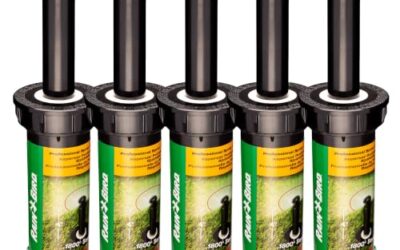
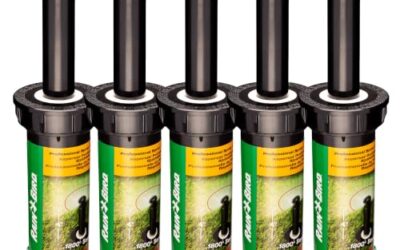
| Rain Bird 5004 PC Rotor, 2-Pack (Y54007) | The widest coverage per head on medium to large lawns | 25 to 50 ft radius, 4 in pop-up, Rain Curtain nozzle tree included |
| Hunter PGP Ultra PGP-04 Rotor, 5-Pack | Fine-tuning coverage with nozzle choice across varied zones | 17 to 47 ft radius per the listing, 4 in pop-up, 34 nozzle options |
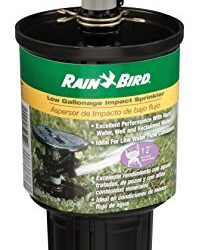
| Rain Bird 42SA+ Gear Drive Rotor | Mid-size lawns that want simple, forgiving adjustment | 26 to 38 ft radius, 4 in pop-up, preinstalled 3.0 GPM nozzle |
| Orbit 55461 Voyager Gear Drive Rotor, 2-Pack | Household systems adjusted with a plain screwdriver | Up to 35 ft radius per the listing, 4 in pop-up, 40 to 360 degree arc |
How to Choose
Radius is a range, not a promise. Every rotor listing states a radius span, such as 25 to 50 feet, and where a head actually lands inside that span depends on the nozzle fitted and the pressure at the head. The top of the range needs the largest nozzle and healthy pressure; the bottom of the range is what the smallest nozzle delivers. Plan your layout around the middle of the stated range, not the headline maximum, so the pattern still reaches when pressure dips on a long lateral line or when several zones share a modest supply.
Coverage means head-to-head spacing. Even the best rotor applies less water at the very edge of its throw, so sprinkler layouts overlap patterns on purpose: each head is spaced so its stream reaches the next head. In practice that means spacing heads at roughly the radius you have dialed in, not at the maximum the box advertises. A 50 foot rotor spaced 50 feet apart leaves seams; the same head spaced for a 38 to 42 foot working radius, with the nozzle chosen to match, waters evenly. When you compare heads for coverage, compare the radius you can honestly space them at.
The spray pattern decides evenness inside the radius. A single hard stream tends to dump water at the far edge and leave the middle dry. Designs that break the stream into droplets of mixed sizes, such as Rain Bird’s Rain Curtain nozzles, put water down along the whole arc of the throw, including close to the head. Multi-nozzle racks matter for the same reason: swapping nozzles lets you match flow to arc, so a head watering a quarter circle does not apply water four times as fast as the full-circle head beside it. Matched flow across arcs is what makes a whole zone green instead of striped.
Arc range shapes coverage around obstacles. Lawns are rarely open circles. A rotor that adjusts from 40 degrees to a full 360 covers corners, edges and open middle runs with one model, while a head whose arc begins at 50 degrees cannot serve a narrow corner without overspray. Check the minimum arc against the tightest corner in your yard, and prefer through-the-top adjustment, which lets you set and check the pattern while the head is running instead of guessing with the water off.
Pop-up height protects the pattern. All four heads here rise 4 inches, the standard for most lawns. That height matters to coverage because a stream released below the top of the grass hits blades first and lands short and uneven. If your turf is kept tall or grows thick, 4 inches is the minimum to consider; if you mow short, it is ample. A head that cannot clear the grass cannot deliver its stated radius, whatever the listing says.
Inlet size and pressure set the ceiling. Three of these rotors connect on a 3/4 inch inlet, the usual size for rotor zones, and each listing assumes ordinary residential pressure. Long radius figures collapse quickly on weak supply: a head rated to 50 feet at strong pressure may throw half that at the end of an undersized line. Measure your pressure and flow before choosing the longest-throw model, because coverage you cannot feed is coverage you do not have.
Best Options
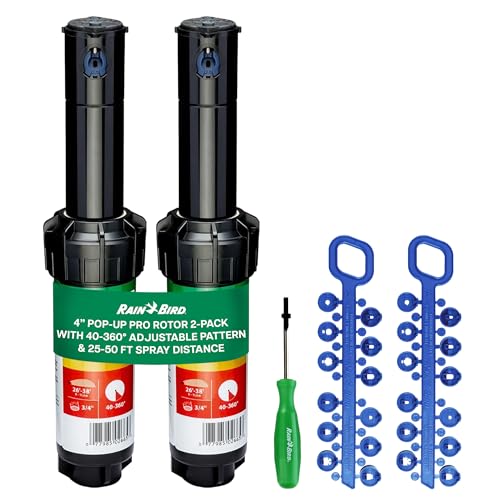
Rain Bird 5004 PC Rotor, 2-Pack (Y54007)
The 5004 PC is the coverage leader in this guide. Its listing states a spray distance of 25 to 50 feet from a 4 inch pop-up body, with the arc adjustable from 40 to 360 degrees, which makes it the head to choose when a zone has to cross a wide open lawn with as few heads as possible. Rain Curtain nozzle technology is the evenness story: the included nozzle tree carries standard angle and low angle nozzles, so the stream can be shaped to lay water along the full radius instead of piling it at the edge.
Sold as a 2-pack, it suits a first pair of long runs or a like-for-like upgrade of the two hardest-working positions in a zone. The honest limit is appetite: reaching the far end of that 50 foot range asks for the larger nozzles and the pressure to drive them, so on a weak supply this head performs like a mid-range rotor and the simpler models below make more sense.
Specs
- Radius 25 to 50 ft per the listing; 4 in pop-up height; adjustable arc 40 to 360 degrees; gear-drive rotor with Rain Curtain nozzle tree (standard angle and low angle nozzles); model Y54007; sold as a 2-pack; brand Rain Bird
Best for: Medium to large lawns where one head must cover the widest possible area evenly
Watch out for: The listing’s flow figures are inconsistent between storefronts, so plan around the radius and your own measured pressure rather than a stated flow number
Hunter PGP Ultra PGP-04 Rotor, 5-Pack
The PGP Ultra is the tuner’s pick. Its listing describes a 4 inch pop-up rotor with an adjustable arc from 50 to 360 degrees, a radius of 17 to 47 feet and flow from 0.36 to 14.8 GPM, with 34 nozzle options across the range. That nozzle depth is a coverage feature, not a gimmick: short-radius nozzles let the same body serve a narrow section at 17 feet, while the larger standard nozzles stretch it toward the top of the range on open ground, keeping precipitation matched across a mixed zone.
The drive is non-strippable with automatic arc return, so a head knocked or twisted by a mower or a curious hand returns to its set pattern instead of watering the street. Adjustment is through the top with a factory-installed rubber cover over the turret. Sold as a 5-pack, it fits a whole zone rebuild where every head should match. Note the arc floor: at 50 degrees minimum, it cannot pinch down to the narrowest corners.
Specs
- Radius 17 to 47 ft per the listing; flow 0.36 to 14.8 GPM per the listing; 4 in pop-up height; adjustable arc 50 to 360 degrees; 34 nozzle options; non-strippable gear drive with automatic arc return; 3/4 in inlet; model PGP-04; sold as a 5-pack; brand Hunter
Best for: Varied zones where nozzle choice, not just throw, decides how even the coverage is
Watch out for: The 50 degree minimum arc is too wide for tight corners, and one Hunter document states the radius ceiling 1 ft lower than the listing, so treat the top figure as approximate
Rain Bird 42SA+ Gear Drive Rotor
The 42SA+ covers the middle ground that most suburban lawns actually occupy. Its listing states a spray distance of 26 to 38 feet, a true 4 inch pop-up and an arc adjustable from 40 to 360 degrees, with a preinstalled 3.0 GPM nozzle so the head waters sensibly out of the box at common residential pressure. Rain Curtain nozzles handle the evenness work here too, producing the larger droplets that resist wind drift on exposed lawns.
Adjustment is deliberately simple, with a quick check feature that lets you confirm the arc while the rotor runs, which shortens the walk-back-and-forth that setting rotors usually involves. The closed-case, water-lubricated gear drive suits sandy or gritty soil, where open mechanisms wear early. It gives up the extreme reach of the 5004 above, and in exchange asks less of your pressure and your patience.
Specs
- Radius 26 to 38 ft per the listing; 4 in pop-up height; adjustable arc 40 to 360 degrees; preinstalled 3.0 GPM nozzle; 3/4 in female inlet; water-lubricated gear drive with Rain Curtain nozzle; model 42SA+; brand Rain Bird
Best for: Mid-size lawns that want dependable, even coverage with the least adjustment fuss
Watch out for: A single fixed nozzle is fitted, so very low pressure zones may need a nozzle swap to reach the stated radius
Orbit 55461 Voyager Gear Drive Rotor, 2-Pack
The Voyager is the household-grade option, built around adjustment with a standard slotted screwdriver instead of a brand key. Its listing gives each rotor up to 35 feet of radius coverage, a 4 inch pop-up height and an arc adjustable from 40 to 360 degrees, with the radius reducible to 75 percent of maximum for shorter runs. The 2-pack is described as covering up to 70 linear feet, which frames it honestly: a pair of these handles a modest rectangular lawn or one side of a larger one.
Gear drive keeps it quiet in operation, and the 3/4 inch inlet matches standard rotor plumbing. It cannot match the reach or nozzle depth of the professional heads above, and its listing has a known quirk, covered below, so check what arrives. For a small system where coverage needs are modest and tools should stay simple, it remains a reasonable fit.
Specs
- Radius up to 35 ft per head per the listing; 4 in pop-up height; adjustable arc 40 to 360 degrees; radius adjustable down to 75 percent of maximum; 3/4 in inlet; gear-drive rotor; model 55461; sold as a 2-pack; brand Orbit
Best for: Small to medium lawns where simple screwdriver adjustment matters more than maximum reach
Watch out for: Buyer questions on the listing report mix-ups between Voyager generations and a lookalike model, so confirm the head and model number when the box arrives
Which One Fits
- Choose the Rain Bird 5004 PC if your lawn is wide and open and you want the fewest heads covering the most ground, provided your pressure can feed a long throw.
- Choose the Hunter PGP Ultra if your zones mix long and short runs and you want nozzle choice to keep coverage even across all of them.
- Choose the Rain Bird 42SA+ if your lawn sits in the 26 to 38 foot band and you value a preinstalled nozzle and quick arc checks over extreme reach.
- Choose the Orbit Voyager if the system is small, the budget of effort is low, and every adjustment should happen with a screwdriver you already own.
Common Mistakes
Spacing heads at the maximum radius. The headline figure is the edge of the pattern, where application is thinnest. Spacing at maximum guarantees dry seams; space head-to-head at the radius you have actually dialed in.
Mixing rotors with different flows on one zone. A head throwing 50 feet and a head throwing 30 feet on the same line apply water at different rates unless their nozzles are matched to their arcs. Keep one rotor family per zone, or balance nozzles deliberately.
Setting the arc with the water off. Guessing the pattern on a dry lawn leads to overspray on paths and missed corners. Adjust through the top while the zone runs, then walk the edge of the pattern and check where water actually lands.
Ignoring pressure until the heads disappoint. Radius figures assume healthy pressure at the head. Long lines, small pipe and tired valves all shave feet off the throw, so measure first and choose the model your supply can feed.
Judging coverage in the first minute. Patterns look fuller once the stream settles and the ground wets evenly. Let a zone run a full cycle, then check soil moisture at the head, at mid-radius and at the edge before changing anything.
FAQ
How far apart should pop-up rotors be spaced for even coverage?
Space them head-to-head: the distance between heads should roughly equal the working radius each head is set to, so every point in the zone is reached by at least two patterns. For a rotor dialed to 35 feet, that means heads about 35 feet apart, not the 50 feet a longer model advertises at maximum.
Does a longer radius always mean better coverage?
No. A long throw helps only when pressure and nozzle size support it, and an oversized rotor reduced to a short radius often waters less evenly than a mid-range head running near its design point. Match the head’s comfortable range to your lawn’s dimensions first, then use arc and nozzle choice to tidy the edges.
What pop-up height do I need for good coverage?
Four inches, the height of every head in this guide, suits most lawns because the riser clears typical grass so the stream can arc freely. If your turf is kept unusually tall or thick, the stream will clip blades and fall short, and a taller body is worth considering before blaming the rotor’s radius.
Can I mix these rotors with another brand on the same zone?
You can, provided the inlet threads match and the precipitation rates are balanced with nozzle choice, but mixing families makes even coverage harder to achieve. A zone of identical heads with matched nozzles is far easier to space, set and troubleshoot, so replace a full zone at a time where you can.
Final Verdict
For the widest, most even coverage per head, the Rain Bird 5004 PC leads on its 25 to 50 foot radius and Rain Curtain pattern. The Hunter PGP Ultra is the better tool when a zone mixes distances and nozzle tuning decides the result. The Rain Bird 42SA+ covers the typical mid-size lawn with the least fuss, and the Orbit Voyager serves small systems that prize simple adjustment. Whichever you choose, space the heads head-to-head and set the arcs under pressure: layout, not headline radius, is what turns a rated throw into a uniformly green lawn.