Key takeaways
- Compare 4 automatic-filter-cleaning dust extractors for pro workspaces, with HEPA filtration, airflow, tank size and auto-clean cycles explained.
In a professional workspace, the real decision is not whether a dust extractor feels strong during the first ten minutes, but whether it still pulls properly after an hour of fine sanding, cutting or grinding dust has loaded its filter. A clogged filter quietly cuts airflow, leaves more dust at the tool, and forces stops to shake or swap filters. Automatic filter cleaning changes that calculation, because the machine clears its own filter during work and keeps suction steadier across a long session.
This guide is for workshop owners, remodelers, concrete and drywall crews, and facilities teams who run dust-producing tools every day. The picks were chosen from Amazon titles and specifications that name automatic, AutoClean or AutoCleanPlus filter cleaning directly, alongside tank size, airflow in CFM, motor amperage and filtration type. Every model below is a corded professional extractor, not a general shop vacuum with a manual filter tap.
Quick Picks
As an Amazon Associate we earn from qualifying purchases
| Product | Best for | Key spec from title |
|---|---|---|
| DEWALT DWV010 HEPA Dust Extractor | Mobile remodeling crews | 8-gallon with automatic filter cleaning |
| Bosch VAC090AH Dust Extractor | Concrete and silica dust work | 9-gallon with Auto Filter Clean and HEPA filter |
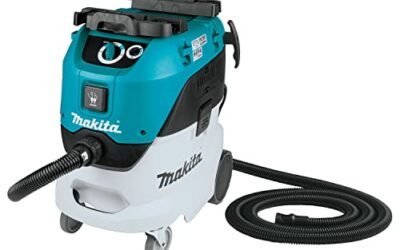
| Makita VC4210L Dust Extractor | Quiet indoor workspaces | 11-gallon wet/dry HEPA filter dust extractor |
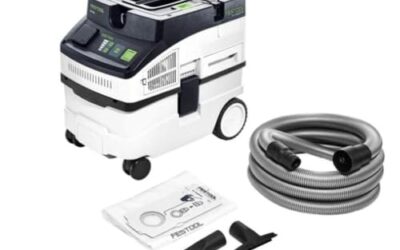
| Metabo ASR 35 AutoCleanPlus | Continuous heavy-duty extraction | 9-gallon AutoClean HEPA, 157 CFM |
How to Choose
Check How the Auto-Clean Cycle Actually Works
Automatic cleaning is not one single mechanism, so read the listing wording closely before comparing models. The DEWALT DWV010 and Bosch VAC090AH describe timed cleaning, pulsing the filter every 30 seconds and every 15 seconds respectively, which suits steady fine-dust work where loading is predictable. The Metabo ASR 35 AutoCleanPlus instead describes impulse cleaning triggered when suction performance falls, so it reacts to actual filter loading. Timed systems are simple and predictable, while demand-based systems may clean less often on lighter dust. Either approach beats stopping work to remove and shake a filter by hand.
Match Airflow and Tank Size to Your Dust Volume
Airflow, listed in CFM, shows how much air the extractor moves, and tank size shows how long it can work before emptying. A compact 8-gallon unit such as the DEWALT DWV010 suits a crew moving between rooms, where a smaller body is carried or rolled many times a day. A larger 11-gallon Makita VC4210L suits a fixed bench or a long sanding session where stopping to empty interrupts the job. Do not choose capacity alone, though: a big tank paired with modest airflow will still struggle at a demanding tool port.
Confirm the Filtration Level Your Work Requires
Fine dust work is where filtration claims need the closest reading. Several picks here carry HEPA filtration, and the Makita listing describes a two-stage system capturing 99.95 percent of particles at 2 microns and larger, with a certified HEPA main filter for smaller particles. Check which filter is included in the box rather than assuming the highest-rated filter ships fitted, because some extractors meet a particular rule only with a specific filter set installed. If your work involves concrete, drywall or renovation dust, match the included filter and bag setup to that requirement before ordering.
Plan Around Power, Hose and Tool Activation
These are corded machines drawing serious current, with listings ranging from 11 amps on the Metabo to 15 amps on the DEWALT, so check what else shares the circuit in your workspace. Tool-activated outlets, where the extractor starts and stops with the connected tool, reduce both noise and wasted running time, and several picks here offer that function. Also confirm hose length and the included adapters against your own tools. A sander, track saw and concrete grinder rarely share one port size, and an adapter bought later can delay an otherwise ready setup.
The 4 Best Options
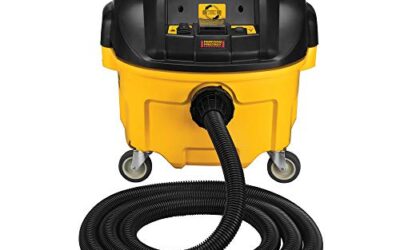
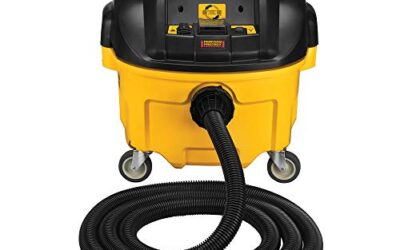
DEWALT DWV010 HEPA Dust Extractor with Automatic Filter Cleaning, 8-Gallon
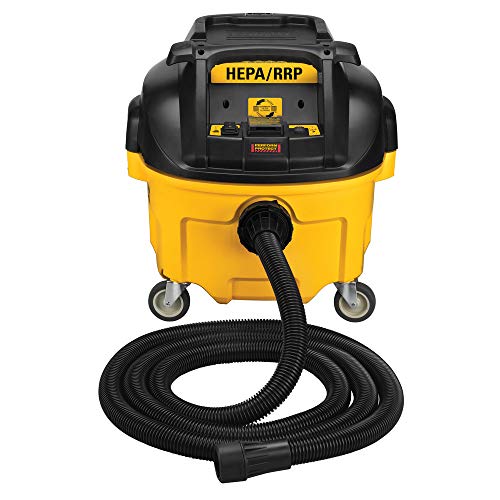
The DEWALT DWV010 fits professional workspaces that move constantly, because its 8-gallon body is the most portable format in this group while still offering automatic filter cleaning that pulses every 30 seconds. That frequent cycle suits drywall sanding, remodeling and renovation dust, where fine powder loads a filter quickly and a lighter machine gets carried between rooms. Its 15-amp motor and tool-actuated operation suit crews who connect one main tool, work a room, then move on, rather than leaving an extractor parked at one bench all week.
Specs
- Brand: DEWALT
- Model: DWV010 HEPA Dust Extractor
- Capacity: 8 gallons
- Motor: 15 amp
- Airflow: 155 CFM of airflow, as stated in the Amazon listing description
- Filtration: HEPA
- Filter cleaning: Automatic filter cleaning
Best for: Mobile remodeling and drywall crews who need frequent automatic cleaning in a smaller, easier-to-carry extractor.
Watch out for: The 8-gallon tank fills sooner on high-volume work, so plan more frequent emptying than with the larger picks.
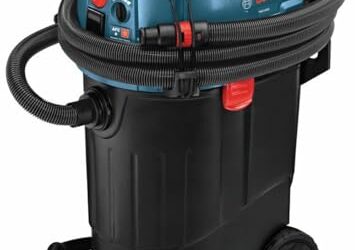
Bosch VAC090AH Portable 9 Gallon Dust Extractor with Auto Filter Clean and HEPA Filter

The Bosch VAC090AH suits workspaces dealing with concrete and other fine, heavy dust, where its automatic filter cleaning runs every 15 seconds, the most frequent timed cycle in this group. That rhythm is aimed at maintaining maximum suction while grinding, cutting or drilling loads the filter continuously. The 9-gallon tank sits between the compact DEWALT and the larger Makita, making this a balanced choice for a workshop or jobsite crew that wants strong dust control without stepping up to the biggest body. The included hose and power tool adapter nozzle support direct tool connection.
Specs
- Brand: Bosch
- Model: VAC090AH 9-Gallon Dust Extractor
- Capacity: 9 gallons
- Filtration: HEPA filter
- Filter cleaning: Automatic filter cleaning every 15 seconds
- Included components: HEPA flat filter, fleece filter bag, 9.85 ft vacuum hose, bend nozzle and power tool adapter nozzle
Best for: Concrete, masonry and silica-related dust work where frequent automatic cleaning helps hold suction during long runs.
Watch out for: Confirm the included fleece bag and filter setup matches your dust type, since fine concrete dust consumes bags quickly.
Makita VC4210L 11 Gallon Wet/Dry HEPA Filter Dust Extractor/Vacuum

The Makita VC4210L is the pick for indoor professional workspaces that need capacity and wet and dry capability in one machine. Its 11-gallon container is the largest here, and the Amazon listing describes an innovative automatic filter-cleaning system with a two-stage filtration setup using main Nano filters to maximize container volume. A 12-amp motor generating 148 CFM and 92 inches of water lift gives it strong stated suction for concrete and woodworking applications. This is a sensible central extractor for a busy shop that would rather empty less often and handle occasional wet pickup without swapping machines.
Specs
- Brand: Makita
- Model: VC4210L 11 Gallon Wet/Dry HEPA Filter Dust Extractor/Vacuum
- Capacity: 11 gallons
- Motor: 12 amp
- Airflow: 148 CFM
- Water lift: 92 inches
- Filtration: Two-stage filtration with main Nano filters, capturing 99.95 percent of particles 2 microns and larger
Best for: Fixed workshops and indoor crews wanting the largest tank here, wet and dry use, and automatic filter cleaning.
Watch out for: The larger 11-gallon format takes more floor and storage space, so measure its parking spot in a crowded workspace.
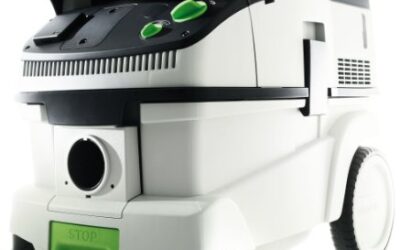
Metabo ASR 35 AutoCleanPlus 11 AMPS 9 Gallon AutoClean HEPA All-Purpose Vacuum Cleaner 157 CFM (602057800)
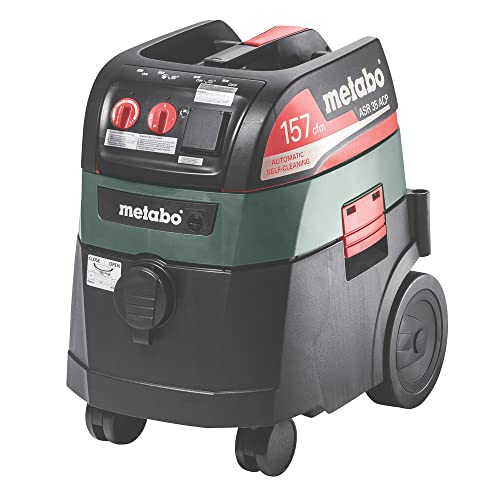
The Metabo ASR 35 AutoCleanPlus suits continuous, heavy-duty extraction where filter loading varies through the day. Instead of relying only on a fixed timer, its AutoCleanPlus system uses automatic MPulse impulse filter cleaning during continuous use, vibrating the filters when optimum suction performance falls below a set level. That makes it a strong fit for concrete and rock dust, mixed workshop work and long tool-connected sessions where dust load is uneven. The stated 157 CFM is the highest airflow figure in this group, and the 9-gallon tank keeps the body manageable for a machine aimed at sustained professional use.
Specs
- Brand: Metabo
- Model: ASR 35 ACP HEPA, model number 602057800
- Capacity: 9 gallons
- Motor: 11 amps, as stated in the Amazon listing title
- Airflow: 157 CFM
- Filtration: HEPA
- Filter cleaning: AutoCleanPlus automatic impulse filter cleaning
Best for: Workshops and sites running continuous extraction with uneven dust loads, where cleaning triggered by falling suction fits better than a fixed timer.
Watch out for: Check the filter cassette type it uses against your spares stock, since it differs from the flat-filter designs in this group.
Which One Fits Your Situation
You Move Between Rooms or Jobs All Day
Choose the DEWALT DWV010. Its 8-gallon format is the easiest in this group to carry, load and reposition, and its automatic cleaning every 30 seconds keeps fine drywall and remodeling dust from quietly choking the filter while you work. The trade-off is more frequent emptying, which most mobile crews accept in exchange for a machine that does not slow them down between rooms.
You Cut, Grind or Drill Concrete Regularly
Choose the Bosch VAC090AH. Its automatic cleaning every 15 seconds is the most frequent timed cycle here, which suits the relentless fine dust that concrete work produces. The 9-gallon tank and HEPA filter fit a crew focused on dust control at the tool, and the included power tool adapter nozzle helps connect grinders and similar equipment directly.
You Want One Central Extractor for a Busy Shop
Choose the Makita VC4210L. The 11-gallon tank means fewer stops to empty during long sanding or cutting sessions, and wet and dry capability covers spills and damp cleanup without a second machine. Its automatic filter-cleaning system and two-stage filtration suit a fixed workspace where one extractor serves several benches and tools across the week.
Your Dust Load Changes From Hour to Hour
Choose the Metabo ASR 35 AutoCleanPlus. Its impulse cleaning responds when suction performance drops, rather than cleaning on a fixed schedule whether the filter needs it or not. That suits mixed work, such as alternating between light wood dust and heavy concrete dust, and its stated 157 CFM airflow supports demanding tool-connected extraction during continuous use.
Common Mistakes
- Buying a standard shop vacuum and assuming it has automatic filter cleaning, when the listing only describes a manual filter or no cleaning system at all.
- Comparing tank size alone and ignoring airflow in CFM, so a large extractor still underperforms at the tool port.
- Assuming a HEPA claim covers every job, without checking which filter is actually included and fitted for your dust type.
- Ignoring motor amperage and overloading a shared workshop circuit by running the extractor and a large tool together.
- Forgetting hose and port adapters, so the extractor arrives but cannot connect cleanly to the tools it was bought for.
Frequently Asked Questions
How does automatic filter cleaning actually help during a workday?
It clears dust from the filter while the extractor keeps working, instead of waiting for you to stop, open the machine and shake the filter out. That keeps airflow steadier during fine-dust jobs such as drywall sanding or concrete grinding, where a filter can load within a single session. Suction still depends on bags, hose condition and correct filters, but automatic cleaning removes a common cause of performance loss.
Is a timed cleaning cycle better than cleaning triggered by suction loss?
Neither is universally better, because they solve slightly different patterns. Timed systems, such as cleaning every 15 or 30 seconds, are predictable and suit steady fine dust that loads a filter at a constant rate. Triggered systems clean when suction performance falls, which can suit mixed work with uneven dust loads. Match the approach to how consistent your dust production is, rather than treating one mechanism as automatically superior.
Do these extractors still need filter bags with automatic cleaning?
In most professional setups, yes, bags remain part of the system. A bag captures the bulk of the dust before it reaches the main filter, which reduces how hard the automatic cleaning has to work and makes emptying cleaner. Running bagless with fine dust usually loads the filter faster and shortens its useful life. Always follow the bag and filter combination the listing describes for your model and dust type.
Can one of these extractors serve several different power tools?
Yes, provided the hose and adapters fit each tool port and the airflow suits the most demanding tool you connect. Many professional workspaces keep one extractor and swap it between a sander, saw and grinder using the included or correct adapters. Check port diameters before buying, and remember that a tool-activated outlet only helps if each tool is compatible with that socket and its power draw.