Key takeaways
- Find the best automatic-filter-cleaning dust extractors for woodworking and jobsite dust control, with HEPA filtration, tool activation and steady suction.
Introduction
Fine dust is the hardest part of woodworking and remodeling to manage. A sander or concrete grinder can fill a room with dust in minutes, and a standard shop vacuum loses suction fast once its pleated filter loads up with fine particles. The filter blinds over, airflow drops, and the tool throws more dust into the air instead of into the drum. Stopping work to tap or wash a filter breaks the rhythm of a job and leaves dust on every surface.
Dust extractors with automatic filter cleaning solve that problem at the source. These machines pulse, shake, or back-flush their own filters on a timer while work continues, knocking dust off the filter surface and back into the collection drum, so airflow stays steadier through a long sanding session.
This guide covers four dust extractors sold on Amazon US that list automatic filter cleaning as a stated feature, from a compact 8-gallon jobsite unit to an 11-gallon wet and dry extractor for a fixed workshop. All four pair the cleaning cycle with HEPA filtration and a tool-activated outlet, so the extractor starts and stops with the power tool connected to it.
How to Choose an Automatic-Filter-Cleaning Dust Extractor
Start with the cleaning cycle itself. Listings state the interval between cleaning pulses, and it varies by model: the Bosch in this guide cleans every 15 seconds, the YOWMOFT every 20 seconds, and the DeWalt every 30 seconds. A shorter interval keeps the filter clearer during heavy fine-dust work, such as drywall sanding, where the filter loads up fastest. The Makita lists an automatic filter-cleaning system without a stated interval in the material checked.
Next, look at drum capacity. An 8-gallon drum suits a mobile setup that moves from room to room, because the machine stays light enough to carry and roll through doorways. A 9-gallon drum holds more debris between emptying, which helps on longer jobs. An 11-gallon drum, like the one on the Makita in this guide, suits a fixed workshop where the extractor stays in one place and the extra capacity means fewer trips to empty it. A machine rated for wet and dry work can also handle spills and slurry, while a dry-only unit cannot.
Airflow, measured in cubic feet per minute, tells how much air the machine moves, and water lift tells how hard it pulls at the hose end. Both numbers come from the maker, so they are best used to compare machines or to get a general sense of scale. A figure around 148 to 151 CFM, which three of the machines in this guide carry, is a solid middle ground for sanding and routing work.
Filtration decides what happens to the finest dust. HEPA filtration is the standard to look for when the work involves silica dust from concrete, fine drywall dust, or long hours of sanding in an enclosed room. A HEPA filter is rated to capture particles down to 0.3 microns, which covers the fine dust that stays airborne longest. All four machines in this guide list HEPA filtration. Check whether the listing names a HEPA filter, a main flat filter, or a two-stage system, and check what replacement filters and bags are listed for the model before ordering.
Tool activation ties the extractor to the work. An on-board outlet lets a power tool switch the extractor on and off, so the machine runs only while the tool runs and keeps running for a short delay after the tool stops to clear the hose. Check the maximum tool current the outlet supports: the YOWMOFT lists a 5-amp limit for connected tools, so larger tools need a different arrangement. Hose size, cord length, weight, and wheels decide how pleasant the machine is to live with, and weight matters most when the machine goes up stairs or into a van.
Top Picks
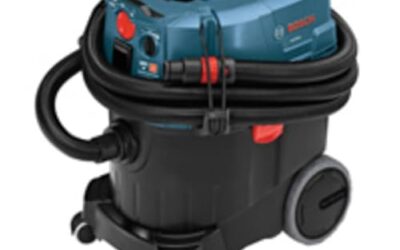
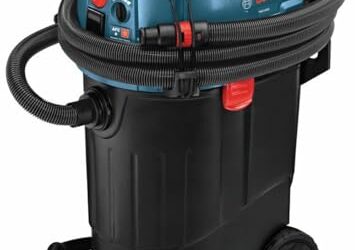
1. Bosch VAC090AH Portable 9-Gallon Dust Extractor with Auto Filter Clean and HEPA Filter

The Bosch VAC090AH is a 9-gallon portable dust extractor built around an automatic on-board filter-cleaning system that activates every 15 seconds to help maintain suction power. That 15-second interval is the shortest cleaning cycle among the machines in this guide, which makes this unit a strong match for fine-dust work where the filter loads up quickly. The listing states that the included HEPA filter captures 99.7 in 100 particles at 0.3 microns, keeping fine dust inside the machine instead of letting it pass back into the room.
Power tool activation is built in: the connected power tool’s activation switch serves as the on and off switch for the vacuum, so the extractor runs with the tool and stops when the tool stops. The listing describes the machine as a complete package designed to help users move toward compliance with the OSHA silica dust regulation, which governs dust control on concrete and masonry work. The 9-gallon drum holds enough debris for a long sanding session without making the machine hard to move, and the portable form suits a contractor who carries the extractor from room to room or from site to site.
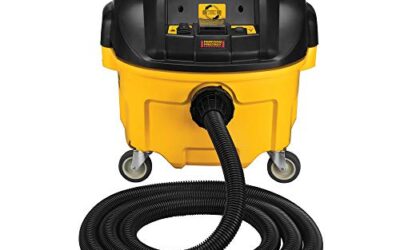
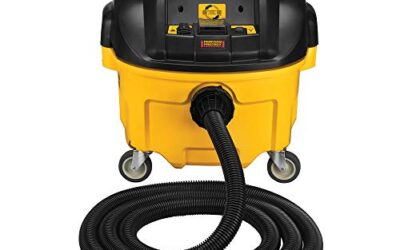
2. DEWALT DWV010 HEPA Dust Extractor with Automatic Filter Cleaning, 8-Gallon
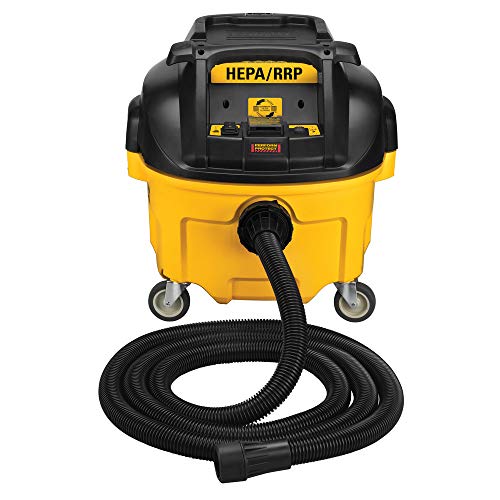
The DEWALT DWV010 is an 8-gallon HEPA dust extractor with a 15-amp motor and an automatic filter-cleaning system that pulses every 30 seconds. The maker rates its airflow at 150 CFM, and the 8-gallon drum keeps the machine compact enough to move around a jobsite without a second pair of hands. The listing states that the automatic filter pulses keep the machine running without downtime for manual filter cleaning, which is the core promise of this category.
Power tool actuation is built in, so the extractor starts and stops with the connected power tool. The HEPA filtration in the listing suits silica dust and fine drywall dust, and the 15-amp motor gives the machine enough pull for sanders, routers, and grinders used in remodeling work. At 22 lb in the material checked, the DWV010 is the lightest machine in this guide, and that weight matters when the extractor goes up stairs, into a van, or across a finished floor.
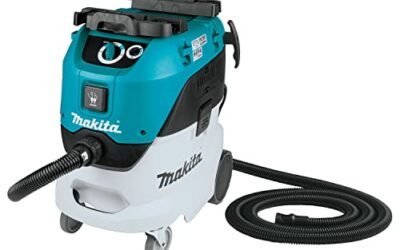
3. Makita VC4210L 11-Gallon Wet/Dry HEPA Filter Dust Extractor

The Makita VC4210L is an 11-gallon wet and dry HEPA dust extractor with an automatic filter-cleaning system, a 12-amp motor, and a maker-rated airflow of 148 CFM with 92 inches of water lift. The 11-gallon drum is the largest in this guide, and the wet and dry rating means the machine handles spills and slurry as well as dry dust. The listing states that the automatic filter-cleaning system extends filter life and keeps performance steady without manual work, and that the certified HEPA main filter captures particles down to 0.3 microns.
The two-stage filtration system pairs a main flat filter with the HEPA filter, and the listing states that the main filter captures particles 2 microns and larger. An on-board tool-activated outlet starts and stops the extractor with power tool use, with a 10-second off delay that clears remaining debris from the hose after the tool stops. The working sound level is listed at 60 dB(A), the quietest published figure among the machines in this guide, and the machine weighs 35.3 lb in the material checked.
4. YOWMOFT 8-Gallon Dust Extractor for Woodworking, 150 CFM, CVLA30 Auto HEPA Clean
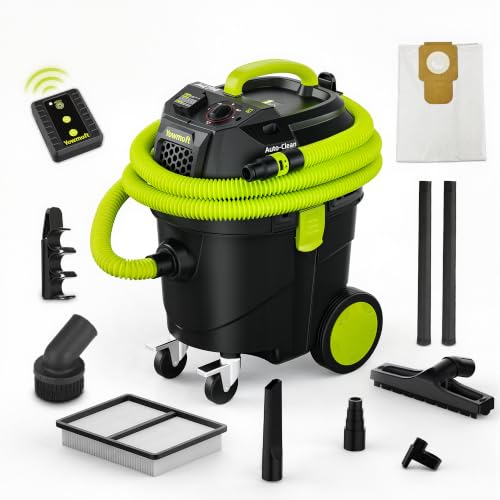
The YOWMOFT CVLA30 is an 8-gallon dust extractor for woodworking with automatic HEPA filter cleaning every 20 seconds, a remote control, and a power tool connector. The maker rates its 1200-watt motor at 150 CFM with 96 inches of water lift, and the 8-gallon drum suits a bench setup that collects dust from one tool at a time. The listing states that the automatic HEPA clean maintains suction by periodically cleaning the filter without manual work, and that the cycle starts every 20 seconds to prevent dust buildup.
A remote control in the package adjusts power and suction from within range, so the operator can change settings without walking back to the machine. Integrated auto start synchronizes the extractor with a connected power tool up to 5 amps, and a delayed start mechanism prevents current overload when the machine powers up. The listing states that the machine handles dust, debris, and liquids, which gives it a second role in general workshop cleanup. It weighs 35.2 lb in the material checked.
Comparison Table
| Product | Key Feature | Best For |
|---|---|---|
| Bosch VAC090AH | Automatic filter cleaning every 15 seconds, HEPA filter, 9-gallon drum | Fine-dust work that needs the most frequent cleaning cycle |
| DEWALT DWV010 | Automatic filter cleaning every 30 seconds, 15-amp motor, 8-gallon drum | Portable jobsite use and light weight |
| Makita VC4210L | Automatic filter cleaning, 11-gallon wet and dry drum, 148 CFM | Fixed workshops, large capacity, and quiet running |
| YOWMOFT CVLA30 | Automatic HEPA cleaning every 20 seconds, remote control, 150 CFM | Bench setups that benefit from remote power and suction control |
Buying Guide
Choosing between these four machines comes down to where the extractor will live, what dust it will collect, and which tools it will serve. Drywall sanding and concrete grinding produce the finest dust and load a filter fastest, so they benefit most from a short cleaning interval and HEPA filtration. The Bosch, with its 15-second cycle, and the YOWMOFT, with its 20-second cycle, are the closest matches for that work. General woodworking with a sander or router produces coarser dust that loads a filter more slowly, so the DeWalt at 30 seconds and the Makita with its general automatic system both serve well.
Next, measure the space. A small shop with one bench and one sander does not need an 11-gallon drum, and a heavy machine that stays in one corner can be a burden in a tight room. An 8-gallon machine on wheels moves easily, fits beside a bench, and empties quickly. A larger shop with several tools, or a crew that sands all day, benefits from the Makita’s 11-gallon drum and its wet pickup, because the machine empties less often and handles more kinds of mess.
Check the tool connection before ordering. Look at the tools that will connect to the extractor and note their current draw. A small random-orbit sander draws far less than a large router or a concrete grinder, and the extractor’s tool outlet has a limit. The YOWMOFT lists a 5-amp limit, so check each tool against that number. Also check the hose size against the tools: a 2-1/4 inch hose with the right adapter fits most sanders, while a dust port of a different size may need an adapter that is not in the box.
Filtration and bags deserve a close look as well. A HEPA filter is the right choice for silica dust and for work in occupied homes, where dust escaping the machine settles on furniture and stays in the air. Check whether the machine uses fleece filter bags, plastic disposal bags, or a bare drum, and check the availability of replacement filters and bags for the model. A machine with easy-to-find consumables costs less to run over a year than a machine with hard-to-find filters. The Makita lists fleece and plastic bags in its package, which is a useful starting point.
Noise matters more than most buyers expect. An extractor runs for hours at a time, often in a room with the operator, and a loud machine makes a long day harder. The Makita lists a working sound level of 60 dB(A), the quietest figure in this guide. The other machines do not state a sound figure in the material checked, so treat noise as an open question for them and check the listing for a stated figure before ordering.
Maintenance is the last piece of the buying decision. Automatic cleaning reduces filter work, but it does not remove it entirely. Filters still need inspection, bags still need changing, and the drum still needs emptying before it overfills. Check the manual for the cleaning and replacement schedule of the model, and keep a spare filter and a pack of bags on hand so a loaded filter never stops a job. A machine that is easy to open, empty, and reassemble will get maintained on time, while a machine that fights the operator will get neglected until suction falls off.
Finally, confirm the listing before ordering. Check that the model number on the listing matches the model in this guide, that the listing states automatic filter cleaning, and that the drum size and motor figures match what is described here.
Frequently Asked Questions
How does automatic filter cleaning work on a dust extractor?
Automatic filter cleaning uses a timed pulse or shake to knock dust off the filter surface and back into the collection drum. The machine runs the cycle on its own while work continues, so suction stays steadier than it would if the filter loaded up untouched. The interval varies by model: the Bosch in this guide cleans every 15 seconds, the YOWMOFT every 20 seconds, and the DeWalt every 30 seconds. The Makita lists an automatic system without a stated interval in the material checked. The cycle does not replace filter inspection or bag changes, but it stretches the time between manual cleaning stops.
Do I still need HEPA filtration if the extractor cleans its own filter?
Yes, because the two features do different jobs. Automatic cleaning keeps airflow steady by clearing dust off the filter, while HEPA filtration decides how fine the dust is that the filter captures. A HEPA filter is rated to capture particles down to 0.3 microns, which covers the fine silica and drywall dust that stays airborne longest. All four machines in this guide list HEPA filtration alongside automatic cleaning, and that pairing is the right combination for fine-dust work in enclosed rooms.
What size dust extractor do I need for a small workshop?
An 8-gallon machine suits a small workshop with one bench and one tool running at a time, because it moves easily and empties quickly. The DeWalt DWV010 and the YOWMOFT CVLA30 in this guide are both 8-gallon machines, and either one fits a bench setup well. A 9-gallon machine like the Bosch adds a little capacity without much extra bulk, while an 11-gallon machine like the Makita suits a larger shop or a crew that sands all day. Match the drum to the amount of dust the job produces between emptying stops, not just to the size of the room.
Can a dust extractor with automatic filter cleaning handle wet pickup?
Only if the listing states wet and dry use. The Makita VC4210L in this guide is rated for wet and dry pickup, and the YOWMOFT listing states that it handles dust, debris, and liquids. The Bosch and DeWalt listings checked for this guide describe dust extraction without stating wet pickup, so do not use them for liquids unless the listing for the unit ordered states wet use. Using a dry-only machine for wet pickup can damage the motor and the filter, so check the listing and the manual before mixing liquids with a dust extractor.
Conclusion
Automatic filter cleaning changes how a dust extractor behaves through a long job. Instead of suction fading as the filter loads up, the machine clears its own filter on a timer and holds airflow steadier from the first cut to the last. That steadier airflow means less dust in the air, less dust on the workpiece, and fewer stops to clean a filter by hand.
The four machines in this guide cover the main shapes of that idea. The Bosch VAC090AH cleans its filter every 15 seconds and pairs that short cycle with HEPA filtration in a portable 9-gallon body, which suits fine-dust work that loads a filter fast. The DEWALT DWV010 is the lightest machine here, with a 15-amp motor, a 30-second cleaning pulse, and an 8-gallon drum that moves easily around a jobsite. The Makita VC4210L is the workshop machine, with an 11-gallon wet and dry drum, a 148 CFM maker rating, a 10-second tool delay, and the quietest published sound figure in this guide. The YOWMOFT CVLA30 adds remote control and a 20-second cleaning cycle to an 8-gallon bench machine, with a 5-amp tool outlet limit to check before ordering.
Pick the machine that matches the dust, the tools, and the space. Fine drywall and concrete dust point toward the shortest cleaning interval and HEPA filtration. A small bench setup points toward an 8-gallon machine with remote control or light weight. A fixed workshop with long sessions points toward the largest drum and the quietest running. Check the listing for the model ordered, confirm the automatic cleaning feature and the tool outlet limit, and keep spare filters and bags on hand.
Disclosure: As an Amazon Associate, we earn from qualifying purchases.