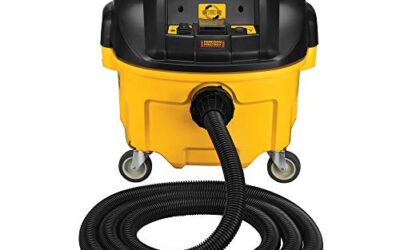
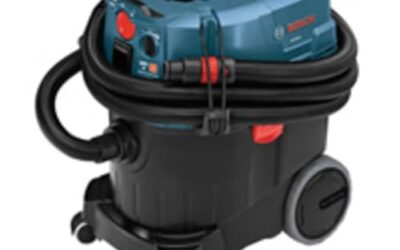
Key takeaways
- Compare HEPA dust extractors for fabrication workshops by airflow, auto-start, filter cleaning and capacity to control metal, wood and silica dust.
Fabrication workshops produce a difficult mix of dust. A single shift can involve cutting and grinding metal, sanding timber or composites, drilling, and routing, leaving fine residue that hangs in the air, works into motors, and coats finished work before painting. A cleanup vacuum helps with chips, but it is not the same tool as an extractor built to connect to a power tool, start automatically, and filter exhaust air through a certified HEPA filter.
This guide compares four corded HEPA extractors from Festool, Makita, Bosch, and Fein. Each is tool-triggered rather than a basic shop vacuum, and each suits a different balance of capacity, airflow, and filter maintenance. The right choice depends on the tools you connect, the material you cut most often, and how long suction must stay consistent between services.
As an Amazon Associate we earn from qualifying purchases
How to Choose a HEPA Dust Extractor for a Fabrication Workshop
Check what HEPA actually means on the listing
HEPA is a filtration standard, not a general promise of clean air. A true HEPA filter is rated to capture 99.97 percent of particles at 0.3 microns, the size range hardest for filters to trap. Some extractors carry full-unit HEPA certification, meaning the assembled machine, including seals and housing, has been assessed as a system. Others fit a HEPA filter into a machine not certified as a complete unit. For fine sanding dust, filler, or respirable crystalline silica from concrete and stone, that distinction matters. Look for the capture figure, the particle size, and whether the filter is standard equipment or an optional extra. If a machine needs an optional HEPA filter to reach the standard, include that filter in the setup from day one.
Also consider the filter bag. Most professional extractors use a fleece or self-cleaning bag as the first stage, holding bulk debris, protecting the HEPA filter, and making emptying cleaner. Running without the correct bag shortens filter life.
Match airflow and suction to the tool
Airflow is expressed in cubic feet per minute, or CFM, and suction as static water lift in inches. Airflow carries dust away from a sander, saw, or router hood. Water lift describes how strongly the machine pulls, which helps when the hose is long, the tool port is small, or dust must move through bends and adapters.
The extractors in this guide sit in a useful band in their manufacturer figures: roughly 130 to 153 CFM, with water lift in the low to high nineties for most of these corded models. That suits sanders, track saws, routers, mitre saws with modest ports, and small grinders fitted with extraction shrouds, provided the hose diameter and adapter match the tool. A loose adapter leaks air and dust no matter how strong the motor is, so plan on the correct coupling for each tool. Variable suction is also useful. Full power can make a random-orbit sander stick to the workpiece, while too little suction leaves dust behind. A dial or electronic control lets you tune the pull to the tool.
Look for an auto-start tool outlet
Extraction only works if it runs every time the tool runs. An auto-start, or tool-activated, outlet solves the human part of that problem. You plug the saw or sander into the extractor, and switching the tool on starts the extractor. When you release the trigger, the extractor typically runs on for a few seconds to clear dust still in the hose, then stops. The Makita listing describes a tool-activated outlet, the Fein listing material describes an autostart outlet with a power-on delay to prevent current spikes, and Festool and Bosch models in this class also provide tool-triggered operation, with some variants adding Bluetooth starting for cordless tools depending on the exact version.
Check the outlet rating against your largest tool and the total circuit load, since extractor and tool share a supply. If the shop uses mostly cordless tools, confirm how automatic starting works for them before assuming the corded outlet covers the workflow.
Understand filter cleaning systems
Fine dust blinds filters. As the filter loads, airflow falls, the tool hood captures less, and more dust escapes into the shop. Automatic filter cleaning pulses air to knock dust off the filter at intervals. Bosch listing material describes cleaning every 15 seconds to help maintain suction. Makita describes an automatic filter-cleaning system with a two-stage filtration arrangement. Fein automatic-cleaning variants are built around fully automatic filter cleaning for longer filter service life. Festool’s CT 26 E centres on a self-cleaning filter bag and main-filter care, with automatic-cleaning variants elsewhere in the range, so confirm the exact version you are buying.
Automatic cleaning is especially valuable during long sanding runs, grinding with a shroud, or any job producing a steady stream of fine powder. For intermittent cutting and general cleanup, a bag-based system checked and emptied on schedule can still perform well. Either way, no system removes the need to inspect the filter and replace bags before they are overfilled.
Choose capacity for the work cycle
Capacity is quoted in gallons or litres and describes the container, not always the usable bag volume. A compact extractor around four to seven gallons suits a single bench and moving between stations. A mid-size unit around nine to eleven gallons reduces emptying during a full day of sanding or cutting. A fourteen-gallon machine suits a shared station or longer production runs where stopping to change a bag interrupts the job.
Bigger is not automatically better. A large container is heavier when full, takes more floor space, and can encourage users to leave dust sitting too long. Match capacity to how often someone will realistically service the extractor.
Keep OSHA silica context in view
Workshops that cut, grind, or drill concrete, stone, tile, mortar, or some engineered materials must consider respirable crystalline silica rules. In the United States, OSHA silica standards set exposure limits and, for construction, Table 1 control methods that often pair a tool with a dust collector equipped with a HEPA filter and, for some tasks, a filter-cleaning mechanism. Bosch listing material frames its PRO+GUARD system as helping users move toward OSHA Silica Table 1 compliance, and several makers describe their HEPA extractors in similar terms.
An extractor alone does not make a task compliant. The shroud, tool, hose connection, filter, work practice, and any required respiratory protection all form part of the control. Check current OSHA requirements and the tool manufacturer’s instructions for your task, and for any dust, capture at source rather than dry-sweeping residue back into the air.
Noise, hoses, and everyday handling
An extractor runs for long stretches, so sound level affects fatigue. Listings quote 62 decibels on a low setting for the Festool CT 26 E, 60 dB(A) for the Makita VC4210L, and figures in the mid-sixties for Fein Turbo models. Those numbers use maker test conditions and are not directly interchangeable, but this class is generally quieter than an old utility vacuum. Anti-static hoses, built-in hose and cord storage, and locking casters all help in a busy bay.
The Extractors Compared
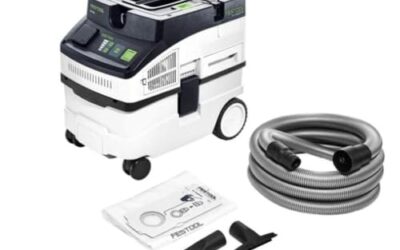
Festool 583492 CT 26 E HEPA Dust Extractor

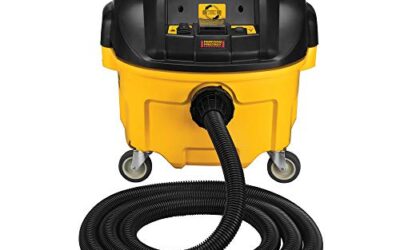
The CT 26 E is the balanced, mid-size option in Festool’s CLEANTEC range and a common choice for fabrication and finish workshops using track saws, sanders, and routers with dust ports. Its Amazon listing describes full-unit HEPA certification and a standard-equipment HEPA filter rated to remove particulate down to 0.3 microns. The listing gives a capacity of 6.9 gallons, airflow of 137 CFM, a sound level of 62 decibels on the low setting, and a weight of 28.7 pounds.
For a fabrication bench, the appeal is integration and control. Suction is adjustable, so a sander can run without excessive pull while a saw still gets strong extraction. The self-cleaning filter bag collapses as the machine cycles, helping limit dust caking and making fuller use of container volume. Hose and cord storage, a locking brake, and a flat top that accepts stacked tool cases suit a shop where the extractor lives beside a bench and moves only between nearby stations.
The trade-off is filter cleaning. This version relies on the bag system and periodic main-filter attention rather than the automatic cleaning cycle offered by some rivals. That means scheduling bag changes and filter checks, especially after long sanding sessions. Workshops that grind or sand fine material continuously may prefer an automatic-cleaning model below. Workshops that cut, route, and sand in shorter runs, and value compact handling and tool-system integration, will find the CT 26 E easy to live with. It is a sensible default for a single station handling mixed wood, composite, and light metal finishing work.
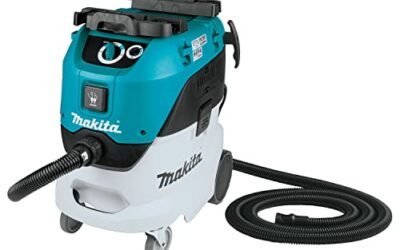
Makita VC4210L 11 Gallon Wet/Dry HEPA Filter Dust Extractor/Vacuum

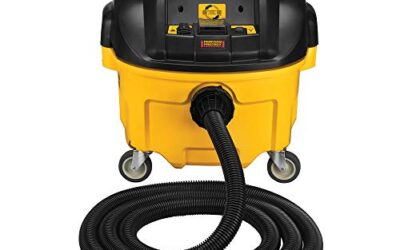
The Makita VC4210L is an eleven-gallon wet and dry extractor aimed at concrete and woodworking applications, according to its Amazon listing. The listing gives a 12-amp motor generating 148 CFM and 92 inches of water lift, an operating sound level of 60 dB(A), and a weight of about 35 pounds. It describes a certified HEPA main filter capturing 99.97 percent of particles at 0.3 microns and larger, an automatic filter-cleaning system, and a two-stage filtration arrangement.
That combination fits a workshop that splits time between dry dust and occasional wet pickup, or between wood and masonry-related tasks. The larger container means fewer interruptions on a long run, and automatic cleaning helps suction stay steadier as fine dust accumulates. The model is also described with a tool-activated outlet and a run-on period to clear the hose after the tool stops, which is exactly the behaviour needed at a saw or sander station.
Listing details include wide-set rear wheels and enlarged front casters for stability and a lower centre of gravity, plus sound-absorbing motor chamber construction. That stability matters when a hose is pulled across a bay. As with any wet and dry machine, follow the maker’s filter and bag instructions when switching between wet and dry work, because the configuration protecting a HEPA filter during dry extraction is not the same as the setup for liquid pickup. Choose the Makita when capacity, relatively quiet running for its class, and automatic filter cleaning matter more than the smallest footprint.
Bosch VAC140AH 14 Gallon Dust Extractor with Auto Filter Clean and HEPA Filter

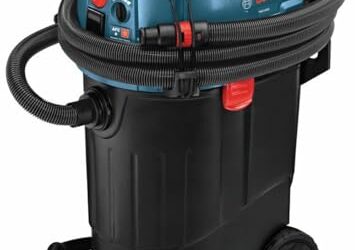
The Bosch VAC140AH is the high-capacity option in this group. Descriptions of the model give a fourteen-gallon container, maximum airflow of 150 CFM, and 97 inches of static water lift. Its HEPA filter is described as capturing 99.97 percent of particles at 0.3 microns or larger, with a fleece filter bag included to protect the filter and contain dry dust.
The defining feature is automatic filter cleaning every 15 seconds, as described in the model’s listing material. During grinding, heavy sanding, or long cutting sessions, that frequent cycle is intended to maintain suction rather than letting performance fade until someone stops to service the filter. For a shared extraction point, or a station seeing continuous fine dust, that consistency can matter more than a small difference in headline airflow.
Bosch also frames this extractor within its PRO+GUARD dust system as helping users move toward OSHA Silica Table 1 compliance, making it a natural candidate for shops that regularly work with concrete, stone, or masonry alongside metal and timber. The extractor supports power-tool activation, so the connected tool’s switch can start and stop the vacuum, keeping source capture tied to the cut itself. Suction adjustment helps match pull to the application and to available circuit capacity.
The cost of capacity and cleaning is size. A fourteen-gallon machine is a station in its own right rather than a unit to tuck under every bench. Place it where its hose reaches the main dust-producing tools, keep spare fleece bags on hand, and it suits a workshop that would rather empty less often and keep suction steady through long, dusty runs.
Fein Turbo II HEPA Set Wet/Dry Dust Extractor

The Fein Turbo II HEPA Set is a wet and dry extractor with an 8.5-gallon capacity in its Amazon listing. The listing gives a filter type of HEPA, a noise level of 66 decibels, and suction figures for the Turbo II HEPA line described as 151 CFM capacity with strong static water lift. It is positioned as a professional extractor set, so the included accessories and hose arrangement are part of the value.
Fein’s Turbo range is known for straightforward handling, an anti-static system in its listing descriptions, and a compact footprint for its capacity. This size sits between the Festool CT 26 E and the larger Makita and Bosch machines: big enough for a full session at one station, small enough to roll between a grinding bench, a sanding area, and cleanup duties without feeling like moving furniture. Wet and dry capability adds flexibility where coolant spills, wash-down residue, and dry filings can all appear in the same week.
Check the exact set contents on the listing you buy from, because the Turbo family includes standard, HEPA, and automatic-cleaning variants with similar names. The HEPA Set here is the version identified by the ASIN above. For mixed cutting, sanding, drilling, and cleanup it covers the core requirements, and it suits a smaller workshop wanting one professional extractor to move around rather than a fixed unit at a single large station.
Which One Should You Pick?
Start with the station, not the brand. For a single bench doing mixed cutting, routing, and sanding in shorter runs, the Festool CT 26 E offers a compact container, adjustable suction, and tidy storage, provided you keep on top of bag changes and filter checks. For a busier station handling wet pickup and longer dry runs, the Makita VC4210L adds capacity, automatic filter cleaning, and a tool-activated outlet.
If the workshop’s problem is sustained fine dust and frequent filter loading, look first at the Bosch VAC140AH. Its fourteen-gallon container and automatic cleaning cycle are built for continuity, and its silica-system framing is relevant where masonry materials are part of the workload. If space is tight but you still need professional HEPA extraction that moves between benches and handles wet and dry tasks, the Fein Turbo II HEPA Set is the middle path.
Extraction that requires unplugging, wheeling, and re-rigging adapters between jobs tends to get skipped, so a smaller extractor living at the bench often captures more dust than a larger machine parked across the room. Budget for the system around the machine too: hose adapters, spare bags, a replacement HEPA filter, and any grinder shroud.
Maintenance Notes
Check the filter bag at the start of a heavy job, and replace it when full or heavily loaded with fine dust, even if it could hold more chips. A coated bag is already restricting airflow. Inspect the HEPA filter at the manufacturer’s intervals and follow its cleaning guidance exactly. Do not blast it with compressed air or brush it in open air unless the instructions allow it, as poor technique can damage the media and release collected dust. Replace a filter that is damaged or no longer restores airflow.
Empty wet pickup promptly, dry the container as instructed, and refit dry filtration before dust work. Wipe hose ends and adapters so grit does not break the seal, and check the hose for splits at the inlet bend. If the extractor forms part of a silica control plan, record which filter is fitted, when bags and filters were changed, and which tool and shroud combinations it serves.
FAQ
Is a HEPA dust extractor different from a shop vacuum with a HEPA filter?
It can be. A dust extractor is designed around tool connection, automatic starting, controlled suction, and sustained filtration. Some shop vacuums accept a HEPA filter but lack full-unit certification, an auto-start outlet, or filter cleaning. Check certification wording and the tool outlet, not just the word HEPA on the box.
Do I need automatic filter cleaning?
Not for every job, but it helps where fine dust is produced continuously, such as long sanding runs or grinding with a shroud, by slowing the loss of suction as the filter loads. For intermittent cutting and drilling, a well-maintained bag-based system can be sufficient.
Can one extractor serve several tools?
Yes, if hose and adapters fit each tool and airflow and outlet rating suit the largest tool. Consider dedicating an extractor to the dustiest station.
Does a HEPA extractor make silica work compliant on its own?
No. It is one part of a system that can include a tool shroud, correct hose connection, maintained HEPA filtration, suitable work practices, and, where required, respiratory protection. Check current OSHA requirements for your task.
How often should the HEPA filter be replaced?
Follow the manufacturer’s schedule, and replace it sooner if airflow does not recover after correct cleaning and a fresh bag, or if the media is damaged. No single interval fits every workshop.
Can these extractors pick up liquids?
Several models here are described as wet and dry machines, with configurations differing by model. Reconfigure filters and bags exactly as the manual directs before wet pickup, and restore the dry HEPA configuration afterwards.