Key takeaways
- Compare the best HEPA dust extractors for renovation teams, with sealed filtration, automatic filter cleaning and suction for silica and drywall dust.
Renovation dust is not ordinary household dust. Drywall sanding fills a room in minutes, concrete grinding throws fine silica into the air, and demolition work loads every surface with particles that settle into lungs, tools, and finishes. A standard wet/dry vacuum moves the visible mess but lets the finest dust pass straight through its filter and back into the room. The real decision is not how big the tank is, but whether the machine traps the fine fraction, keeps suction steady as the filter loads, and survives a full crew day without stopping for filter changes.
This guide is for renovation teams who sand drywall, grind concrete, cut tile, and demolish rooms, plus crew leads who need one extractor that can move from job to job and meet silica dust rules. The four extractors below were chosen from the names and specifications on their Amazon listings, covering compact 8-gallon units, a 9-gallon self-cleaning model, an 11-gallon workhorse, and a quiet European extractor built for fine sanding work.
Quick Picks
As an Amazon Associate, we earn from qualifying purchases.
| Product | Best for | Key spec from title |
|---|---|---|
| DEWALT DWV010 HEPA Dust Extractor | Drywall sanding and demo cleanup | 8-gallon tank with automatic filter cleaning |
| Bosch VAC090AH Dust Extractor | Concrete grinding and silica dust work | 9-gallon tank, 150 CFM, HEPA filter |
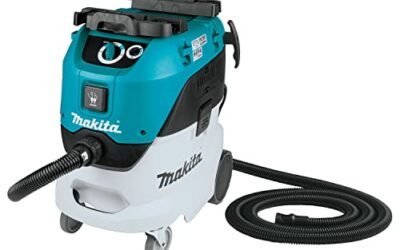
| Makita VC4210L Dust Extractor | All-day crew work and large rooms | 11-gallon tank, 148 CFM, AWS capable |
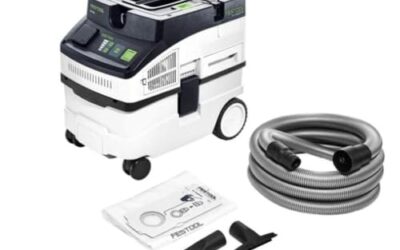
| Festool CT 26 E HEPA Dust Extractor | Fine sanding in occupied homes | 26-liter container, 1,200-watt turbine |
How to Choose
Start with sealed HEPA filtration
HEPA filtration is the feature that separates a dust extractor from a shop vacuum. A true HEPA filter captures 99.97 percent of particles at 0.3 microns, and the machine must also be sealed so dust cannot leak around the filter on its way through. Look for certified HEPA rather than HEPA-style, and check whether the listing mentions silica dust rules, since teams working with concrete, tile, and masonry need that level of capture. Fleece filter bags add a second layer: they hold the bulk of the dust, keep the main filter cleaner for longer, and let the crew bag waste without a cloud. In occupied homes, sealed filtration matters more, because everyone inside breathes whatever escapes.
Match airflow and water lift to the job
Airflow in CFM tells you how much air the extractor moves, while water lift in inches tells you how hard it pulls through a long hose and a clogged filter. Both numbers matter: sanding drywall needs steady airflow to keep dust at the tool, while grinding concrete needs strong lift to pull heavy particles through the hose. The extractors here sit near 148 to 150 CFM, the range where a crew stops fighting the hose and starts working. Automatic filter cleaning matters as much as the raw numbers, because a filter that loads up in twenty minutes turns a strong machine into a weak one by lunch. Check whether cleaning runs on a timer or needs a manual shake.
Size the tank for a crew day
Tank capacity decides how often someone stops work to empty the machine. An 8-gallon tank suits a two-person crew doing trim and drywall patching, while an 11-gallon tank suits a larger crew grinding floors or demolishing a room. Bigger is not always better: a full 11-gallon tank of wet debris is heavy, and a compact unit is easier to carry up stairs and load into a van. Weight matters on every move, since the extractor travels with the crew from room to room and job to job. Casters help, but they do not help on stairs, so think about who carries the machine and how far it travels in a day.
Check the tool hookup and wet work
A dust extractor earns its keep when it connects to the tool making the dust. Power tool activation lets the extractor start and stop with the saw or sander, so the hose is only pulling when the tool runs, and a suction dial lets the crew turn the pull down for delicate sanding. Hose diameter and adapters decide whether the extractor actually fits the tools on the truck, so check the sizes before ordering. Wet and dry capability matters on renovation jobs too, since a burst pipe or a wet slab shows up without warning, and a machine that cannot handle water becomes a second trip to the truck.
The 4 Best Options
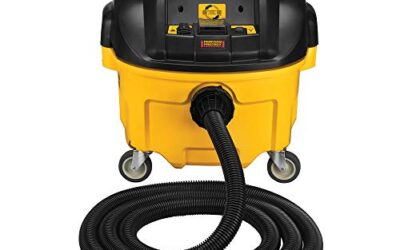
DEWALT DWV010 HEPA Dust Extractor with Automatic Filter Cleaning
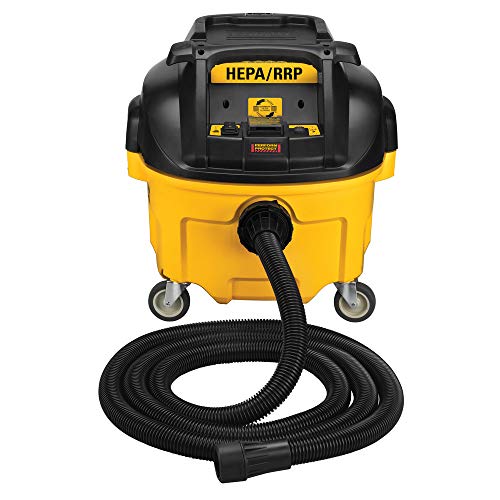
The DEWALT DWV010 is the compact pick for crews that move fast between rooms. Its 8-gallon tank is big enough for a day of drywall sanding and demo cleanup without constant emptying, yet the unit stays light enough at 22 pounds to carry up a flight of stairs. Automatic filter cleaning keeps suction from fading as the filter loads, which is the moment most small extractors give up. The 15-amp motor runs on a standard 120-volt circuit, so it plugs in anywhere on the job, and the wet and dry design means the same machine handles a spill as well as sanding dust.
Specs
- 8-gallon tank with automatic filter cleaning
- HEPA filter
- 15-amp motor, 120-volt corded
- 22 pounds
- Wet and dry use
Best for: Drywall sanding and demo cleanup on a crew that moves between rooms.
Watch out for: This listing meets the EPA lead rule only with the specified DWV9330 filter, so check which filter ships in the box before the first job.
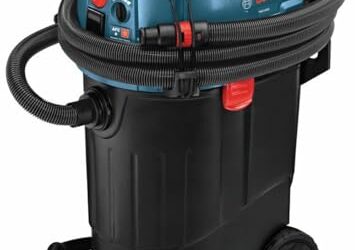
Bosch VAC090AH 9-Gallon Dust Extractor with Auto Filter Cleaning

The Bosch VAC090AH is the extractor for concrete, tile, and heavy sanding, where dust is fine, sessions run long, and rules are strict. Its 9-gallon tank holds more than the compact picks, and the automatic filter cleaning pulses every 15 seconds to keep suction steady while grinding. Its 150 CFM airflow and 97 inches of water lift sit in the range of a serious jobsite machine, and the HEPA filter captures 99.97 percent of particles at 0.3 microns. Power tool activation starts the extractor with the tool, and the Power Broker dial matches suction to the task instead of running flat out all day.
Specs
- 9-gallon tank, wet and dry
- 150 CFM maximum airflow, 97 inches static water lift
- HEPA filter captures 99.97 percent of particles at 0.3 microns
- Automatic filter cleaning every 15 seconds
- Power tool activation and Power Broker suction dial
- 28 pounds, 60 dB noise level, 1,140-watt motor
- Fleece filter bag and 9.85-foot hose included
Best for: Concrete grinding and silica dust work where suction must hold all day.
Watch out for: At 28 pounds it is heavy when full, so plan on rolling it rather than lifting it between rooms.
Makita VC4210L 11-Gallon Wet/Dry HEPA Filter Dust Extractor

The Makita VC4210L is the capacity pick, built for crews that need one extractor to run all day across large rooms. Its 11-gallon tank is the largest here, and the 12-amp motor moves 148 CFM with 92 inches of water lift, so it keeps up with planers, grinders, and sanders without fading. The automatic filter-cleaning system and two-stage filtration keep the main filter working through long sessions, and the certified HEPA filter captures 99.97 percent of particles at 0.3 microns. AWS lets the extractor start wirelessly with a compatible tool, and the kit arrives with an anti-static hose, HEPA filter, fleece filter bag, and plastic disposal bag.
Specs
- 11-gallon tank, wet and dry
- 12-amp motor, 148 CFM, 92 inches of water lift
- Automatic filter-cleaning system
- Certified HEPA filter captures 99.97 percent of particles at 0.3 microns
- AWS capable for wireless tool start
- 35 pounds
- Anti-static hose, HEPA filter, fleece filter bag, plastic disposal bag included
Best for: All-day crew work and large rooms where capacity matters most.
Watch out for: The 11-gallon tank gets heavy fast when it fills with wet debris, so empty it before it reaches the top.
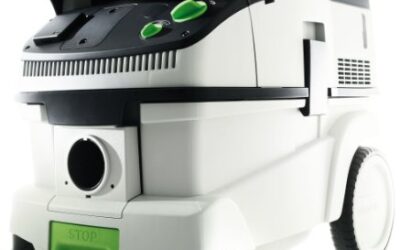
Festool CT 26 E HEPA Dust Extractor

The Festool CT 26 E is the quiet, precise pick for fine sanding in homes where people still live. Its 26-liter container and 24-liter dust bag give it real capacity in a compact body, and the 1,200-watt turbine keeps suction steady through long sanding sessions. The antistatic function stops dust from clinging to the hose and the work, and the Bluetooth-ready design works with tool modules that add sockets and auto-start options. The 7.5-meter power lead reaches across a room without an extension cord, and the top docks a tool box, so the sander rides along instead of in a separate case.
Specs
- 26-liter container, 24-liter dust bag capacity
- 1,200-watt turbine
- 7.5-meter power lead
- Antistatic function
- Bluetooth-ready for tool modules
Best for: Fine sanding in occupied homes where quiet running and clean air matter.
Watch out for: Festool sells the CT 26 under several part numbers, so confirm the listing matches part number 583492 before ordering.
Which One Fits Your Situation
Your crew sands drywall all day
Pick the DEWALT DWV010. The 8-gallon tank is enough for a day of drywall work, the automatic filter cleaning keeps suction from fading mid-afternoon, and at 22 pounds it is the easiest unit here to carry up stairs. It plugs into any standard circuit, so the crew spends no time hunting for a special outlet. Just confirm the filter in the box, since the EPA lead-rule claim depends on the specified filter.
You grind concrete and cut tile
Pick the Bosch VAC090AH. The 9-gallon tank and 15-second filter cleaning cycle are built for the kind of fine, relentless dust that concrete and tile throw off, and the 150 CFM airflow with 97 inches of water lift pulls heavy particles through a long hose. The HEPA filter and silica-focused setup fit jobs where dust rules are enforced. The 28-pound weight is the trade, so keep it on its wheels.
You need one extractor for big rooms and long days
Pick the Makita VC4210L. The 11-gallon tank means fewer stops to empty, the 148 CFM airflow keeps up with hungry tools, and the automatic filter cleaning handles the long sessions without a manual shake. AWS start is a real convenience when the crew runs several tools, and the included fleece and disposal bags cover the first jobs. Empty the tank before it gets too heavy to move.
You sand in homes people still live in
Pick the Festool CT 26 E. Fine sanding in an occupied home needs clean exhaust and low noise more than raw tank size, and the Festool delivers both with its sealed HEPA setup and 1,200-watt turbine. The antistatic hose keeps dust off the work, the long lead reaches across a room, and the tool box dock keeps the kit together. Confirm part number 583492 on the listing first.
Common Mistakes
- Buying a shop vacuum and calling it a dust extractor, then wondering why fine dust escapes into the room.
- Skipping the fleece filter bags, so the main HEPA filter loads up in a single morning and suction collapses.
- Matching the hose to the tool by eye instead of checking diameters and adapters, then finding the connection leaks.
- Letting the tank fill to the top before emptying, which strains the motor and makes the unit too heavy to move.
- Running the extractor without a HEPA filter fitted, which turns the machine into a dust spreader on a renovation job.
Frequently Asked Questions
What is the difference between a dust extractor and a shop vacuum?
A dust extractor is built around sealed HEPA filtration, tool-triggered start, and automatic filter cleaning, while a shop vacuum is a general cleanup machine with looser filtration. Extractors capture the fine fraction that matters for health and silica dust rules, and hold suction steady as the filter loads. A shop vacuum moves visible debris well, but fine dust passes through and settles back onto finished surfaces.
Do I need a HEPA filter for drywall dust?
Yes, for renovation work a HEPA filter is the right call. Drywall sanding produces a huge volume of fine dust that settles everywhere and stays in the air long after sanding stops. A HEPA filter captures 99.97 percent of particles at 0.3 microns, keeping the room cleaner and the air safer for the crew. A standard filter lets the finest dust through, so the room needs a cleanup.
How does automatic filter cleaning work?
Automatic filter cleaning uses short air pulses to shake dust off the filter while the extractor keeps running. On the Bosch the cycle fires every 15 seconds; other models clean on a timer or when suction drops. The pulses keep airflow from fading during long sessions, so the crew never stops to shake the filter by hand. It does not replace the filter, which still needs changing on schedule.
Can these extractors handle wet messes?
Yes, all four extractors here are wet and dry machines, so they pick up water from a burst pipe, wet slab, or spill. Before wet work, remove the dry filter bag and fit the wet setup the listing describes, and never run a dry HEPA filter through standing water. After wet work, dry the tank and hose before fitting a fresh bag, or the next dry session clogs fast.