Key takeaways
- Four dust extractors with automatic filter cleaning for construction cleanup, compared on HEPA filtration, tank size, airflow, and tool-triggered start.
Fine construction dust loads a filter faster than almost anything else a vacuum swallows. Drywall sanding, concrete grinding, and mortar mixing all produce the kind of powder that coats pleats within the hour, and suction fades long before the tank looks full. The real decision is not raw power on day one; it is whether the machine clears its own filter while you keep working, or whether your crew stops every hour to knock dust out of a cartridge by hand.
That difference matters most to concrete and drywall crews chasing silica compliance, remodelers working inside occupied homes, and shop owners who run one extractor across several tools all day. Every model below was picked because its Amazon listing states an automatic filter cleaning system by name, and the specs quoted come straight from those listings: cleaning interval, airflow, tank size, filtration, and the included bag and hose package.
Quick Picks
As an Amazon Associate we earn from qualifying purchases
| Product | Best for | Key spec from title |
|---|---|---|
| DEWALT DWV010 HEPA Dust Extractor | Renovation crews that need EPA RRP compliance in a compact tank | Automatic Filter Cleaning, 8-Gallon |
| Bosch VAC090AH Dust Extractor | Tool-triggered silica work where a smaller footprint matters | Auto Filter Clean and HEPA Filter, 9 Gallon |
| Bosch VAC140AH Dust Extractor | Long cleanup shifts on large commercial floors | Auto Filter Clean and HEPA Filter, 14 Gallon |
| Metabo ASR 35 AutoCleanPlus | Shops that want cleaning triggered by suction loss, not a timer | AutoClean HEPA, 157 CFM, 9 Gallon |
How to Choose
How the Auto-Clean System Works and How Often It Runs
Automatic cleaning comes in two broad styles. Timed systems reverse or pulse air through the filter on a fixed cycle: Bosch cleans every 15 seconds, while the DEWALT unit pulses every 30 seconds. Sensor-driven systems such as Metabo AutoCleanPlus watch suction performance and vibrate the filter cassettes only when airflow drops below a set level. Shorter intervals hold suction steadier under heavy drywall or concrete dust, while demand-based cleaning reduces wear and noise during lighter work. Check the listing wording carefully, because a manual shake lever or a cleaning button you press yourself is not automatic cleaning, however the marketing phrases it.
Filtration Class and HEPA Options for Silica Dust
Construction cleanup often means respirable silica, so the filter story matters as much as the motor. Look for a certified HEPA main filter that captures particles at 0.3 microns, and read the fine print on conditions: the DEWALT DWV010, for example, meets the EPA lead renovation rule for HEPA vacuums only when the named DWV9330 filters are fitted. Bosch builds its AH extractors around a HEPA flat filter as part of the PRO+GUARD system aimed at OSHA silica Table 1 compliance. A fleece filter bag in front of the main filter also protects that expensive element from direct loading.
Tank Capacity and the Bag System Behind It
Tank gallons decide how often work stops for emptying, but the bag system decides how messy that stop is. The eight-gallon DEWALT suits a two-person renovation crew, the nine-gallon Bosch and Metabo fit tool-led work, and the fourteen-gallon Bosch VAC140AH stretches across a full day of floor cleanup. Fleece bags seal the dust inside when you pull them, which keeps the tank cleaner and the filter less loaded; running bagless saves consumables yet coats everything. Wet pickup capacity is always lower than the headline dry figure, so check the listing if slurry or wash-down water is part of your cleanup routine.
Airflow, Water Lift, and Tool-Triggered Auto-Start
Airflow in CFM tells you how much dust the extractor moves at the tool port, while water lift shows how hard it pulls through long hoses and clogged shrouds. The four models here sit between 148 and 157 CFM, close enough that hose diameter and shroud fit matter more than small gaps. Tool-triggered auto-start is the feature crews feel daily: plug the saw or grinder into the extractor outlet and the vacuum starts and stops with the tool, usually with a short run-on that clears the hose. Confirm the outlet rating on the listing if you run large grinders, and check the hose length included before ordering adapters.
The 4 Best Options
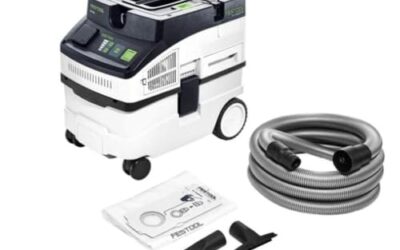
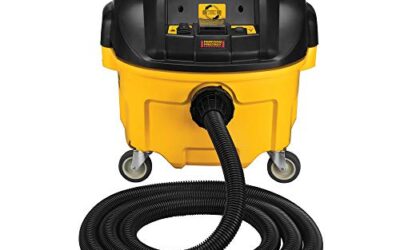
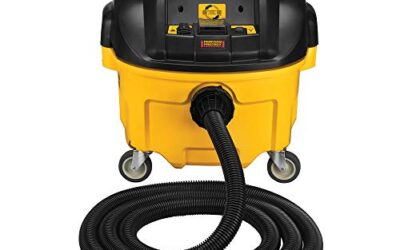
DEWALT DWV010 HEPA Dust Extractor with Automatic Filter Cleaning
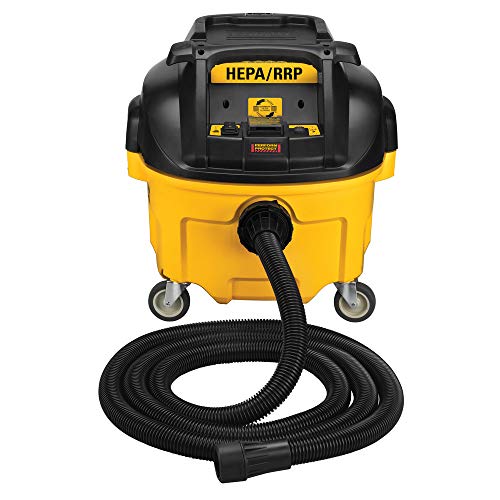
Renovation contractors who work around lead paint and occupied homes will find the most direct fit here. The eight-gallon tank keeps the unit compact enough to carry between rooms, yet the 15-amp motor still delivers airflow in line with larger machines. Its automatic filter clean pulses on a thirty-second cycle, so suction holds through long sanding and demolition sessions without anyone stopping to service the filter. The power tool actuation outlet ties the extractor to the tool trigger, and the listing ties its HEPA status to the specified filter set, which makes compliance paperwork simpler for lead-safe jobs.
Specs
- 15-amp motor delivering 155 CFM of airflow
- Automatic Filter Clean pulses every 30 seconds for continuous operation
- 8-gallon tank capacity
- Dual HEPA filters; meets the EPA RRP rule for HEPA vacuums when used with DWV9330 filters
- Power Tool Actuation outlet starts and stops the extractor with the connected tool
- Model DWV010
Best for: Lead-safe renovation and remodeling crews that need documented HEPA compliance in a portable size
Watch out for: The HEPA and RRP claim depends on fitting the DWV9330 filters named in the listing, so budget for the correct filter set rather than generic replacements
ASIN: B00OA02TZ0
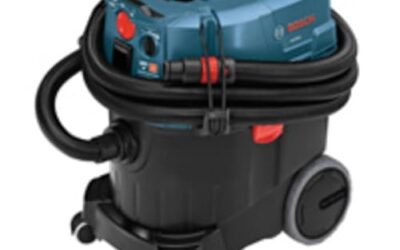
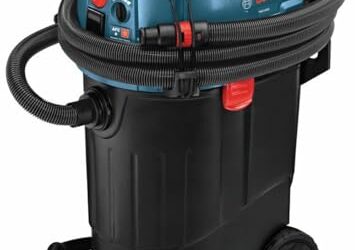
Bosch VAC090AH Portable 9-Gallon Dust Extractor with Auto Filter Clean

Small crews cutting concrete, tile, or stone get a silica-focused machine that still fits in a van. The nine-gallon tank pairs with a fleece bag system, so fine dust stays sealed away from the HEPA flat filter and the filter lasts longer between changes. Bosch cleans that filter automatically every fifteen seconds, the shortest interval in this group, which suits grinding and tuckpointing where dust production never really pauses. Power tool activation lets the connected tool switch the extractor, and a water-level sensor protects the motor during wet pickup, a practical touch for wash-down work after cutting.
Specs
- 9-gallon dust extractor with 150 CFM maximum airflow
- 97 in. static water lift
- Automatic filter cleaning every 15 seconds to maintain maximum suction power
- HEPA flat filter for particles at 0.3 microns
- Power tool activation and wet vacuuming water-level sensor with automatic shutoff
- Includes VB090F fleece filter bag, VH1035 9.85 ft vacuum hose, bend nozzle, and power tool adapter nozzle
- Item weight 28 pounds
Best for: Two-person crews doing tool-led concrete and masonry work under silica rules
Watch out for: Only one fleece bag is listed in the box, and heavy silica work consumes bags quickly, so order spares with the machine
ASIN: B076CSZXY3
Bosch VAC140AH Portable 14-Gallon Dust Extractor with Auto Filter Clean

When the job is a warehouse slab, a parking structure, or a full-floor renovation, emptying the tank becomes the bottleneck, and this is the model built around that problem. Fourteen gallons of capacity stretch the interval between stops, while the same fifteen-second automatic cleaning cycle as its smaller sibling keeps suction from sagging as the tank fills. The HEPA filter and PRO+GUARD positioning target OSHA silica compliance on regulated sites, and power tool activation remains on board for grinder and saw work. At thirty-eight pounds it is the heaviest pick here, so it suits crews that roll it onto a floor and leave it stationed.
Specs
- 14-gallon dust extractor with 150 CFM maximum airflow
- 97 in. static water lift
- Automatic filter cleaning every 15 seconds to maintain maximum suction power
- HEPA filter, capturing particles at 0.3 microns
- Power tool activation for connected tools
- Part of the Bosch PRO+GUARD dust system for OSHA silica regulation compliance
- Item weight 38 pounds
Best for: Large commercial cleanup and long grinding shifts where tank stops cost real time
Watch out for: The size and weight make it a poor match for multi-story carry work, so confirm your crew mostly rolls it on one level
ASIN: B076CP3C9D
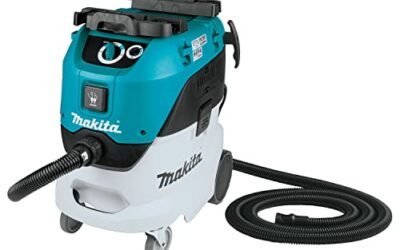
Metabo ASR 35 AutoCleanPlus HEPA All-Purpose Vacuum Cleaner
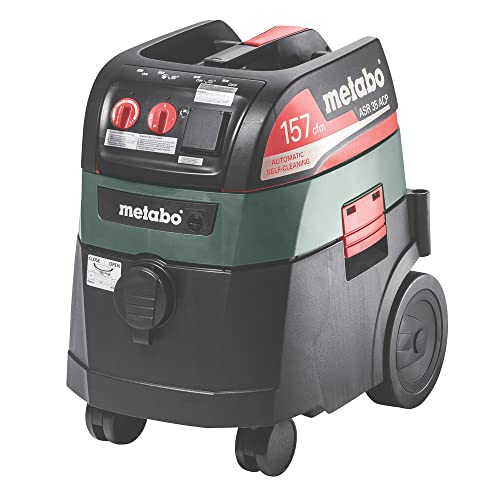
Shops and site crews who dislike timed cleaning cycles should look at Metabo’s different approach. AutoCleanPlus uses electromagnetic MPulse shaking, and the system watches suction performance: when airflow falls below the optimum level, the filter cassettes are vibrated immediately, so cleaning happens when the filter actually needs it rather than on a clock. That suits mixed work, where an hour of coarse demolition chips might load the filter less than ten minutes of fine sanding. The 157 CFM rating is the highest airflow figure in this group, the container takes thirty-five liters, and a tool socket provides automatic start and stop for connected power tools.
Specs
- 11-amp motor with 157 CFM maximum air output
- 9-gallon (35 liter) container volume
- AutoCleanPlus automatic MPulse filter cleaning during continuous use
- Cleaning triggers automatically when optimum suction performance falls below a set level
- HEPA filtration for concrete and rock dust extraction
- Power tool socket with automatic startup and shutdown of the vacuum
- Model 602057800 (ASR 35 AutoCleanPlus)
Best for: Mixed construction and shop work where dust type changes through the day
Watch out for: The US listing is the L-class AutoCleanPlus configuration, so verify the filter set supplied matches the dust class your site documentation requires
ASIN: B07J56SZH6
Which One Fits Your Situation
You Grind and Cut Concrete Under Silica Rules
Start with either Bosch. The fifteen-second automatic cleaning interval is the most aggressive here, and the HEPA flat filter plus PRO+GUARD positioning speaks directly to OSHA silica Table 1 documentation. Pick the nine-gallon VAC090AH when the extractor travels tool to tool, and the fourteen-gallon VAC140AH when it parks beside a large grinder for hours. Both keep suction steady while fine concrete dust tries to blind the filter.
You Renovate Occupied Homes and Lead Paint Is in Play
The DEWALT DWV010 fits this work best. Its listing ties the unit to the EPA renovation, repair, and painting rule when the named DWV9330 filters are fitted, which is exactly the paperwork trail lead-safe jobs demand. The compact eight-gallon tank moves room to room easily, tool actuation keeps dust capture at the sander or saw, and the thirty-second cleaning pulse maintains suction through long prep days without filter stops.
Your Crew Cleans Big Floors All Day
Choose the Bosch VAC140AH and let capacity do the work. Fourteen gallons between emptying stops, a fleece bag system that seals dust in, and automatic cleaning every fifteen seconds add up to fewer interruptions across a long shift. It is heavy, so plan on rolling it rather than carrying it, but for slab cleanup, warehouse work, and multi-room demolition debris, the fewer stops easily outweigh the extra pounds.
Your Dust Changes From Coarse to Fine All Day
The Metabo ASR 35 AutoCleanPlus matches variable work because its cleaning is demand-based. Sensors notice when suction performance dips and vibrate the filters at that moment, so coarse chips do not trigger needless cycles and fine sanding dust gets cleaned the moment it starts choking airflow. The tool socket with automatic start and stop also suits a bench or site saw that runs in short bursts all day.
Common Mistakes
- Buying a shop vacuum with a HEPA filter but no automatic cleaning, then losing suction within the first hour of drywall or concrete dust
- Assuming any filter with HEPA in the name satisfies silica or lead rules, without checking the exact filter model the listing names for compliance
- Running the extractor without fleece bags to save money, which loads the main filter directly and shortens its life
- Ignoring the auto-start outlet rating and plugging in a tool that draws more than the socket allows
- Choosing tank size by the dry gallon figure, then finding wet pickup capacity is several gallons lower during wash-down cleanup
Frequently Asked Questions
How often should an automatic filter cleaning system run during concrete work?
Shorter intervals hold suction steadier when dust is fine and constant. Bosch extractors clean every fifteen seconds, the DEWALT pulses every thirty seconds, and the Metabo cleans when its sensors detect suction dropping. For continuous grinding, a fifteen-second timed cycle is the safer pattern; for mixed work, demand-based cleaning avoids unnecessary cycles while still reacting the moment airflow falls.
Does automatic filter cleaning remove the need for filter bags?
No. Bags and automatic cleaning do different jobs. A fleece bag captures the bulk of the dust and seals it in for disposal, which protects the main filter and keeps the tank cleaner. The cleaning system then shakes loose the fine layer that still reaches the filter. Running bagless loads the filter faster, shortens its service life, and makes emptying far messier.
Can these extractors handle wet construction cleanup as well as dry dust?
Yes, within limits. These machines are wet and dry extractors, and the Bosch VAC090AH even lists a water-level sensor that shuts the motor down at maximum fill. Wet capacity is lower than the headline dry gallon figure, and you should remove or protect dry filter bags before slurry work. Check the listing for the wet rating of the exact model you choose.
What makes an extractor compliant for silica dust on a regulated site?
Compliance rests on the whole system, not one feature. You need a HEPA filter capturing particles at 0.3 microns, a filter cleaning mechanism that keeps airflow up, and a shroud or tool connection that captures dust at the source. Bosch positions its AH models within the PRO+GUARD system for OSHA silica Table 1, while DEWALT ties its RRP status to the named DWV9330 filter set.