Our Short List of 3

- Best for: Zones with a genuinely small supply, where the head itself must be the low-flow component.
- Brand: Rain Bird
- Model number: LG-3
- Pattern: Adjustable 20 to 360 degrees
- Spray distance: 26 to 41 feet
- Best for: Low-flow zones fed by wells or reclaimed water, where clog resistance matters as much as the flow figure.
- Brand: Orbit
- Model number: 55200
- Pop-up height: 3 inches
- Pattern: Adjustable 20 to 360 degrees

- Best for: Sloped or uneven zones where low-head drainage and pressure swing waste a limited supply.
- Brand: Rain Bird
- Model: 1804-SAM-PRS
- Pop-up height: 4 inches
- Feature: Seal-A-Matic (SAM) check valve built in
All 4 Picks at a Glance
| Product | Specs | Action |
|---|---|---|
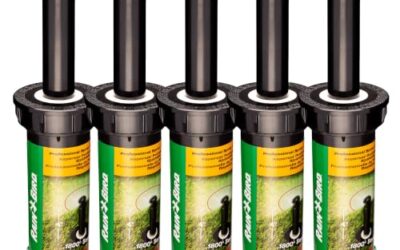
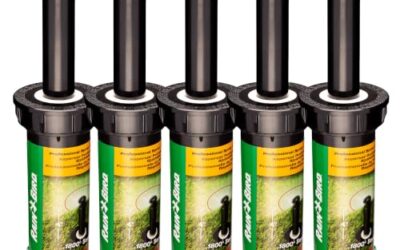
| Rain Bird LG-3 Low Gallonage Pop-up Impact Lawn Sprinkler, Adjustable 20° – 360° Pattern, 26′ – 41′ Spray Distance |
| Check price on Amazon |
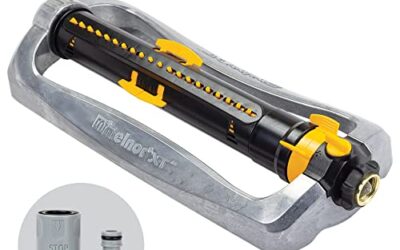
| Orbit 55200 Pulse Pop-Up Impact Sprinkler Head, Black |
| Check price on Amazon |
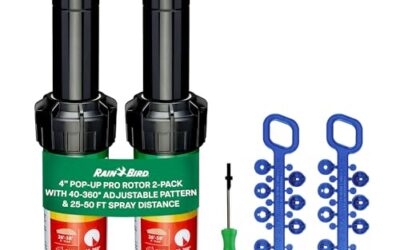
| Rain Bird 1804-SAM-PRS 4″ Pop-up Sprinkler with In-Stem Pressure Regulator & Seal-A-Matic Valve |
| Check price on Amazon |
 Hunter PGP-ADJ 3/4″ Rotor Sprinkler Head, Adjustable 40°-360° Arc, 4″ Pop-Up, Preinstalled 3.0 GPM Nozzle |
| Check price on Amazon |
Key takeaways
- Compare pop-up sprinklers that still lift and spray well on low-flow zones, with nozzle flow, pop-up height and inlet size taken from the Amazon listings.
A weak zone changes the buying question completely. The real decision is not which head throws farthest on a strong supply, but which head will still lift fully, seal properly and hold a usable pattern when the water arriving at it is limited. A head that needs more flow than the zone can give will rise halfway, leak around the stem and leave dry arcs, so the flow figure in the listing matters more than the headline spray distance.
This guide is for homeowners on well systems, long lateral runs and older zones where several heads share a modest supply, and for anyone replacing heads that no longer pop up cleanly. Every product below is a pop-up model sold on Amazon, and the picks were chosen from the names and specifications on those listings, with low-gallonage nozzles, pressure regulation and check valves weighted heavily.
Quick Picks
As an Amazon Associate we earn from qualifying purchases
| Product | Best for | Key spec from title |
|---|---|---|
| Rain Bird LG-3 Low Gallonage Pop-up Impact Lawn Sprinkler | Weak zones that need a head built around a small nozzle | Pre-installed 3 GPM nozzle |
| Orbit 55200 Pulse Pop-Up Impact Sprinkler Head | Dirty or reclaimed water on a low-flow zone | Pre-installed 3 GPM nozzle |
| Rain Bird 1804-SAM-PRS 4″ Pop-up Sprinkler | Sloped zones that lose water to low-head drainage | In-stem pressure regulator and Seal-A-Matic valve |
| Hunter PGP-ADJ Rotor Sprinkler Head | Larger areas where fewer rotor heads replace many sprays | Preinstalled 3.0 GPM nozzle |
How to Choose
Add Up the Flow the Zone Has to Supply
Start with arithmetic, not with spray distance. Each head draws the flow of its fitted nozzle for as long as the zone runs, so six heads carrying 3 GPM nozzles ask the supply for roughly three times what two of them would. On a low-flow supply, that total decides whether the last head on the run lifts at all. Read the nozzle flow printed in each listing below, multiply it by the number of heads on the zone, and keep the result comfortably inside what your supply delivers. If the total is too high, the honest fixes are fewer heads per zone or smaller nozzles, not a different brand of the same size.
Match Pop-Up Height to Your Grass, Nothing More
Pop-up height is listed in inches, and it only needs to clear the turf you actually mow. A 3-inch riser suits short, frequently cut grass, while a 4-inch riser clears taller fescue that would otherwise block the lower part of the spray. Going taller than the lawn needs buys nothing on a weak zone, because the head still has to lift that stem against the same limited pressure. Check the height in the title of each listing here, compare it with the grass around the heads you are replacing, and pick the shortest riser that clears it cleanly.
Treat Pressure Regulation and Check Valves as Flow Tools
Two features in these listings earn their place specifically on weak systems. A pressure-regulating stem holds the nozzle near its intended working pressure, which reduces the misting that wastes water when pressure swings along a run. A check valve, such as the Seal-A-Matic design in the Rain Bird body below, stops the water left in the line from draining out of the lowest head after shut-off, which matters on any slope. Neither feature creates flow you do not have, but both stop a limited supply from being wasted, so they are worth prioritising over cosmetic differences.
Check the Inlet Size Before Anything Else
A head that does not match your lateral fittings is a return waiting to happen. The listings below show two different connections: the impact heads use half-inch female pipe thread inlets, with the Orbit offering both side and bottom positions, while the Hunter rotor uses a three-quarter-inch inlet. Measure or read the fitting on the head you are removing, then match it to the inlet line in the specs here. Adapters exist, but each extra joint is another place for a small leak, and on a low-flow zone even a small leak is flow the furthest head never receives.
The 4 Best Options
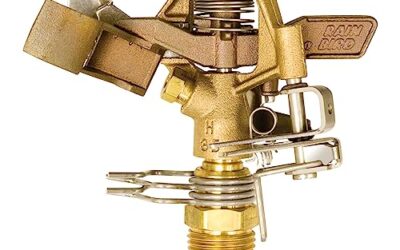
Rain Bird LG-3 Low Gallonage Pop-up Impact Lawn Sprinkler, Adjustable 20° – 360° Pattern, 26′ – 41′ Spray Distance
- Best for: Zones with a genuinely small supply, where the head itself must be the low-flow component.
- Brand: Rain Bird
- Model number: LG-3
- Pattern: Adjustable 20 to 360 degrees
- Spray distance: 26 to 41 feet
Zones with a genuinely small supply, where the head itself must be the low-flow component.
Confirm the 3 GPM draw still fits your zone total when several heads run together, and check that a 41-foot maximum throw suits your spacing rather than overshooting into paths.
This is the most direct answer in the group, because low gallonage is the product’s stated purpose rather than a side benefit. The pre-installed nozzle is rated at 3 GPM, so a zone planner can budget the draw precisely instead of guessing, and the impact design is described in the listing for hard, dirty and reclaimed water, which suits wells and pond-fed lines. The adjustable pattern covers corners through to full circles from one model, which keeps a mixed-shape lawn on a single head type.
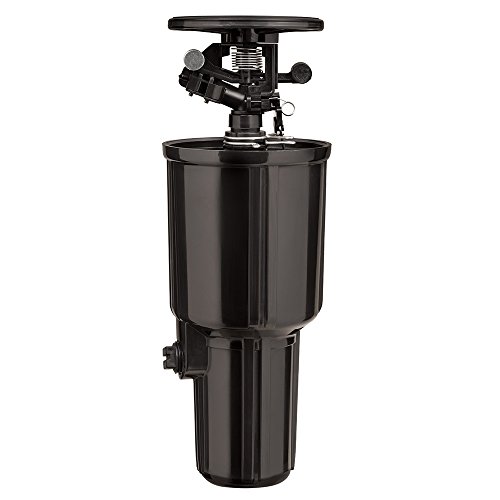
Orbit 55200 Pulse Pop-Up Impact Sprinkler Head, Black
- Best for: Low-flow zones fed by wells or reclaimed water, where clog resistance matters as much as the flow figure.
- Brand: Orbit
- Model number: 55200
- Pop-up height: 3 inches
- Pattern: Adjustable 20 to 360 degrees
Low-flow zones fed by wells or reclaimed water, where clog resistance matters as much as the flow figure.
The recommended operating pressure in the listing is 40 PSI, so measure your zone pressure and confirm it reaches that level before planning around the full throw.
The Orbit takes the same low-draw route with a different set of practical details. Its pre-installed nozzle is also rated at 3 GPM, and the listing gives a full-pattern precipitation rate at a stated spacing and pressure, which helps when comparing how long a zone needs to run. The flow-through design is presented for dirty and high-mineral water, the radius can be reduced with an adjustment screw, and the dual inlets give an installer a side option where the bottom connection sits too deep or too shallow.
Rain Bird 1804-SAM-PRS 4″ Pop-up Sprinkler with In-Stem Pressure Regulator & Seal-A-Matic Valve
- Best for: Sloped or uneven zones where low-head drainage and pressure swing waste a limited supply.
- Brand: Rain Bird
- Model: 1804-SAM-PRS
- Pop-up height: 4 inches
- Feature: Seal-A-Matic (SAM) check valve built in
Sloped or uneven zones where low-head drainage and pressure swing waste a limited supply.
Budget for a nozzle as a separate purchase and confirm its flow rating, because the zone’s total draw is decided by the nozzle you fit, not by this body.
This Rain Bird body approaches a weak zone from the waste side of the equation. The Seal-A-Matic check valve holds water in the lateral instead of letting it drain from the lowest head after each run, and the in-stem pressure regulator keeps the fitted nozzle working at a steadier pressure along the run. It is sold as a body, so the nozzle is chosen separately, which is an advantage on low-flow systems: the person designing the zone picks the nozzle flow instead of accepting whatever arrives fitted.
Hunter PGP-ADJ 3/4″ Rotor Sprinkler Head, Adjustable 40°-360° Arc, 4″ Pop-Up, Preinstalled 3.0 GPM Nozzle
- Best for: Bigger, open areas where replacing many spray heads with fewer rotors brings the zone total within the supply.
- Brand: Hunter Industries
- Model number: PGP-ADJ
- Pop-up height: 4 inches
- Arc: Adjustable 40 to 360 degrees
Bigger, open areas where replacing many spray heads with fewer rotors brings the zone total within the supply.
Verify your fittings are three-quarter-inch before ordering, and plan spacing from the lower end of the throw range, since a low-flow zone rarely delivers the maximum distance.
A rotor earns a place in a low-flow guide for a structural reason: one rotor covers ground that would otherwise need several spray heads, and fewer heads means fewer nozzles drawing on the zone at once. This Hunter arrives with a 3.0 GPM nozzle preinstalled and a nozzle set in the box, so the arc and radius can be set per position. Its throw is far longer than the impact heads above, which suits open lawn, provided the spacing is planned around the reduced distance a weak supply actually delivers.
Which One Fits Your Situation
Your Heads Rise Halfway and Weep Around the Stem
That pattern points to a zone asking for more water than arrives. Start with the Rain Bird LG-3, whose whole design centres on a 3 GPM nozzle, and count how many heads share the run. If the total still exceeds the supply, split the zone or drop a head rather than expecting any single model to overcome the arithmetic.
Your Supply Comes From a Well or Reclaimed Source
Water with grit or minerals punishes small spray nozzles first. The Orbit 55200 is the pick here, because its listing describes a flow-through impact design for dirty and high-mineral water, with a large nozzle opening and the same modest 3 GPM draw. The LG-3 is the alternative if you prefer the Rain Bird pattern adjustment.
Your Yard Slopes and the Lowest Head Dribbles After Shut-Off
That is drainage, not a pressure fault, and the fix is a check valve. Choose the Rain Bird 1804-SAM-PRS body, whose Seal-A-Matic valve holds the lateral’s water in place between runs. Pair it with a nozzle whose flow you have chosen for the zone, and the slope stops taxing a supply that is already limited.
You Are Rebuilding a Zone With Too Many Spray Heads
When a long run of sprays starves the far end, consolidating helps more than replacing like for like. The Hunter PGP-ADJ covers a wide radius from one position, so a rebuilt zone can run fewer heads at a known nozzle flow. Confirm the three-quarter-inch inlet matches your fittings before committing to the change.
Common Mistakes
- Adding up spray distances instead of nozzle flow, then wondering why the last head on the zone barely lifts.
- Replacing a failed head with a larger-nozzle model, which quietly raises the whole zone’s demand.
- Buying a pressure-regulated body and forgetting it ships without a nozzle, so the zone cannot run until one is fitted.
- Planning spacing from the maximum throw in a title, when a low-flow supply delivers something closer to the minimum.
- Ignoring a slow leak at a threaded joint, which on a weak zone steals flow from every head downstream of it.
Frequently Asked Questions
How do I know if my zone is really low flow?
Run the zone and watch the furthest head. If it rises only partway, leaks around the stem or throws far short of its listed distance while nearer heads behave, the zone is asking for more water than the supply delivers. Compare the combined nozzle flow of every head on the run with what your source provides.
Will a pressure-regulating head fix a zone that will not pop up?
Not on its own. A regulator steadies pressure at the nozzle and reduces wasteful misting, but it cannot create flow that is not arriving. If heads will not lift, reduce the zone’s total draw first with smaller nozzles or fewer heads, then use a regulated body such as the 1804-SAM-PRS to keep the result consistent.
Are impact heads or rotors better when water is limited?
They solve different problems. Impact heads such as the LG-3 and the Orbit 55200 draw a fixed, modest amount per head and tolerate dirty water well. A rotor such as the Hunter PGP-ADJ covers more ground per position, so a zone can run fewer heads. Choose by whether your limit is water quality or head count.
Can I mix different head types on one low-flow zone?
You can, but plan the run times carefully, because sprays, impacts and rotors apply water at different rates from the same valve. A corner that finishes quickly beside a rotor still running will be overwatered. Grouping similar heads per zone keeps timing simple, and every head’s nozzle flow still counts toward the same total.