Key takeaways
- Find the best carving knives for turkey, roast beef, ham, and brisket, with long blades, sure grips, and clean slices for every holiday meal.
Quick Answer
The best carving knife for most home cooks is a long, thin slicing knife with a Granton edge, because it glides through a roast in long, even strokes and leaves clean, presentable slices. A 10-inch to 12-inch blade covers a whole turkey or a large roast without sawing, while a shorter blade suits smaller birds and weeknight roasts. If you carve at the table in front of guests, a carving set with a matching fork keeps the roast steady and the presentation tidy. If hand strength or stamina is a concern, an electric carving knife does the work with a gentle guiding motion instead of arm power. The five picks below cover every one of those situations, from a budget-friendly slicer to a forged professional carving knife and a premium long-blade brisket knife.

As an Amazon Associate, we earn from qualifying purchases.
Table of Contents
- Quick Answer
- How to Choose a Carving Knife
- Victorinox Fibrox Pro 12-Inch Slicing Knife with Granton Blade
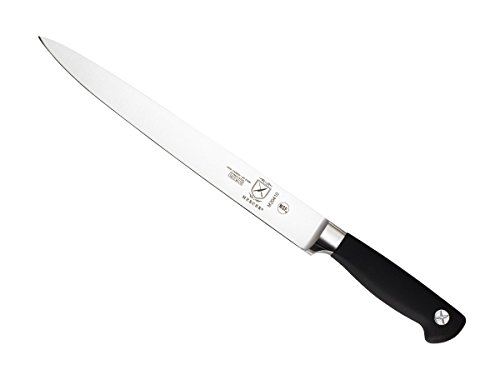
- Mercer Culinary Genesis 10-Inch Carving Knife
- Cutluxe Brisket Knife 12-Inch Carving and Slicing Knife
- MAIRICO 11-Inch Brisket Slicing and Carving Knife
- Hamilton Beach Electric Knife Set
- Carving Knives Compared
- How to Carve a Roast Cleanly
- Care, Sharpening, and Storage
- Who Should Skip a Long Carving Knife
- Frequently Asked Questions
- Conclusion
- Product and ASIN Reference
How to Choose a Carving Knife
A carving knife has one job, and it is different from the job of a chef knife or a bread knife. A chef knife chops, dices, and rocks through vegetables on a board. A bread knife saws through crust with a serrated edge. A carving knife draws long, smooth slices from a cooked roast, a turkey, a ham, or a brisket, and it does that best when the blade is long, narrow, and thin, with a straight or gently curved edge that meets the meat in one continuous stroke. Understanding a handful of features makes the choice straightforward.
Blade length is the first decision. A 12-inch blade spans a whole turkey breast or a large brisket in a single pass, which is how you get slices of even thickness from one end of the roast to the other. A 10-inch blade is the versatile middle ground, long enough for a holiday bird and short enough to control on a smaller roast or a leg of lamb. An 11-inch blade splits the difference and suits cooks who carve briskets and roasts more often than whole birds. Shorter blades force more strokes, and every extra stroke is another chance for a ragged edge or an uneven slice. Longer blades need more board space and more storage space, so measure your cutting board and your knife drawer before choosing the longest option.
Edge style is the second decision. A Granton edge has shallow oval hollows ground into the sides of the blade, and those hollows create tiny air pockets that keep slices of moist meat from clinging to the steel. For turkey, ham, and brisket, a Granton edge is a genuine advantage, because it lets each slice fall away cleanly instead of sticking and tearing. A plain straight edge is simpler to sharpen and works well on roasts with a firm crust or a dry exterior, but it can drag on very juicy meat. A serrated edge belongs on an electric carving knife, where two reciprocating blades saw through the meat, or on a bread knife, not on a manual carving knife, because serrations tear the smooth surface of a roast.
Steel determines how long the edge lasts and how easy it is to maintain. High-carbon stainless steel is the standard for good carving knives, because it resists rust, holds an edge through a whole holiday meal, and sharpens without special equipment. Forged blades are made from a single piece of steel that is heated and shaped, and they tend to feel heavier and more balanced, with a bolster where the blade meets the handle. Stamped blades are cut from a sheet of steel, and they tend to be lighter and thinner, which many cooks prefer for long slicing strokes. Neither construction is automatically better. A well-made stamped slicer can outperform a poorly made forged knife, and the right choice depends on how the knife feels in your hand and how much weight you like behind each stroke.
Handle comfort matters more than most buyers expect, because carving a large roast takes several minutes of steady work. Look for a handle that fills your palm without forcing your fingers into a cramped grip, with a texture that stays secure when your hands are damp from handling a hot roast. Handles made from textured polymers stay grippy when wet, while polished wood handles look beautiful at the table but can become slick. A full tang, where the steel of the blade runs the whole length of the handle, adds strength and balance, and rivets or a molded grip keep the handle firmly attached to the blade through years of washing and use.
A carving fork is a useful companion, and some of the best values in this guide are sets that include one. The fork holds the roast steady while the knife works, which keeps the meat from sliding across the board and keeps your fingers well away from the blade. If you already own a sturdy carving fork, a knife alone is fine. If you do not, a set saves a separate purchase and guarantees that the fork matches the knife in size and style.
Electric carving knives deserve a place in the conversation, especially for cooks with arthritis, wrist strain, or limited grip strength. Two serrated blades move back and forth against each other, and the motor does the cutting while you guide the knife. The result is thin, even slices with almost no arm effort. Electric knives are louder than manual knives, need an outlet nearby, and require more care at cleaning time, but for a big holiday meal they can turn a tiring chore into a quick one.
Finally, think about storage and care before you buy. Long carving knives do not fit in every knife block, and a blade left loose in a drawer dulls quickly and endangers anyone reaching into the drawer. A sheath, a blade guard, a magnetic strip, or a block with a long slot keeps the edge safe and the knife ready. Hand washing and immediate drying protect the edge and the handle far better than a dishwasher cycle, and a quick pass with a honing rod before carving keeps the edge aligned through the meal.
Victorinox Fibrox Pro 12-Inch Slicing Knife with Granton Blade
The Victorinox Fibrox Pro 12-inch slicing knife is the workhorse of this roundup, and it earns its place through a combination of length, a Granton edge, and a handle that stays secure when hands are wet. Victorinox has supplied professional kitchens for decades, and this knife shows why the brand keeps appearing in restaurant kitchens and culinary schools. The 12-inch blade is long enough to span a whole turkey breast or a full packer brisket in one stroke, so slices come off the roast at an even thickness from end to end, with no sawing and no ragged edges.
The Granton edge is the feature that sets this knife apart for holiday carving. Shallow hollows along the blade create air pockets that stop moist slices from clinging to the steel, so each slice of turkey or ham falls away cleanly instead of sticking and tearing. That matters most on a large bird, where the meat is juicy and the slices are wide, and it is one reason this knife is a favorite for brisket, where a clean surface shows off the smoke ring and the grain. The high-carbon stainless steel blade resists corrosion, holds its edge through a long carving session, and sharpens easily with standard equipment.
The Fibrox Pro handle is a textured polymer grip shaped to fill the palm, and it stays secure even when your hands are damp from handling a hot roast or basting juices. That grip is a real advantage at the table, where a slippery handle can turn a confident carve into a careful one. The knife is stamped rather than forged, which keeps it light and nimble for its length, and the balance sits slightly toward the handle, so the blade feels controlled rather than tip-heavy during long strokes. The knife carries NSF certification, which means it meets standards used in professional food service, and it is dishwasher safe, though hand washing keeps the edge in better shape over time.
This is the knife to choose if you carve large roasts often and want one reliable slicer that handles turkey, ham, roast beef, and brisket without fuss. It is also a strong choice for a first carving knife, because the length and the Granton edge forgive a less-than-perfect technique, and the handle keeps working when conditions get messy. The main trade-off is length: a 12-inch blade needs a large cutting board and a storage slot to match, and cooks with small kitchens may prefer a 10-inch option. There is no carving fork in the box, so pair it with a fork you already own or buy one separately if you carve at the table.
Specs
- Blade length: 12 inches
- Blade material: high-carbon stainless steel
- Edge: Granton edge with hollow-ground ovals
- Construction: stamped blade
- Handle: Fibrox Pro textured polymer, slip-resistant grip
- Certification: NSF certified
- Care: dishwasher safe, hand washing recommended
- Tier: Budget
Mercer Culinary Genesis 10-Inch Carving Knife
The Mercer Culinary Genesis 10-inch carving knife is a forged knife built for cooks who want professional construction at a mid-range tier. Mercer Culinary supplies culinary schools and restaurant kitchens, and the Genesis line reflects that heritage, with a precision-forged blade, a full tang, and a handle designed for long shifts. The 10-inch blade is the versatile length in this guide, long enough for a holiday turkey and short enough to stay nimble on a leg of lamb, a pork loin, or a smaller roast.
The blade is precision-forged from high-carbon German steel, with a taper-ground edge that grows thinner toward the tip. That taper reduces drag as the blade moves through the meat, so each stroke feels smooth from heel to tip instead of catching partway through a slice. The steel is hardened to hold an edge through a full carving session, and it sharpens readily with a honing rod or a whetstone. A bolster where the blade meets the handle adds weight and balance, and it gives your index finger a natural resting place that keeps the knife steady during long strokes.
The Santoprene handle is soft to the touch, textured for grip, and shaped with a slight palm swell that fills the hand without forcing the fingers into a tight curl. It stays secure when damp, which matters when you are carving a roast that has just come out of the oven, and it resists slipping even after repeated washing. The full tang runs the length of the handle, so the knife feels solid and balanced, with the weight distributed evenly between blade and handle rather than tipping forward.
This knife suits a cook who carves often enough to appreciate forged construction and who wants one knife that handles the holiday bird and the weeknight roast with equal ease. It is a strong match for a cook who already owns a carving fork and wants a dedicated knife rather than a set. The 10-inch length is easier to store than a 12-inch slicer, and it fits more knife blocks and drawers. The main trade-off is that the plain straight edge lacks the anti-stick hollows of a Granton blade, so very juicy slices may cling to the steel more than they would on a Granton slicer. A quick wipe of the blade between slices solves that, and the forged edge rewards the small effort with clean, precise cuts.
Specs
- Blade length: 10 inches
- Blade material: high-carbon German steel
- Edge: taper-ground straight edge
- Construction: precision-forged, full tang, with bolster
- Handle: Santoprene, textured grip
- Certification: NSF certified
- Care: hand wash and dry immediately
- Tier: Mid-range
Cutluxe Brisket Knife 12-Inch Carving and Slicing Knife
The Cutluxe 12-inch brisket knife is the premium pick in this roundup, built for cooks who carve large cuts of meat and want a long, precise slicer with a gift-ready presentation. Cutluxe designed this knife for brisket, turkey, roast beef, and ham, and the 12-inch blade shows it, spanning the widest roasts in a single stroke so slices come off even and clean. The blade is made from high-carbon German steel, hardened for edge retention, and finished with a Granton edge that keeps slices from sticking to the steel.
The full-tang construction runs the steel through the entire handle, which gives the knife a solid, balanced feel and the strength to handle dense smoked brisket without flexing. The handle is ergonomic, shaped to sit comfortably in the palm during long carving sessions, and it provides a secure grip when hands are damp. The edge is honed to a fine angle that slices rather than tears, which matters for brisket, where a torn surface hides the grain and the smoke ring, and for turkey, where a clean slice keeps the breast meat intact and presentable.
A sheath is included, which solves the storage problem that long slicers often create. The sheath protects the edge in a drawer, guards fingers when the knife is stored, and makes the knife easy to carry to a holiday gathering or a barbecue. The knife arrives in packaging suited to gifting, which makes it a natural choice for a cook who is building a barbecue kit or looking for a present for a grill enthusiast.
This is the knife to choose if brisket and large roasts are your main event and you want the longest blade in this guide with a Granton edge and a sheath included. It is also the right pick if you carve at the table and want a knife that looks as good as it cuts. The main trade-off is size: a 12-inch blade needs a large board and a long storage spot, and it can feel like more knife than a small roast requires. For a whole turkey, a full brisket, or a large ham, though, that length is exactly the point, and the knife earns its place with every clean, even slice.
Specs
- Blade length: 12 inches
- Blade material: high-carbon German steel
- Edge: Granton edge
- Construction: full tang
- Handle: ergonomic, full tang handle
- Included: protective sheath
- Series: Artisan Series
- Care: hand wash and dry immediately
- Tier: Premium
MAIRICO 11-Inch Brisket Slicing and Carving Knife

The MAIRICO 11-inch brisket slicing and carving knife is the budget-friendly long slicer in this guide, and it earns its place by giving cooks an 11-inch Granton-edge blade with a full tang and a gift box at a modest tier. The 11-inch length sits between the 10-inch and 12-inch options, long enough to span a turkey breast or a brisket flat in one stroke, yet a little easier to control and store than the longest blades. For a cook who carves a few times a year and wants a capable slicer without a premium outlay, that middle length is a practical compromise.
The blade is made from premium stainless steel, with a Granton edge that keeps slices from clinging to the steel as they come off the roast. The edge is ground to a 15-degree angle per side, which is a fine, sharp angle that slices cleanly through turkey, ham, roast beef, and brisket with light pressure. A fine edge like this rewards gentle use: let the length of the blade do the work, draw the knife through the meat in one smooth motion, and avoid twisting the blade against bone, which can dull or nick any fine edge.
The full-tang construction gives the knife strength and balance, and the handle is shaped for a comfortable, secure grip during a full carving session. The knife arrives in a gift box, which makes storage simple and makes it a ready present for a new homeowner, a barbecue fan, or anyone setting up a first kitchen. The blade is easy to hone, so a few passes with a honing rod before carving restore the edge to slicing shape, and hand washing with immediate drying keeps the steel bright and the handle in good condition.
This knife suits a cook who wants a long slicer for holiday meals and weekend roasts without committing to a premium tier. It is a strong choice for brisket, where the 11-inch blade and Granton edge produce clean slices across a wide flat, and for turkey, where the length keeps breast slices even. The main trade-off is that the steel and the fit and finish are workmanlike rather than luxurious, and the edge benefits from regular honing to stay at its best. For the tier, though, the combination of length, Granton edge, full tang, and gift box is hard to beat.
Specs
- Blade length: 11 inches
- Blade material: premium stainless steel
- Edge: Granton edge, 15 degrees per side
- Construction: full tang
- Handle: ergonomic grip
- Included: gift box
- Care: hand wash and dry immediately, hone before use
- Tier: Budget
Hamilton Beach Electric Knife Set
The Hamilton Beach electric knife set is the powered pick in this roundup, and it changes the carving equation for cooks who want thin, even slices with almost no arm effort. Two reciprocating serrated stainless steel blades move back and forth against each other, and the motor does the cutting while you guide the knife through the meat. The result is steady, uniform slices of turkey, ham, roast beef, and bread, with a gentle guiding motion replacing the long arm strokes a manual knife requires.
The set runs on a 120-watt motor, which provides steady power through a whole bird or a large ham without bogging down. The blades measure 7.25 inches, which is shorter than the manual slicers in this guide, so a large roast takes more passes, but each pass is effortless, and the serrated edges handle crusty bread and firm roasts as easily as they handle tender turkey. The handle is ergonomically designed to fit either hand, and the trigger sits naturally under the thumb, so the knife feels controlled rather than clumsy during a long carving session.
The set includes a carving fork and a compact storage case, which keeps the blades, the fork, and the knife together between uses and protects the serrated edges in a drawer. The five-foot cord reaches across a dining table, so you can carve at the table in front of guests without hunting for an outlet behind the sideboard. The blades and fork are hand wash only, and the case keeps everything organized until the next holiday.
This set suits a cook with limited grip strength, wrist strain, or arthritis, and it suits any host who wants to carve a large meal quickly without tiring out before dinner is served. It is also a versatile tool beyond the roast: the serrated blades slice bread loaves cleanly, cut foam for craft projects, and portion soft foods with ease. The main trade-offs are noise, the need for an outlet, and the shorter blade, which means more passes on a very large roast. For a cook who values ease over ceremony, though, those trade-offs are small, and the set earns its place as the most effortless carver in this guide.
Specs
- Blade length: 7.25 inches, reciprocating serrated stainless steel blades
- Motor: 120 watts
- Power: corded, 5-foot cord
- Handle: ergonomic design, fits either hand
- Included: carving fork and compact storage case
- Care: blades hand wash only
- Tier: Mid-range
Carving Knives Compared
Choosing among these five picks comes down to how you carve, what you carve, and how much effort you want to spend. The Victorinox Fibrox Pro 12-inch slicer is the most versatile manual pick, with the longest blade, a Granton edge, and a grip that stays secure when wet, and it suits a cook who carves large roasts often. The Mercer Culinary Genesis 10-inch carving knife is the forged mid-range option, with a taper-ground edge and a Santoprene handle, and it suits a cook who values professional construction and a blade that stores easily. The Cutluxe 12-inch brisket knife is the premium long slicer, with a Granton edge, full tang, and an included sheath, and it suits a cook who carves brisket and large roasts and wants a gift-ready knife. The MAIRICO 11-inch slicer is the budget long blade, with a Granton edge and a gift box, and it suits a cook who carves a few times a year and wants length without a premium tier. The Hamilton Beach electric knife set is the effortless option, with a motor, a carving fork, and a storage case, and it suits a cook who wants thin, even slices with minimal arm effort.
Blade length runs from 7.25 inches on the electric set to 12 inches on the Victorinox and Cutluxe slicers, with the MAIRICO at 11 inches and the Mercer at 10 inches in between. Longer blades make fewer strokes and more even slices on large roasts, while shorter blades are easier to control and store. Granton edges appear on the Victorinox, Cutluxe, and MAIRICO picks, and they help slices fall away cleanly from moist meat. The Mercer uses a plain taper-ground edge that rewards a smooth technique, and the Hamilton Beach uses reciprocating serrated blades that saw through meat with motor power.
Construction also differs. The Mercer is precision-forged with a bolster, the Cutluxe and MAIRICO are full tang, the Victorinox is stamped and light, and the Hamilton Beach is a powered tool with a molded handle. None of these approaches is wrong. Forged knives feel substantial and balanced, stamped knives feel light and quick, full-tang knives feel solid, and electric knives feel effortless. Handle material follows the same pattern: textured polymer on the Victorinox, Santoprene on the Mercer, ergonomic grips on the Cutluxe and MAIRICO, and a molded ergonomic handle on the Hamilton Beach. All five stay secure when hands are damp, which is the feature that matters most at the table.
For a single-knife household, the Victorinox 12-inch slicer covers the most situations, from turkey to brisket. For a cook who carves brisket seriously, the Cutluxe 12-inch knife pairs length with a sheath and a premium feel. For a cook who wants forged construction and a manageable length, the Mercer 10-inch knife is the right size. For a tight tier, the MAIRICO 11-inch slicer gives up little in length. For a cook who wants the easiest carve, the Hamilton Beach set removes the effort entirely. Any of the five will carve a holiday roast well; the best one is the one that matches your roasts, your hands, and your kitchen.
How to Carve a Roast Cleanly
Good carving starts before the knife touches the meat. Let the roast rest after it comes out of the oven, so the juices settle and the slices hold together instead of shedding moisture across the board. Ten to twenty minutes is enough for most roasts, and a whole turkey benefits from the longer end of that range. While the roast rests, set out a large cutting board with a groove or a rim to catch juices, a carving fork, a serving platter, and a damp cloth under the board to keep it from sliding.
Hold the carving fork in your non-dominant hand and press the tines into the roast away from the path of the blade, keeping your fingers behind the fork and clear of the edge. Start the knife at the heel, draw it through the meat in one long, smooth stroke toward the tip, and let the length of the blade do the work instead of pressing down hard. Short, sawing strokes tear the surface and produce uneven slices, while a single long stroke leaves a clean, smooth face on each slice. Wipe the blade with a damp cloth between slices if meat starts to cling, especially on a juicy turkey or ham.
Slice against the grain whenever you can see it, because cutting across the muscle fibers shortens them and makes each slice more tender to chew. For a turkey, remove the legs and wings first, then slice the breast meat in even slices parallel to the breastbone, working from the outside in. For a roast beef or a brisket, find the direction of the grain and slice across it in even strokes, keeping each slice the same thickness so the platter looks neat and every serving cooks and tastes the same. For a ham, slice around the bone in thin, even pieces, and turn the ham as you work so the knife always meets the meat at a comfortable angle.
Serve the slices as you cut them, arranging them on a warm platter in overlapping rows, and spoon a little of the resting juices over the top to keep the meat moist. If the roast cools while you carve, a brief return to a warm oven restores the temperature without drying the slices. With a long, sharp carving knife and a steady technique, carving becomes one of the most satisfying parts of a holiday meal, and the slices on the platter show the care that went into the cooking.
Care, Sharpening, and Storage
A carving knife keeps its edge longest when it is hand washed, dried immediately, and stored with the blade protected. Rinse the blade with warm water and mild soap after carving, dry it with a soft towel, and put it away before it sits damp in a sink or a dishwasher. Dishwasher cycles expose the edge to heat, detergent, and rattling against other utensils, and that combination dulls a fine edge faster than normal use. The Victorinox slicer is dishwasher safe, but hand washing still extends its life, and the other picks in this guide call for hand washing outright.
Honing and sharpening are different jobs, and both matter. Honing realigns the microscopic edge of the blade, and a few light passes on a honing rod before carving keep the knife slicing cleanly through a whole roast. Hold the rod vertically with the tip on a board, draw the blade down the rod at a steady angle, and alternate sides for a handful of passes. Sharpening removes metal to create a fresh edge, and it is needed less often, usually once or twice a year for a home carving knife, or when honing no longer restores the bite. A whetstone, a professional sharpening service, or a quality manual sharpener all work, and the right choice depends on your comfort with the technique. Serrated electric blades are not honed or sharpened at home; replace them when they stop cutting cleanly.
Storage protects the edge and the people in the kitchen. A sheath or blade guard is the simplest option for a long slicer, and the Cutluxe knife includes one. A magnetic strip holds knives visibly and keeps edges from knocking against other tools, while a knife block with a long slot works if the slot fits the blade. Avoid tossing a carving knife loose into a drawer, where the edge dulls against other utensils and where a reaching hand can find the blade first. Keep the knife dry, keep it sharp, and keep it covered, and it will carve cleanly for years.
Who Should Skip a Long Carving Knife
A long carving knife is not the right tool for every kitchen or every cook. If you cook mainly for one or two people and your largest roast is a small chicken or a pork tenderloin, a 12-inch slicer is more blade than the job needs, and a 10-inch knife or even a chef knife will handle the work with less board space and less storage hassle. If your kitchen has a small cutting board, a short counter, or a crowded drawer, measure before you buy, because a long blade that does not fit your storage will spend its life in a drawer where it dulls and endangers fingers.
If you rarely cook roasts and carve a turkey once a year, a dedicated carving knife may still earn its place, but an electric set or a borrowed slicer could serve just as well for a single meal. Cooks with very small hands may find a 12-inch blade unwieldy, and a 10-inch forged knife with a comfortable handle could suit them better. Cooks who prefer to carve in the kitchen rather than at the table may not need a matching fork or a gift-ready presentation, and a simple slicer alone will do.
A carving knife is also the wrong tool for jobs that need a different edge. Do not use it to chop vegetables, cut through bone, or slice crusty bread, because the thin edge can chip on bone and the smooth blade will skid on a hard crust. A chef knife handles chopping, kitchen shears handle bone and poultry joints, and a serrated bread knife handles crust. Use the carving knife for the job it was made for, and it will stay sharp and ready for every roast you cook.
Frequently Asked Questions
What size carving knife is best for a turkey?
A 10-inch to 12-inch blade is the best range for a turkey, because the length spans a whole breast in one stroke and produces even slices. A 12-inch blade is ideal for a large bird, while a 10-inch blade suits a smaller turkey and stores more easily. A Granton edge helps slices fall away cleanly from the moist breast meat.
What is the difference between a carving knife and a slicing knife?
The terms overlap heavily, and most knives sold as slicing knives work as carving knives. In general, a carving knife is a long, thin knife with a pointed or rounded tip, often sold with a fork, while a slicing knife may be longer and narrower, with a Granton edge, and is often used for brisket and roasts. Either style carves a turkey well, and blade length and edge style matter more than the name on the box.
Should I choose a Granton edge or a plain edge for carving?
A Granton edge is the better choice for moist roasts like turkey, ham, and brisket, because the hollows keep slices from sticking to the blade. A plain edge is simpler to sharpen and works well on roasts with a firm exterior, but slices may cling to the steel. If you carve juicy roasts often, choose the Granton edge; if you sharpen your own knives and prefer a simple edge, a plain blade serves well.
How do I keep a carving knife sharp between holidays?
Hand wash the blade, dry it immediately, and store it in a sheath, a blade guard, or a block so the edge stays protected. Hone the blade with a few light passes on a honing rod before each carving session to realign the edge. Sharpen the knife once or twice a year, or when honing no longer restores a clean cut, and never use the thin carving edge on bone or frozen food.
Conclusion
The best carving knife is the one that matches your roasts, your hands, and the way you like to serve a meal. A long Granton-edge slicer like the Victorinox Fibrox Pro 12-inch knife handles the widest range of roasts with the least fuss, and it is the pick most home cooks should start with. A forged knife like the Mercer Culinary Genesis 10-inch carving knife rewards a cook who values professional construction and a balanced, comfortable handle. A premium long blade like the Cutluxe 12-inch brisket knife suits brisket lovers and holiday hosts who want a sheath and a gift-ready presentation. A budget long slicer like the MAIRICO 11-inch knife proves that length and a Granton edge do not require a premium tier. An electric set like the Hamilton Beach knife set removes the effort entirely for cooks who want thin, even slices without arm strain.
Whichever pick you choose, pair it with a large board, a steady fork, and a rested roast, and let the length of the blade do the work in long, smooth strokes. Keep the edge honed, the blade dry, and the knife stored safely, and it will reward you with clean, even slices at every holiday table for years to come.
Product and ASIN Reference
| Product | ASIN |
|---|---|
| Victorinox Fibrox Pro 12-Inch Slicing Knife with Granton Blade | B0000CFDB9 |
| Mercer Culinary Genesis 10-Inch Carving Knife | B000OOLD62 |
| Cutluxe Brisket Knife 12-Inch Carving and Slicing Knife | B07VLW8677 |
| MAIRICO 11-Inch Brisket Slicing and Carving Knife | B073PXSQCS |
| Hamilton Beach Electric Knife Set | B0BNQXXT2F |