Key takeaways
- Industrial shop vacuums with HEPA filtration compared by tank size, CFM and water lift, with filtration wording taken exactly from each Amazon listing.
The real decision with an industrial shop vacuum is not suction, it is what happens to the finest dust after the machine swallows it. Drywall powder, concrete silica and sanding residue are exactly the particles that pass through a cheap filter and settle back into the air of the shop, so the filter specification on the listing matters more than the horsepower figure printed beside it. Buyers also have to separate two phrases that sound identical: a vacuum fitted with a HEPA filter is not automatically a vacuum whose listing describes certified HEPA filtration.
This guide is written for contractors cutting concrete or drywall, woodshops fighting fine sanding dust, and facility crews who need wet and dry pickup in one machine. Each model below is an industrial or professional extractor whose Amazon listing states HEPA filtration, and the filtration wording in every entry follows the listing itself rather than the stronger claim this topic often attracts.
Quick Picks
As an Amazon Associate we earn from qualifying purchases.
| Product | Best for | Key spec from title |
|---|---|---|
| Makita VC4210L | Contractors who need strong lift in a mid-size tank | 11 gallon, 148 CFM, HEPA filter |
| BOSCH VAC090AH | Dust extraction paired with power tools | 9 gallon, HEPA filter, Auto Filter Clean |
| Dustless Technologies D1618 | Buyers who want the listing’s certified HEPA wording | 8 gallon, certified HEPA filtration |
| Dustless Technologies D1606 | Large-volume wet and dry cleanup | 16 gallon, True HEPA shop vacuum |
| Festool CT 48 EI AC HEPA | High-volume shops running extractors all day | 12.7 gallon, 137 CFM, AutoClean |
How to Choose
Read the filtration wording on the listing literally
HEPA describes a filter grade, and listings use the words around it with very different levels of commitment. Some state only that a HEPA filter is fitted, some quote capture of 99.97 percent of particles at 0.3 microns, and a smaller number describe the filtration system itself as certified HEPA. Those are not interchangeable claims, and a compliance officer or a cautious buyer should treat them as a ladder. When a job genuinely depends on certified performance, buy the machine whose own listing says so, and keep a screenshot of that wording with your purchase records.
Airflow moves debris, water lift pulls it loose
CFM tells you how much air the vacuum moves, which decides how well it clears a floor or a wide nozzle. Static water lift, measured in inches, tells you how hard it pulls against resistance, which is what drags dust out of a sander’s extraction port or lifts wet slurry. A high CFM figure with modest lift suits open cleanup, while tool-connected dust extraction leans on lift. Compare both numbers from the listing together; a machine that wins on one and trails badly on the other will disappoint in one of the two jobs.
Filter cleaning decides whether suction survives the shift
Fine dust blinds filters, and a vacuum that starts the morning strong can fade by lunch if nothing knocks the cake off the pleats. Listings answer this in different ways: automatic filter cleaning that pulses during work, semi-automatic systems the operator triggers, or filter bags that take the first hit and extend the main filter’s life. For drywall and concrete work, treat the cleaning mechanism as a core specification rather than a convenience, and factor replacement filters and bags into the running cost of whichever machine you choose.
Tank size is a workflow choice, not a power figure
An 8 or 9 gallon extractor empties often but carries up stairs and fits in a van rack; a 16 gallon tank swallows a full renovation cleanup yet becomes genuinely heavy when the load is wet. Match capacity to how far the vacuum travels and who has to lift the canister at the end of the day. Wet pickup also argues for a size you can still maneuver when it is full of slurry, which is heavier than the same volume of dry debris by a wide margin.
The 5 Best Options
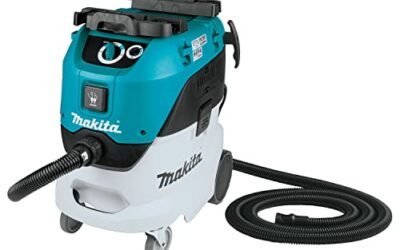
Makita VC4210L Wet/Dry Vacuum

The Makita is the balanced contractor choice here: an 11 gallon tank that one person can still handle, a 12 AMP motor, and listing figures of 148 CFM with 92 inches of static water lift, which is a strong pairing for both floor cleanup and tool-connected extraction. Its listing describes a HEPA filter that captures 99.97 percent of particles at 0.3 microns, and that is the level of claim this guide repeats — the listing says HEPA filter, so this entry says HEPA filter, not certified HEPA. For silica-conscious crews that distinction belongs in the purchase file.
Specs
- Tank capacity: 11 gallons
- Motor: 12 AMP
- Airflow: 148 CFM
- Static water lift: 92 inches
- Filtration: HEPA filter, captures 99.97 percent of particles at 0.3 microns per the listing
- Use: wet and dry pickup
Best for: Contractors who want one mid-size extractor for both jobsite cleanup and dust extraction.
Watch out for: The listing states HEPA filter performance rather than certified HEPA wording, so confirm it meets your specific compliance requirement before relying on it for regulated work.
ASIN: B07ZMN75V2
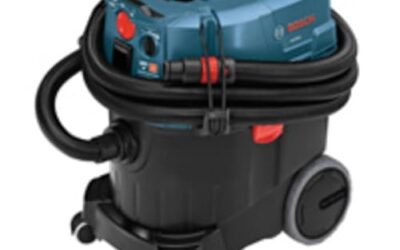
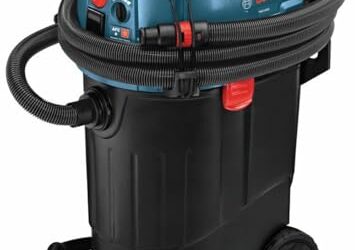
BOSCH VAC090AH Portable Wet/Dry Vacuum Dust Extractor

Bosch built the VAC090AH around the dust-extraction job rather than general cleanup, and the listing’s feature set shows it: a HEPA filter, Automatic Filter Clean that keeps the filter clearing itself during work, power-tool activation so the vacuum starts and stops with the tool, and a fleece filter bag that pre-filters the worst of the load. The 9 gallon tank keeps the unit portable between rooms and floors. Bosch frames this model around silica dust work in its listing material, which is the right context for it — connected to a grinder or sander, not parked in a corner as a general shop vac.
Specs
- Tank capacity: 9 gallons
- Filtration: HEPA filter
- Filter cleaning: Automatic Filter Clean
- Activation: power tool activation
- Filter bag: fleece filter bag
- Use: wet and dry dust extraction
Best for: Trades running sanders, grinders and saws that need the extractor to start with the tool.
Watch out for: As with the Makita, the listing wording is HEPA filter rather than certified HEPA, so buyers with a written certified requirement should compare the Dustless D1618 below.
ASIN: B076CSZXY3
Dustless Technologies D1618 HEPA Wet+Dry Pro Vacuum

The D1618 is the entry in this guide whose listing-derived description uses the words certified HEPA for its filtration system, which is exactly the phrase the keyword for this article asks about and exactly why this model anchors the list. Around that claim sits a practical specification: 8 gallons of capacity, 138 CFM of airflow and 83 inches of water lift, a hydrophobic polyester filter that tolerates the wet side of wet-and-dry work, and semi-automatic filter cleaning to shake off dry dust loading. The smaller tank suits crews who move room to room rather than cleaning one large floor.
Specs
- Tank capacity: 8 gallons
- Airflow: 138 CFM
- Water lift: 83 inches
- Filtration: certified HEPA filtration system per the listing description
- Filter: hydrophobic polyester filter
- Filter cleaning: semi-automatic filter cleaning
- Use: wet and dry pickup
Best for: Buyers whose requirement is written as certified HEPA and who need the listing itself to say so.
Watch out for: The 8 gallon tank is the smallest here, so high-volume dry debris means frequent emptying; confirm the certified wording on the current product page before ordering, since listings can be revised.
ASIN: B089QY6CM9
Dustless Technologies D1606 True HEPA Shop Vacuum

The D1606 is the capacity play from the same brand: a 16 gallon wet and dry shop vacuum sold under a True HEPA name, for workshops and sites where the cleanup volume is large and the extractor stays in one place while it works. Sixteen gallons of dry debris is a full day of renovation waste, and the same volume of wet pickup is available when a job floods or a slurry needs clearing. Because the tank is the story here, this model trades away the easy portability of the 8 and 9 gallon units, and it earns its place on days when emptying breaks would otherwise eat the schedule.
Specs
- Tank capacity: 16 gallons
- Filtration: True HEPA per the product name and listing
- Use: wet and dry pickup
- Model: D1606
Best for: Renovation and workshop cleanup where debris volume is high and the vacuum stays put.
Watch out for: A full 16 gallon tank of wet material is very heavy to move or lift, and the listing presents this model at the True HEPA level, so certified-wording requirements should still go to the D1618.
ASIN: B00QMCCYXG
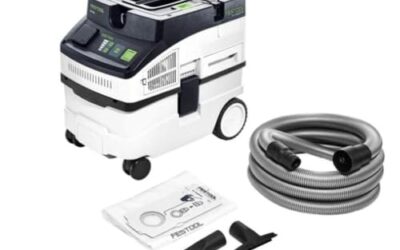
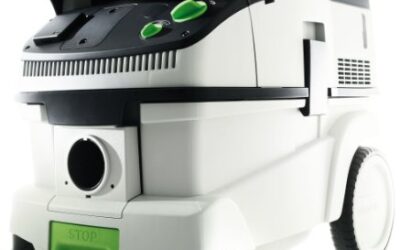
Festool CT 48 EI AC HEPA Dust Extractor (577876)

Festool’s CT 48 is the high-throughput workshop extractor in this set, with a 12.7 gallon container, 137 CFM of airflow and 96 inches of water lift — the strongest lift figure here — plus AutoClean filter cleaning that keeps suction consistent through long sanding sessions. The specification includes Bluetooth connectivity and a power range of 350 to 1200 watts with noise quoted between 62 and 71 dB, which suits a fixed bench setup in a woodworking or finishing shop. Its listing presents filtration at the HEPA level with 99.97 percent capture at 0.3 microns, and this guide reports it at exactly that level.
Specs
- Container capacity: 12.7 gallons (48 liters)
- Airflow: 137 CFM
- Water lift: 96 inches
- Filtration: HEPA filter, 99.97 percent at 0.3 microns
- Filter cleaning: AutoClean
- Connectivity: Bluetooth
- Power: 350 to 1200 watts
- Noise: 62 to 71 dB
- Model: 577876
Best for: Woodworking and finishing shops running extraction for hours at a fixed bench.
Watch out for: The listing supports HEPA filter wording rather than a certified HEPA claim, so do not buy it against a written certified requirement without checking the current product page first.
ASIN: B08PG22CWV
Which One Fits Your Situation
Your paperwork literally requires certified HEPA
Start and finish with the Dustless Technologies D1618. It is the one model in this guide whose listing description applies the word certified to the HEPA filtration system, and that wording is what an auditor, a client or a safety manager will ask to see. Save a copy of the product page with your records, and accept the smaller 8 gallon tank as the cost of getting the claim in writing.
You extract dust at the tool, all day, every day
The BOSCH VAC090AH fits a tool-led workflow best. Power-tool activation removes the second switch from every cut, Automatic Filter Clean keeps airflow from fading as the filter loads, and the fleece bag stretches the main filter’s service life. The Festool CT 48 is the alternative when the bench is fixed and the sessions run longer.
You clean up whole rooms after renovation work
Take the Dustless D1606 and its 16 gallon tank. Fewer emptying trips matter more than portability when the debris is measured in rooms, and the wet capability handles the mop-up phase with the same machine. Just plan how a full tank gets lifted and emptied before the first day, not during it.
You need one vacuum that does a bit of everything on site
The Makita VC4210L is the generalist: mid-size tank, the joint-strongest airflow figure here, 92 inches of lift for tool work, and wet pickup for the inevitable spill. It will not satisfy a certified-wording requirement, but for mixed contractor work without that paperwork, it is the least compromised single purchase in the list.
Common Mistakes
- Treating every HEPA mention as identical, when listings range from a fitted HEPA filter to a filtration system the seller describes as certified HEPA.
- Choosing on CFM alone and ignoring water lift, then finding the vacuum cannot pull dust through a sander’s extraction port.
- Ignoring filter cleaning until suction fades mid-job; fine drywall and concrete dust blind an uncleaned filter quickly.
- Buying the largest tank for a job that involves stairs, then discovering what 16 gallons of wet slurry actually weighs.
- Forgetting bags and replacement filters in the budget, which are recurring costs that differ sharply between models.
Frequently Asked Questions
What is the difference between a HEPA filter and certified HEPA?
A HEPA filter is a component rated to capture very fine particles, and many listings quote 99.97 percent capture at 0.3 microns. Certified HEPA wording goes further by describing the vacuum’s filtration system itself as certified. The practical rule is simple: buy at the level your requirement is written, and judge each machine by the exact words on its own listing rather than by the category name.
Which of these vacuums does the listing describe as certified HEPA?
The Dustless Technologies D1618. Its listing description refers to a certified HEPA filtration system. The Makita, Bosch and Festool entries in this guide are written at the HEPA filter level because that is the wording their listings support, and the larger Dustless D1606 is presented as True HEPA. Always re-check the live product page, because sellers can revise listing text.
Is water lift or CFM more important for dust extraction?
For extraction at a power tool, water lift usually matters more, because the vacuum must pull air through a small port and a length of hose against resistance. For open floor cleanup, CFM takes over, since moving a large volume of air across a wide nozzle clears debris faster. Industrial work involves both, which is why this guide lists the two figures side by side for each model.
Can these vacuums pick up wet material as well as dry dust?
Yes, every model in this guide is a wet and dry machine. The caution is weight and filter care rather than capability: a tank full of wet debris is far heavier than the same tank of dry dust, and fine dry dust should be cleaned from the filter before or after wet work so the two jobs do not combine into a clogged, muddy filter.