Key takeaways
- Compare the best hepa dust extractors for professional workspaces, from 150 CFM jobsite units to compact Festool models, with airflow and filters explained.
A woodworking shop fills with fine dust faster than most owners expect, and the dust you cannot see is the one that matters most. A standard shop vacuum moves the visible chips and leaves the fine particles in the air, where they settle on every surface and into every pair of lungs in the room. A HEPA dust extractor is built for the opposite job: it pulls dust straight from the tool, traps the fine particles in a sealed filter, and keeps the air in the shop breathable while you work.
This guide is written for woodworkers, renovation crews and small professional workshops that need dust extraction their tools can connect to directly. The four extractors below were chosen from the names and specifications on their Amazon product pages, comparing airflow, capacity, filtration and how each machine cleans its own filter while it runs.
Quick Picks
As an Amazon Associate we earn from qualifying purchases
| Product | Best for | Key spec from title |
|---|---|---|
| DEWALT DWV010 HEPA Dust Extractor | Renovation and power-tool work | 150 CFM, 8-gallon capacity |
| Bosch VAC090AH Dust Extractor | Concrete and silica dust | 150 CFM, 97-inch water lift |
| Festool CT 15 E HEPA Dust Extractor | Compact workshop extraction | 3.96-gallon capacity, 25-foot hose |
| Festool CT 26 E HEPA Dust Extractor | Larger capacity Festool system | 6.9-gallon capacity, HEPA filtration |
How to Choose
Airflow and water lift decide suction
Airflow, measured in cubic feet per minute, decides how much dust the extractor pulls from a tool, while water lift measures how hard it pulls. The DEWALT DWV010 and the Bosch VAC090AH both claim 150 CFM, which suits table saws, miter saws and wide belt sanders, while the Bosch adds a 97-inch static water lift for deep suction on heavy debris. Smaller extractors trade airflow for portability, which is fine for a random orbital sander but weak for a planer. Match the airflow to your hungriest tool, and remember that a clogged filter cuts airflow fast, which is why automatic filter cleaning matters.
Capacity and emptying
Capacity decides how often you stop to empty the machine. An 8-gallon drum, like the one on the DEWALT DWV010, or a 9-gallon drum, like the Bosch VAC090AH, suits a crew that fills bags fast during sanding and cutting. The Festool CT 15 holds 3.96 gallons, which suits a one-person shop where the extractor moves between tools, while the CT 26 E holds 6.9 gallons for longer runs. Fleece filter bags, included with the Bosch, keep the drum cleaner and make emptying faster, so check whether your pick includes bags or sells them separately.
Automatic filter cleaning
A HEPA filter that clogs stops the whole system, so the cleaning cycle is a working feature, not a convenience. The DEWALT DWV010 pulses its filter clean every 30 seconds, the Bosch VAC090AH activates its cleaning system every 15 seconds, and both keep suction steady during long sanding sessions without stopping the job. Festool models clean through their own AutoClean system instead. If your work means hours of continuous sanding, a short cleaning interval keeps the airflow where it started, and that is worth more than a small difference in the headline CFM figure.
HEPA handling and safe use
HEPA filtration only protects you when the filter is the right one and it is installed correctly. The DEWALT DWV010 meets the EPA lead renovation rule only when DWV9330 filters are installed, so check the filter model number before any lead-paint work. Never run an extractor for silica or lead dust without its HEPA filter in place, and empty bags and drums outdoors or into a sealed bag so the dust you collected does not return to the shop air. Keep the hose and power cord clear of walkways, and let the extractor run a few seconds after the tool stops to clear the hose.
The 4 Best Options
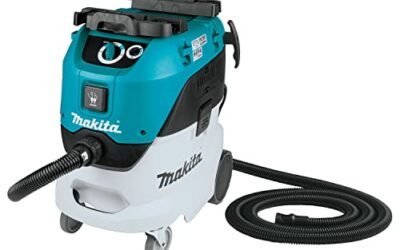
DEWALT DWV010 HEPA Dust Extractor
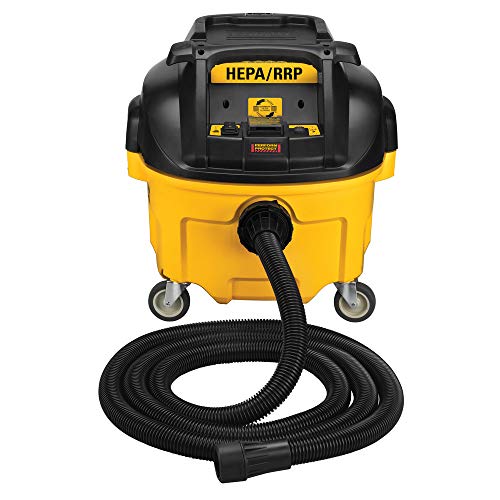
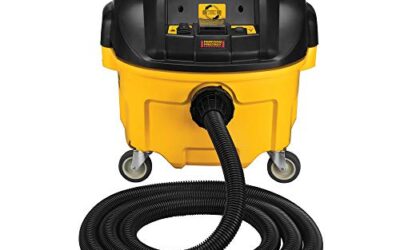
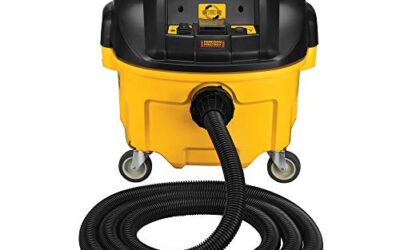
The DEWALT DWV010 is the workhorse of this group, pairing a 15-amp motor with a maker-rated 150 CFM of airflow in an 8-gallon unit built for jobsite dust. Its automatic filter cleaning pulses every 30 seconds, so suction stays steady through long sanding sessions without stopping to knock dust off the filter. Power Tool Actuation switches the vacuum on and off with the connected tool, and the 15-foot anti-static hose with a universal swivel connector reaches around a miter saw or a table saw. At 22 pounds on heavy-duty wheels it moves easily, and it carries a 1-year warranty.
Specs
- Motor: 15 amp
- Airflow: 150 CFM, maker-rated
- Capacity: 8 gallons
- Filter cleaning: Automatic pulse every 30 seconds
- Hose: 15-foot anti-static, 1.25-inch diameter, universal swivel connector
- Activation: Power Tool Actuation
- Weight: 22 lb
- Warranty: 1 year
Best for: Renovation crews and woodworkers who need 150 CFM with automatic filter cleaning.
Watch out for: It meets the EPA lead renovation rule only when DWV9330 filters are installed.
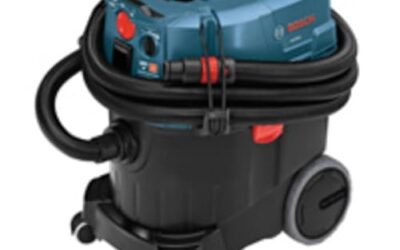
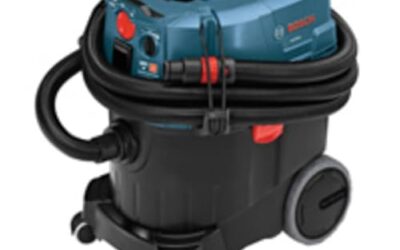
Bosch VAC090AH Dust Extractor

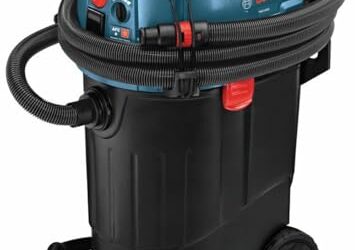
The Bosch VAC090AH is the strongest suction pick here, pairing the same 150 CFM airflow as the DEWALT with a 97-inch static water lift, the deepest pull in this guide. Its automatic filter-cleaning system activates every 15 seconds, the shortest interval of any machine here, which keeps suction high during heavy concrete and silica work. The included HEPA filter captures 99.97 percent of particles at 0.3 microns, and the machine is built to help users move toward compliance with the OSHA silica dust rule. A fleece filter bag, a 9.85-foot hose and power tool activation come in the box, and the whole unit runs at 60 decibels.
Specs
- Airflow: 150 CFM maximum
- Static water lift: 97 inches maximum
- Capacity: 9 gallons
- Filter: HEPA, captures 99.97 percent of particles at 0.3 microns
- Filter cleaning: Automatic, activates every 15 seconds
- Hose: 9.85-foot vacuum hose
- Noise level: 60 decibels
- Weight: 28 lb
- Included: HEPA flat filter, fleece filter bag, bend nozzle, power tool adapter nozzle
Best for: Concrete, silica and renovation dust where deep suction and HEPA filtration matter most.
Watch out for: The 9-gallon drum and 28-pound weight make it the heaviest machine here to carry up stairs.
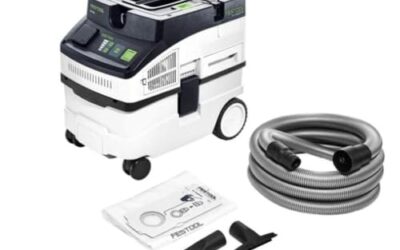
Festool CT 15 E HEPA Dust Extractor

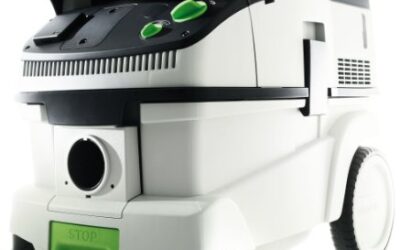
The Festool CT 15 E HEPA is the compact pick, built for a one-person workshop where the extractor follows the tool from bench to bench. It holds 3.96 gallons, runs a 1200-watt motor rated at 1.61 horsepower, and carries a 25-foot hose, the longest in this guide, so it reaches across a shop without moving the machine. A touchpad control handles the settings, and the included HEPA filter traps fine dust at the source. At 29 pounds it is heavier than its small drum suggests, but the compact canister shape and the long hose make it the easiest Festool here to place in a tight shop.
Specs
- Capacity: 3.96 gallons
- Motor: 1200 watts, 1.61 horsepower
- Hose: 25 feet
- Filter: HEPA included
- Control: Touchpad control
- Weight: 29 lb
- Use: Home, garage, office and workshop
Best for: A compact workshop where a small extractor with a long hose follows the tool.
Watch out for: The 3.96-gallon drum fills fast during heavy sanding, so expect frequent emptying.
Festool CT 26 E HEPA Dust Extractor

The Festool CT 26 E HEPA steps up from the CT 15 with a 6.9-gallon capacity, which suits longer runs and bigger jobs without stopping to empty the drum. Its standard-equipment HEPA filter is rated to remove 99.99 percent of dust and particulate down to 0.3 microns, and at 28.7 pounds it weighs slightly less than the smaller CT 15 despite the larger drum. This is the pick for a shop already in the Festool system, or for a woodworker who wants one extractor for sanders, routers and track saws all day. It is built in Germany and shares the Festool extractor system approach.
Specs
- Capacity: 6.9 gallons (26 liters)
- Filter: HEPA, rated to remove 99.99 percent of dust down to 0.3 microns
- Weight: 28.7 lb
- Made in: Germany
- Use: Mobile dust extraction for power tools
Best for: A Festool workshop that needs larger capacity for all-day sanding and cutting.
Watch out for: The larger drum still needs fleece bags for the cleanest emptying, and they are a separate consumable to keep in stock.
Which One Fits Your Situation
You run a renovation crew
Pick the DEWALT DWV010. Its 8-gallon drum, 150 CFM airflow and 30-second filter cleaning cycle handle a full day of sanding and cutting, and Power Tool Actuation means the vacuum follows the tool without anyone remembering to switch it on. The EPA lead renovation note matters here too: fit DWV9330 filters before any work in older buildings.
You cut concrete and stone
Pick the Bosch VAC090AH. Its 97-inch water lift is the deepest suction in this guide, and the 15-second filter cleaning cycle keeps it pulling through silica dust that would choke a slower machine. The HEPA filter and fleece bag are built for exactly this work, and the 9-gallon drum holds a long session of grinding debris.
You work alone in a small shop
Pick the Festool CT 15 E HEPA. Its compact canister fits a tight workshop, the 25-foot hose reaches every bench, and the HEPA filter keeps fine dust out of the air you breathe all day. The small drum is a fair trade for the footprint when one person runs one tool at a time.
You want one extractor for everything
Pick the Festool CT 26 E HEPA. The 6.9-gallon drum covers long sessions, the HEPA filter handles the finest dust, and the machine is sized for sanders, routers and track saws alike. It is the pick for a shop that wants a single extractor rather than a different machine for each tool.
Common Mistakes
- Buying a shop vacuum instead of a true HEPA extractor and expecting the same fine-dust capture.
- Running a HEPA extractor without the HEPA filter installed, which defeats the whole point of the machine.
- Ignoring the filter cleaning interval, then wondering why suction falls off mid-job.
- Choosing the smallest drum for a crew that fills bags fast, then stopping every hour to empty it.
- Emptying a full drum indoors, which puts the dust you just collected back into the shop air.
Frequently Asked Questions
What makes a dust extractor different from a shop vacuum?
A dust extractor connects directly to a power tool and pulls dust from the tool, with a HEPA filter trapping fine particles down to 0.3 microns. A shop vacuum moves larger debris well, but its filter usually lets fine dust pass back into the air. Extractors also add tool activation and automatic filter cleaning, which shop vacuums rarely have.
How much airflow do I need for woodworking?
For sanders, routers and track saws, an extractor in the 150 CFM class covers most work, and both the DEWALT DWV010 and the Bosch VAC090AH are rated at 150 CFM. Smaller sanders run fine on less airflow, while a table saw or planer wants the full 150 CFM. Check the airflow figure, not just horsepower, because airflow is what moves the dust.
Do HEPA filters really capture fine dust?
Yes, when the filter is a true HEPA filter installed correctly. The Bosch VAC090AH lists a HEPA filter that captures 99.97 percent of particles at 0.3 microns, and the Festool CT 26 E lists 99.99 percent at the same size. The filter works as rated when it fits, so match the filter model to the extractor and replace it when airflow drops.
How often should the filter clean itself?
It depends on the dust load. The Bosch VAC090AH cleans its filter every 15 seconds and the DEWALT DWV010 every 30 seconds, and both cycles run automatically while you work. For heavy sanding, the shorter interval keeps suction steadier. If you notice suction falling off despite the cleaning cycle, stop and check the filter and the bag before continuing.