Key takeaways
- Five HEPA dust extractors for tool stations — Festool, Makita, DEWALT, and Bosch — compared on certification, tool activation, airflow, and filter cleaning, with specs from the listings.
Key takeaways:
- Every pick here is a corded dust extractor with HEPA filtration stated in its listing or manufacturer description — no shop vacuum without HEPA certification is included.
- The Festool CT 15 E is the compact single-station pick: 15 L container and tool-activated auto-start.
- The Festool CT 26 E steps up to a 26 L container and Full Unit HEPA Certification — the whole unit certified, not just the filter.
- The Makita VC4210L moves the most air here at 148 CFM and adds wet pickup, but its listing needs a manual availability check.
- The DEWALT DWV010 and Bosch VAC140AH clean their own filters automatically — every 30 seconds and every 15 seconds respectively — keeping suction steady across long sessions.
Quick answer
For a single tool station, buy the Festool CLEANTEC CT 15 E: certified HEPA filtration and an appliance socket that starts and stops the extractor with your tool, in a compact 15 L body sized for a sander or router bench. If the extractor will serve as the shop’s main station machine, the Festool CT 26 E adds a 26 L container, 137 CFM, and Full Unit HEPA Certification. The Makita VC4210L is the high-airflow, wet-and-dry alternative at 148 CFM, the DEWALT DWV010 is the drywall-adjacent pick with automatic filter cleaning every 30 seconds, and the Bosch VAC140AH brings the largest container here — 14 gallons — with tool activation and a Power Broker dial.
As an Amazon Associate, we earn from qualifying purchases.
A dust extractor earns its place at a tool station by doing two things an ordinary vacuum does not. First, it captures the fine fraction of dust — the particles small enough to stay airborne and reach your lungs — through HEPA filtration, rather than collecting the visible chips and blowing the fines back into the room. Second, it works with the tool instead of beside it: on most of these machines the tool plugs into the extractor, which starts when the tool starts and runs on briefly after it stops, so extraction happens exactly when dust is being made.
Scope matters here. This guide covers corded, tool-station dust extractors whose listings or manufacturer descriptions state HEPA filtration. It does not cover general shop cleanup machines without HEPA certification, ambient air cleaners that scrub a room after the fact, or dust collectors sized for stationary planers and jointers.
How to Choose
Certification level is the first filter. Two grades of claim exist in this category, and they are not equal. Most extractors here carry a HEPA filter — the filter itself captures 99.97 percent of particles at 0.3 microns, the figure the manufacturers state. The Festool CT 26 E goes further with Full Unit HEPA Certification: the complete machine, seals and housing included, is certified, so fine dust has no path around the filter. The Makita’s manufacturer text describes a certified-HEPA main filter meeting the DOE HEPA standard. For one sander station, a HEPA filter in a well-sealed unit does the job; for daily fine-dust work, full-unit certification is the stronger claim.
Tool activation decides whether extraction actually happens. An extractor that needs a separate switch will, in real workshops, sometimes not get switched on. Tool-activated models remove that failure mode: the tool plugs into an appliance socket on the extractor, or, in the Makita’s case, an AWS-capable wireless trigger is used, and extraction follows the tool automatically. The Festools, the Makita, and the Bosch all offer a form of tool activation per their listings and manufacturer descriptions. The DEWALT DWV010’s listing material did not explicitly confirm an auto-start outlet, so this guide does not claim one for it — check the current listing if that feature is decisive for you.
Airflow and water lift are different kinds of strength. CFM measures how much air the machine moves, which carries dust from a sander’s pad or a saw’s port; water lift measures suction pressure, which matters for heavier debris and longer hose runs. The spread here is wide: 137 CFM from the CT 26 E, 148 CFM and 92 inches of lift from the Makita, 155 CFM from the DEWALT, and 150 CFM with 97 inches from the Bosch. A single sander station does not need the top of that range; a shared station benefits from it.
Automatic filter cleaning protects suction over a session. Fine dust loads a filter steadily, and suction falls with it. Three machines here fight that mechanically: the Makita has an automatic filter-cleaning system, the DEWALT cleans its filters every 30 seconds, and the Bosch every 15 seconds. The Festools rely on SELFCLEAN filter bags, which shed dust into the bag and keep the main filter clearer for longer. None of this removes filter and bag costs — it stretches the intervals between changes.
Container size and consumables shape the running cost. Containers here run from the CT 15 E’s 15 L to the Bosch’s 14 gallons. Bigger containers mean fewer bag changes and suit shared stations; smaller ones suit a single bench. Every machine here uses filter bags as the first filtration stage, which is also how fine dust leaves the shop — sealed in a bag rather than tipped out of an open drum.
Quick Comparison
| Product | Key Spec | Best For | Filtration |
|---|---|---|---|
| Festool CLEANTEC CT 15 E | 15 L / 3.96 gal container, tool-activated socket | A single sander or router station | HEPA main filter, SELFCLEAN bag |
| Festool CLEANTEC CT 26 E | 26 L / 6.9 gal, 137 CFM | The main shop station extractor | Full Unit HEPA Certification, SELFCLEAN bag |
| Makita VC4210L | 11 gal, 148 CFM, 92 in water lift | Shared station plus wet pickup and cleanup | Certified-HEPA main filter, two-stage |
| DEWALT DWV010 | 8 gal, 155 CFM, filter cleaning every 30 sec | Drywall and fine-dust station work | Two HEPA filters (DWV9330) |
| Bosch VAC140AH | 14 gal, 150 CFM, filter cleaning every 15 sec | Continuous sanding and grinding stations | HEPA filter, fleece bag included |
1. Festool CLEANTEC CT 15 E HEPA Dust Extractor — OUR TOP PICK

The CT 15 E is the entry point into Festool’s extractor line and the natural first extractor for a single tool station. Its container holds 15 L (3.96 gal), the body is compact at roughly 18.5 × 12.6 × 17.1 inches, and it handles wet as well as dry pickup per Festool’s catalog. The HEPA main filter captures 99.97 percent of particles at 0.3 microns, per the manufacturer figure, and a SELFCLEAN filter bag does the first-stage work.
The feature that makes it a station machine rather than a small vacuum is the appliance socket: plug the sander or router into the extractor and the CT 15 E starts when the tool starts and stops when it stops. At a sanding bench, that single behaviour is the difference between dust captured at the pad and dust captured eventually. Two item numbers circulate for this model — the Amazon listing sits under the older one — but the product is the CT 15 E either way.
Best for: a single tool station — a sander or router bench — where a compact, tool-triggered HEPA extractor is the whole requirement.
Watch out for: the 15 L container is the smallest here; at a shared station it will ask for bag changes more often than the CT 26 E or the Bosch.
Specs
- Container: 15 L / 3.96 gal
- Filtration: HEPA main filter (99.97 percent at 0.3 microns, manufacturer figure); SELFCLEAN filter bag
- Tool activation: yes — appliance socket with automatic tool start
- Pickup: wet and dry
- Footprint: ~18.5 × 12.6 × 17.1 in
View the Festool CT 15 E on Amazon
2. Festool CLEANTEC CT 26 E HEPA Dust Extractor

The CT 26 E is the step up to a main-station machine: a 26 L (6.9 gal) container, 137 CFM of maximum airflow, and the strongest filtration claim in this guide — Full Unit HEPA Certification, meaning the complete unit is certified rather than only its filter element. The HEPA filter itself captures 99.97 percent of particles at 0.3 microns. A SYS-Dock on top lets Systainer cases stack directly on the extractor, a small detail that matters in a Festool-based shop.
Tool activation is the standard CT arrangement — an appliance socket that runs the extractor with the tool. One connectivity point needs stating plainly: this listing is the older-generation CT 26 E, and on this generation Bluetooth is not built in; Festool’s catalog describes it as Bluetooth-capable with an additional accessory module. If wireless triggering matters to you, plan on the module — do not buy this listing expecting built-in Bluetooth.
Best for: the main shop station extractor — a bigger container and full-unit certification for daily tool-triggered work.
Watch out for: the ASIN is the older-generation listing and the listing itself flags a newer version; expect the CT 26 E as listed, including the absence of built-in Bluetooth on this generation.
Specs
- Container: 26 L / 6.9 gal
- Airflow: 137 CFM max
- Filtration: Full Unit HEPA Certification; HEPA filter (99.97 percent at 0.3 microns); SELFCLEAN filter bag
- Tool activation: yes — tool-activated appliance socket
- Extras: SYS-Dock for Systainer stacking; Bluetooth via accessory module only, not built in
View the Festool CT 26 E on Amazon
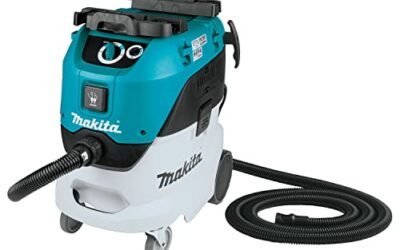
3. Makita VC4210L 11 Gallon Wet/Dry HEPA Filter Dust Extractor

The VC4210L is the biggest all-rounder here. Its 12 AMP motor delivers 148 CFM with 92 inches of water lift through a two-stage filtration system whose certified-HEPA main filter captures 99.97 percent of particles at 0.3 microns and larger, meeting the DOE HEPA standard per Makita’s text. An automatic filter-cleaning system keeps suction up, the 11-gallon container handles wet and dry work, and it runs at a 60 dB(A) operating sound level at 35 lb.
Retailer listings title this model “AWS Capable”: Makita’s Auto-Start Wireless System triggers the extractor from a compatible tool, suiting stations built around Makita’s cordless platform. That is a different activation path from a corded appliance socket, so confirm on the listing which activation method fits your tools before choosing it for that feature.
Best for: a shared tool station that also does wet pickup and general shop cleanup — the largest airflow here with certified HEPA filtration.
Watch out for: availability needs checking — one crawl of this listing showed “No featured offers available,” so confirm the listing is live before relying on it.
Specs
- Container: 11 gal
- Motor: 12 AMP; 148 CFM; 92 in water lift
- Filtration: certified-HEPA main filter (99.97 percent at 0.3 microns and larger, per Makita); two-stage filtration; automatic filter cleaning
- Tool activation: AWS-capable (Auto-Start Wireless System) per retailer listings
- Sound level: 60 dB(A); weight 35 lb; wet and dry pickup
View the Makita VC4210L on Amazon
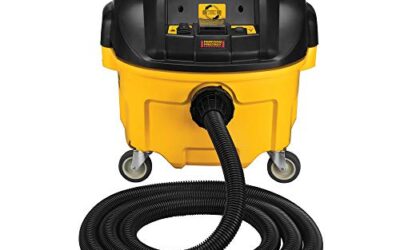
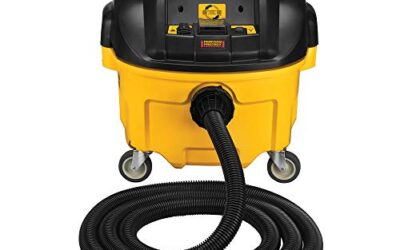
4. DEWALT DWV010 HEPA Dust Extractor with Automatic Filter Cleaning
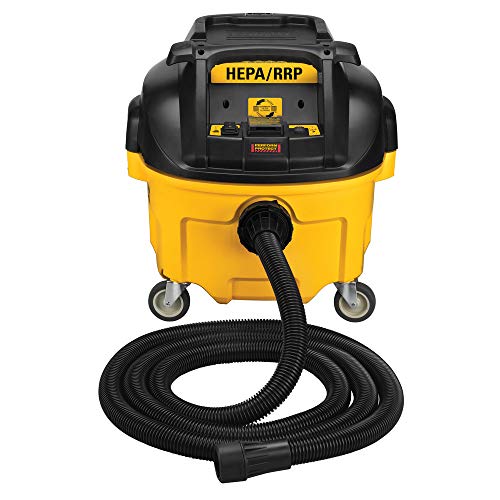
The DWV010 is built for dust that clogs filters: drywall sanding, concrete-adjacent work, and any station where fine powder loads a filter fast. Its 15 AMP motor produces 155 CFM — the highest airflow figure in this guide — and its automatic filter cleaning cycles every 30 seconds to keep suction from fading mid-session. It ships with two HEPA filters (the DWV9330 pair), carries HEPA/RRP certification in its listing, and uses an anti-static hose. The container is 8 gallons, sized for a working station rather than whole-shop cleanup.
One feature is deliberately not claimed here: tool actuation is marketed for this model line generally, but the auto-start outlet was not explicitly confirmed in the sources behind this guide, so verify it on the current listing if you need the extractor to follow your tool automatically.
Best for: heavy drywall and concrete-adjacent station work, where the 30-second automatic filter cleaning keeps suction up through fine, clogging dust.
Watch out for: confirm the auto-start arrangement on the listing before buying for tool-triggered use; no auto-start outlet is claimed for this model here.
Specs
- Container: 8 gal
- Motor: 15 AMP; 155 CFM airflow
- Filtration: two HEPA filters (DWV9330); HEPA/RRP certified per listing
- Filter cleaning: automatic, every 30 seconds
- Hose: anti-static
View the DEWALT DWV010 on Amazon
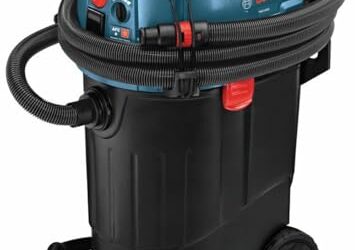
5. Bosch VAC140AH 14-Gallon Dust Extractor with Auto Filter Clean and HEPA Filter

The VAC140AH is the capacity pick: a 14-gallon container — the largest in this guide — with 150 CFM of airflow and 97 inches of static water lift from a 9.5 A motor. Its automatic filter cleaning runs every 15 seconds, the most frequent cycle here, and a fleece filter bag is included. The HEPA filter captures 99.97 percent of particles at 0.3 microns and larger per Bosch’s description, and the machine is part of Bosch’s PRO+GUARD system aimed at silica-dust compliance.
Tool activation is explicit in the manufacturer description: the tool plugs in and activates the extractor, and a Power Broker dial divides the circuit’s capacity between suction and the tool’s own power draw — genuinely useful at a station running a big sander on a shared circuit. For continuous sanding or grinding stations, the largest tank, the fastest filter-cleaning cycle, and strong lift are the argument for this machine.
Best for: the big-capacity station extractor — for continuous sanding and grinding stations that need long intervals between bag changes.
Watch out for: the evidence behind this model’s ASIN comes from a listing outside the US storefront, so open the listing and confirm the details match before ordering.
Specs
- Container: 14 gal
- Motor: 9.5 A; 150 CFM; 97 in static water lift
- Filtration: HEPA filter (99.97 percent at 0.3 microns and larger, per Bosch); fleece filter bag included
- Filter cleaning: automatic, every 15 seconds
- Tool activation: yes — power tool activation with Power Broker dial
View the Bosch VAC140AH on Amazon
Care and Placement at the Station
Place the extractor where the hose reaches the tool’s port without stretching across the work — a hose under tension pulls at the tool and leaks at the connection. Under-bench placement suits the compact CT 15 E; the larger Makita and Bosch belong beside the station on the floor. Keep the exhaust pointed away from the bench, so air leaving the machine does not blow settled dust back over finished work.
Care is mostly consumables discipline. Change the filter bag before it is packed solid — an overfilled bag strangles airflow and stresses the main filter. Machines with automatic filter cleaning still need main filters inspected on the manufacturer’s schedule; the cycle stretches intervals, it does not abolish them. Store spare bags at the station itself.
Frequently Asked Questions
What is the difference between a HEPA filter and Full Unit HEPA Certification?
A HEPA filter claim describes the filter element: it captures 99.97 percent of particles at 0.3 microns. Full Unit HEPA Certification, which the CT 26 E carries, certifies the complete machine — housing and seals included — so dust-laden air cannot bypass the filter through gaps. For a single sander station the filter claim is a sound basis; for daily fine-dust work the full-unit certification is the stronger guarantee.
Does my extractor need tool activation?
For station work, it is close to essential: extraction only helps while dust is being produced, and a separate switch will eventually be skipped on a quick cut. Four of the five picks offer tool activation — appliance sockets on the Festools and Bosch, AWS wireless on the Makita. The DEWALT’s auto-start outlet was not confirmed in our sources, so check its listing if that feature decides your purchase.
How often will I change bags and filters?
It depends on the dust load — fine sanding dust fills bags faster than coarse chips. The automatic filter cleaning on the Makita, DEWALT, and Bosch, and the SELFCLEAN bags on the Festools, exist to stretch those intervals and keep suction steady between changes. Treat bags as a running cost of the station and keep spares on hand.
Can these extractors pick up liquids?
Two of the picks are listed for wet and dry pickup: the Festool CT 15 E per Festool’s catalog, and the Makita VC4210L, a wet/dry machine by design. Wet pickup typically requires changing the filter arrangement per the manual, so follow the manufacturer’s instructions rather than assuming any HEPA extractor can be used wet as it stands.
Conclusion
For most tool stations, the Festool CT 15 E is the right first HEPA extractor: compact, tool-triggered, and certified where it counts. The CT 26 E is the upgrade for a main station that wants full-unit certification and a 26 L container, accepting that this generation carries no built-in Bluetooth. The Makita VC4210L covers the most ground — airflow, wet pickup, cleanup — subject to confirming its listing is live. The DEWALT DWV010 and Bosch VAC140AH are the fine-dust specialists, cleaning their filters every 30 and 15 seconds respectively, with the Bosch adding the largest container here. Match the machine to the dust your station actually makes.
Product and ASIN Reference
| Product | ASIN |
|---|---|
| Festool CLEANTEC CT 15 E HEPA Dust Extractor | B09YJ4BDK8 |
| Festool CLEANTEC CT 26 E HEPA Dust Extractor | B003XWAZ9S |
| Makita VC4210L 11 Gallon Wet/Dry HEPA Filter Dust Extractor/Vacuum | B07ZMN75V2 |
| DEWALT DWV010 HEPA Dust Extractor with Automatic Filter Cleaning, 8-Gallon | B00OA02TZ0 |
| Bosch VAC140AH 14-Gallon Dust Extractor with Auto Filter Clean and HEPA Filter | B076CP3C9D |